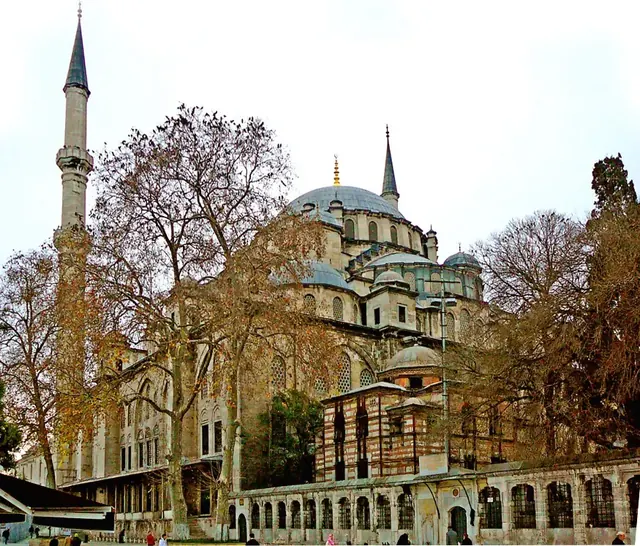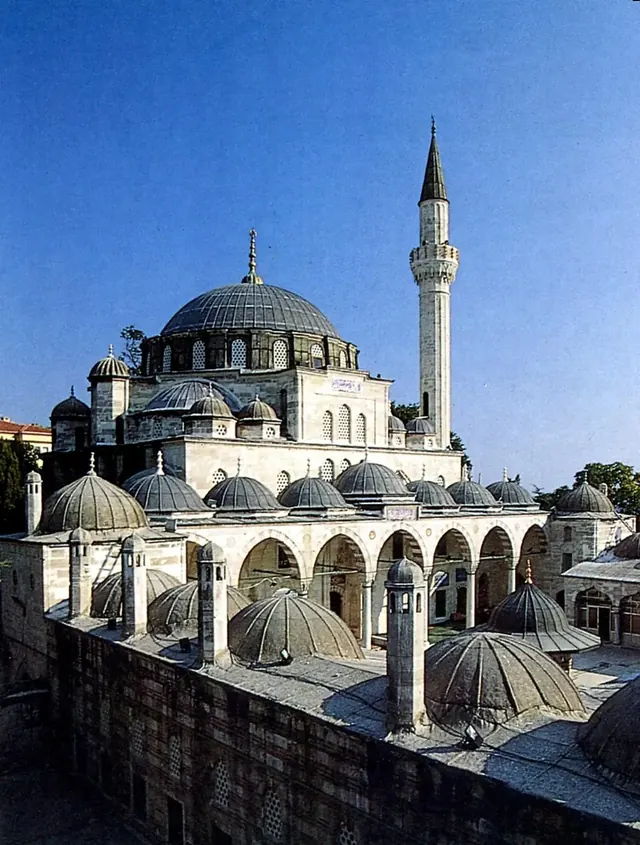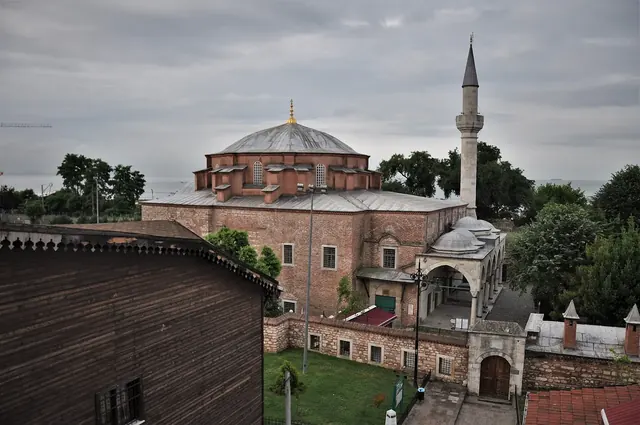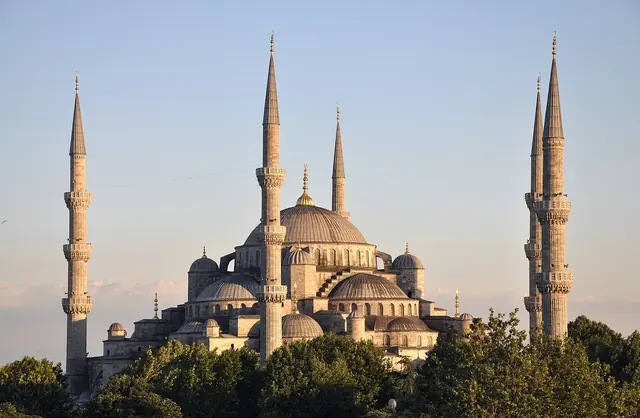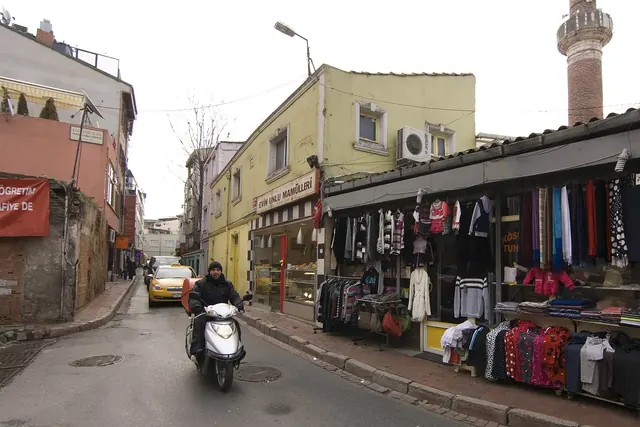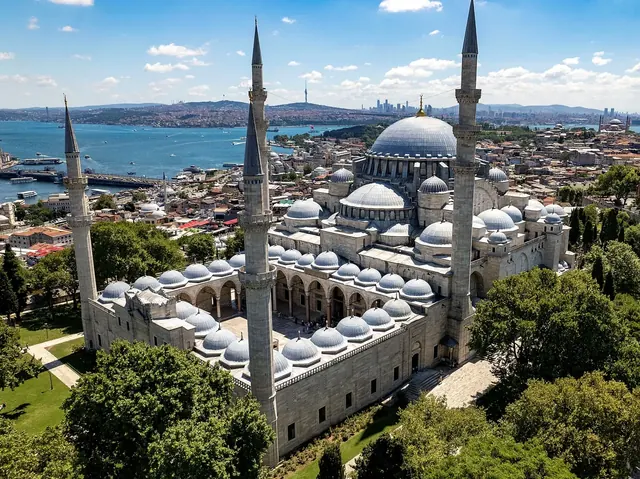
A külliye is an Ottoman complex built around a mosque that brought together schools, a soup kitchen, a hospital, a bathhouse, lodgings for travellers and more. These complexes were built and kept running for centuries by vakıf (waqf) endowments: property whose income was dedicated permanently to charity. In Istanbul you can explore both vast examples like Süleymaniye and Fatih and tiny ones like the Sokollu complex right next to our hotel.
On this page7
A külliye: a neighbourhood centred on a mosque
The word külliye comes from the Arabic kull, meaning “whole” or “all”. In Ottoman cities a major mosque was rarely built on its own. Around it, founders added colleges, a public kitchen, a hospital, baths, a library and shops, creating a new focal point for the neighbourhood. The mosque became the heart of a social services network.
The typical building blocks of a külliye were:
- Medrese: a college teaching theology, law, Arabic, mathematics and sometimes medicine. Students lived in small cells opening onto a courtyard.
- Sıbyan mektebi: a neighbourhood primary school where children learned to read and write and to recite the Qur'an.
- İmaret: a public kitchen serving free meals to students, staff, travellers and the poor.
- Darüşşifa: literally “house of healing”, a hospital. Some Ottoman hospitals are known to have used music and the sound of water as part of treatment.
- Tabhane and kervansaray: guesthouses and lodgings for travellers.
- Hamam, library, türbe: a bathhouse, a library and the founder's tomb; our guide to visiting tombs and cemeteries explains the latter.
- Sebil and çeşme: kiosks and fountains offering free water to all.
The vakıf: charity designed to last for centuries
A vakıf (waqf in Arabic) is a charitable endowment: a person permanently dedicates property or its income to a good cause. The founder sets out the terms in a deed called a vakfiye, which could specify how many students receive stipends, what the kitchen cooks each day and what each staff member is paid. A trustee, the mütevelli, manages the foundation.
Running costs were typically covered by rents from shops, inns, bathhouses and farmland. The Arasta Bazaar behind the Blue Mosque, for example, was built as a row of shops whose rent supported the mosque. Bathhouses such as Sinan's Haseki Hürrem Sultan Hamam were often built as endowment properties too, and according to historical accounts the Cağaloğlu Hamam was commissioned by Sultan Mahmud I to fund the library he founded at Hagia Sophia.
Stories also tell of endowments that fed migrating birds and street animals, sanded icy roads in winter or paid off the debts of the poor. Today many historic endowment properties are cared for by Türkiye's General Directorate of Foundations.
Süleymaniye: an empire's social showcase
Built by Mimar Sinan for Sultan Süleyman the Magnificent between 1550 and 1557, the Süleymaniye Mosque complex is the high point of the külliye idea. Around the mosque stand colleges at several levels, a school of hadith, a medical college, a hospital, a public kitchen, a guesthouse, a caravanserai, a bathhouse, a primary school and shops. In the garden behind the qibla wall are the tombs of Süleyman and Hürrem Sultan, and at one corner of the complex lies Sinan's own modest tomb.
Several of the college buildings now house one of Türkiye's most important manuscript libraries. As you wander the sloping lanes, notice how the buildings step down the hillside: here Sinan's skill as an urban planner is visible on a scale far larger than any single building. Our Mimar Sinan route helps you explore further.
The Fatih complex: the first great centre after the conquest
Built between 1463 and 1470, shortly after the Ottoman conquest of the city, the Fatih Mosque complex was Istanbul's first great Ottoman külliye. Its colleges, known as the Sahn-ı Seman (the “Eight Courtyards”), lined both sides of the mosque and were among the leading institutions of learning of their day. The complex also included a public kitchen, a hospital, a guesthouse and a library.
The mosque you see today was largely rebuilt in the 18th century after the original was badly damaged in the earthquake of 1766, while several of the colleges still stand in their original form. The tomb of Sultan Mehmed II, the conqueror of Constantinople, lies in the garden behind the mosque.
Sokollu: a small külliye next door to our hotel
You do not need a vast complex to understand the idea. A few minutes' walk from our hotel, the Sokollu Mehmed Pasha Mosque is a small but perfect külliye built by Sinan in the early 1570s for the grand vizier Sokollu Mehmed Pasha and his wife İsmihan Sultan. On its sloping site the mosque, the college cells framing the courtyard and a dervish lodge were designed as one ensemble. You reach the courtyard by a staircase that passes beneath the college's classroom, a detail that surprises visitors every time.
Our neighbourhood's other landmark, the Little Hagia Sophia Mosque, a Byzantine church converted into a mosque in the early 16th century, also gained a row of college cells around its courtyard, giving it the feel of a miniature külliye.
Sebils and fountains: following the water through the streets
Providing free water for everyone was one of the most admired forms of charity in Ottoman society. A çeşme is a public fountain with taps set into a wall or standing in a square; a sebil is a small kiosk where an attendant handed out cups of water, and sweet sherbet on holy days, through bronze grilles. Fountain inscriptions often name the donor, add a prayer and include a poem whose letters, read as numbers, give the year of construction.
As you walk the lanes of Sultanahmet and Küçük Ayasofya, look out for small neighbourhood fountains built into walls, most of them now dry. The Fountain of Ahmed III (1728) in front of the main gate of Topkapı Palace is one of the most elegant works of the Tulip Era, while the German Fountain on the Hippodrome, a gift from Kaiser Wilhelm II in 1901, adds a very different style to this long tradition.
Tips for exploring a külliye
- Do not stop at the mosque: walk around the courtyard and grounds, where colleges, tombs and small cemeteries usually sit beside or behind the prayer hall.
- Look at the inscription above each gateway; it often tells you who founded the building and when.
- Curious about the bathhouse side of Ottoman life? Our Turkish bath guide is written for first-timers.
- Dress modestly and avoid prayer times when entering the mosque itself.
Frequently asked questions
What is the difference between a mosque and a külliye?
The mosque is the prayer hall. A külliye is the whole complex around it, which could include colleges, a public kitchen, a hospital, baths, a library, tombs and shops.
Who ate at an Ottoman imaret?
Students, staff of the complex, travellers and the poor. Endowment deeds set out in detail what was served each day and on special occasions.
Do vakıf endowments still exist?
Yes. Many historic endowment buildings are protected by Türkiye's General Directorate of Foundations, and the foundation model is still widely used for education and charity today.
Is there a külliye near Sareban Hotel?
Yes. The Sokollu Mehmed Pasha Mosque and its college are a short walk away, and the Little Hagia Sophia Mosque with its courtyard cells is also right in our neighbourhood.