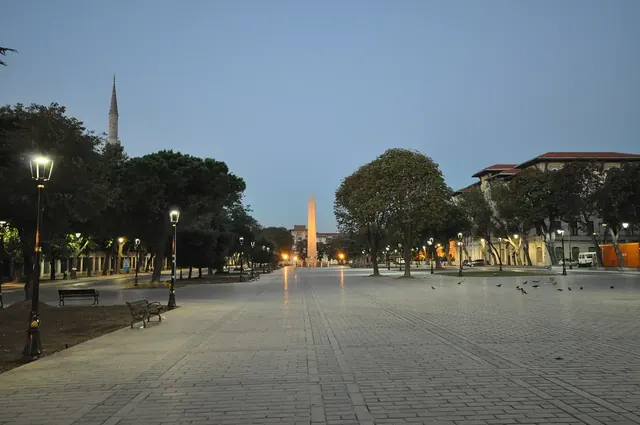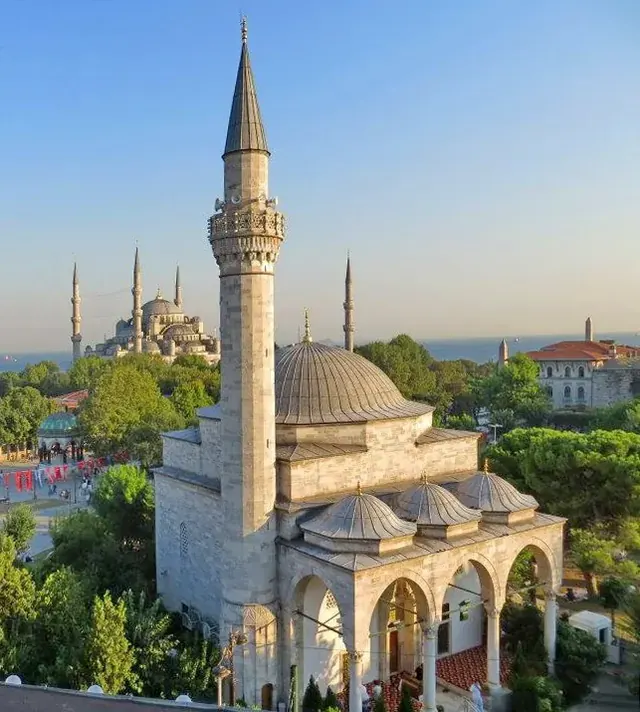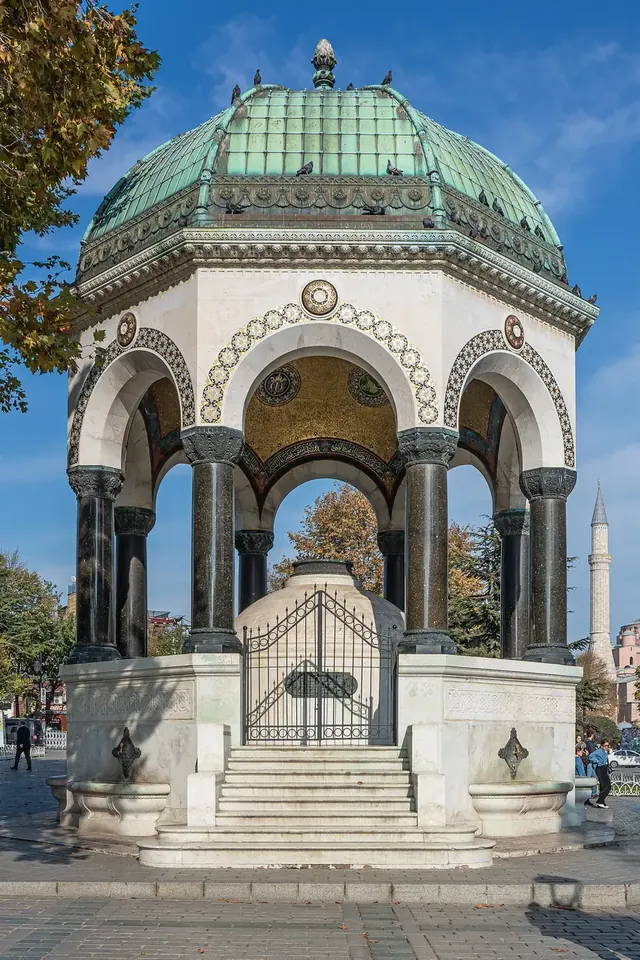
The German Fountain is an octagonal domed fountain that Kaiser Wilhelm II presented to Sultan Abdülhamid II and the city to commemorate his 1898 visit to Istanbul; it was inaugurated in 1901. It stands at the northern end of Sultanahmet Square, on the corner facing the gardens between Hagia Sophia and the Blue Mosque. With its Neo-Byzantine style, golden mosaics and the emblems of two empires, it is the youngest and most colourful monument on the old Hippodrome.
On this page4
A souvenir of an alliance
Wilhelm II first visited Istanbul in 1889 and returned in 1898 on a tour that also took him to Jerusalem and Damascus, where he donated a marble cenotaph for the tomb of Saladin. These visits reflected the rapidly growing political, military and economic ties between the Ottoman Empire and Germany, which produced projects such as the Baghdad Railway.
To thank his hosts, the Kaiser commissioned a fountain. Designed by the architect Max Spitta, it was prefabricated in Germany, shipped to Istanbul in pieces and assembled on site. According to most sources it was officially opened on 27 January 1901, Wilhelm's birthday.
Two empires in stone, bronze and mosaic
Eight porphyry columns carry arches under a bronze dome. Inside, the dome glitters with gold-ground mosaics in the manner of Byzantine churches, a deliberate nod to neighbouring Hagia Sophia. Of the eight medallions in its decoration, four bear the tughra, the calligraphic seal of Abdülhamid II, and four carry Wilhelm II's monogram.
The fountain carries a verse inscription in Ottoman Turkish and a German inscription dedicating the gift to the memory of the 1898 visit. Its Neo-Byzantine look, very different from classic Ottoman fountains, also reflects late 19th-century Europe's fascination with the East.
What to look for
- The dome interior: Look up between the columns to see the gold mosaics, brightest around midday.
- Tughra and monogram: Compare the two rulers' emblems in the medallions.
- Porphyry columns: The purple-red stone reserved for emperors in Byzantine times.
- The inscriptions: Ottoman and German texts that sum up the fountain's diplomatic purpose.
Getting there from Sareban Hotel
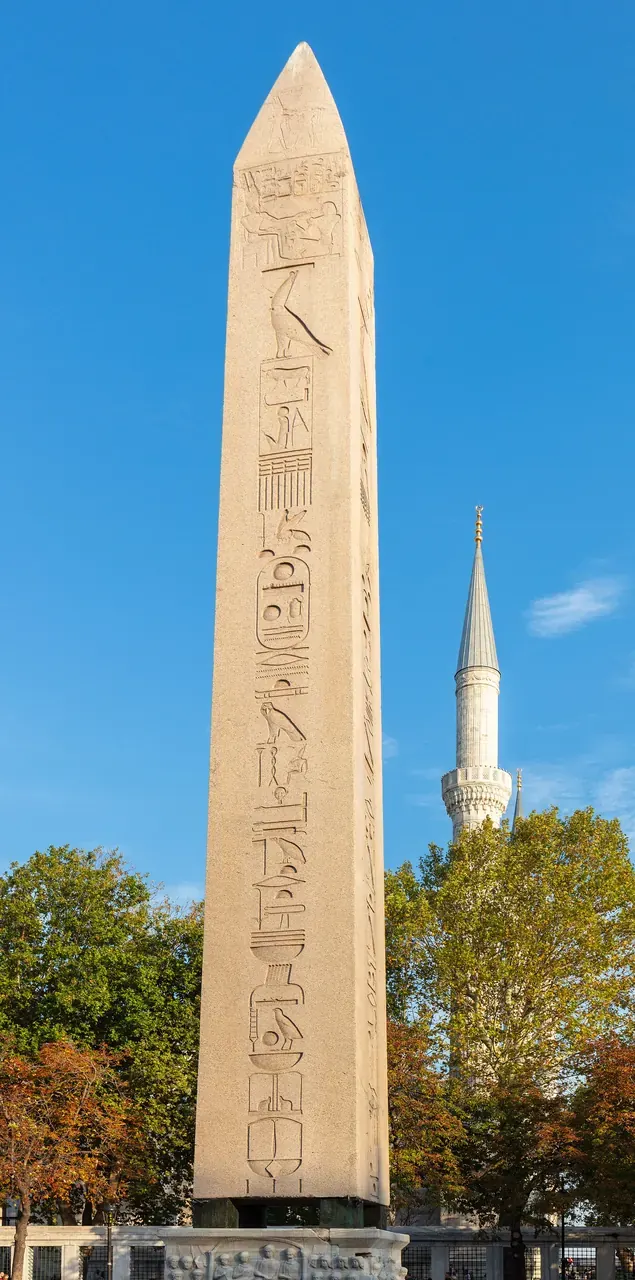
Walk up from our hotel and stroll the Hippodrome from south to north; past the Obelisk of Theodosius, the German Fountain marks the end of the square. The entrance to the Basilica Cistern and the Sultanahmet stop of the T1 tram are right across the road, which makes the fountain a handy meeting point. For more photogenic corners nearby, see our photo spots guide.
Frequently asked questions
When was the German Fountain built?
It was made in Germany to commemorate Kaiser Wilhelm II's 1898 visit and inaugurated in Istanbul in 1901.
Who designed the German Fountain?
It is attributed to the German architect Max Spitta; its parts were produced in Germany and assembled in Istanbul.
What style is it?
Neo-Byzantine: porphyry columns, a bronze dome and gold-ground mosaics echo the Byzantine buildings nearby.