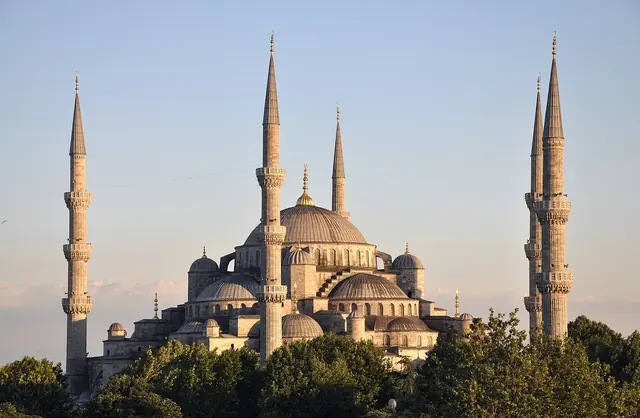
The Blue Mosque, officially the Sultan Ahmed Mosque, was built for Sultan Ahmed I between 1609 and 1616 by the architect Sedefkâr Mehmed Ağa. It stands on the eastern side of the old Hippodrome, facing Hagia Sophia, and its six minarets define the Istanbul skyline. It is a working mosque that visitors can enter free of charge outside prayer times, and it earned its nickname from the blue-toned Iznik tiles inside.
On this page5
A teenage sultan's grand statement
Ahmed I came to the throne at just thirteen, and he was still very young when he commissioned this mosque. Unusually, it was paid for from the treasury rather than from the spoils of a great victory, which drew criticism from religious scholars at the time. His architect, Sedefkâr Mehmed Ağa, had trained under the great Sinan and began his career as a mother-of-pearl inlayer; you can see that delicacy in the inlaid doors and window shutters.
The mosque was built over part of the old Byzantine Great Palace and anchored a whole complex: a madrasa, a hospital, a primary school, a public kitchen and the Arasta Bazaar, whose rents funded the mosque. Ahmed I is buried in the tiled mausoleum at the northern corner, together with his wife Kösem Sultan and his sons Osman II and Murad IV.
Six minarets and a sea of Iznik tiles
Six minarets were a bold choice: at the time only the Great Mosque of Mecca had as many. A popular story says the sultan asked for golden minarets (altın) and the architect heard six (altı); another says a seventh minaret was later added in Mecca to restore its precedence. Neither tale is firmly documented, but locals still love to tell them.
Inside, four massive round piers, nicknamed elephant feet, carry the central dome, which spreads outward through cascading half-domes. More than 20,000 handmade Iznik tiles, concentrated in the upper galleries, bloom with tulips, carnations, cypresses and roses. Light from hundreds of windows shifts the blues and greens through the day. A major restoration that began in 2018 was completed in 2023, so the interior is at its brightest in years.
Highlights to spot
- The western courtyard: Enter from the Hippodrome side to see the arcaded courtyard, as large as the prayer hall itself, and the domes rising in steps above you.
- Mihrab and minbar: The prayer niche is carved from marble, and the tall marble pulpit beside it is finely pierced; notice the stained glass around the mihrab.
- The royal lodge: A screened gallery where the sultan prayed apart from the congregation.
- Tomb of Sultan Ahmed I: The tiled mausoleum on the north side, facing Hagia Sophia.
- The chain at the courtyard gate: Legend says it hung there so that even the sultan, arriving on horseback, had to bow his head.
How visiting works
Visitors are admitted outside the five daily prayers, and each call to prayer brings a pause of roughly an hour, longer around Friday midday prayer. The tourist entrance is separate from the worshippers' entrance, so follow the signs. Shoes go into plastic bags handed out at the door; women cover their hair, and everyone covers shoulders and knees. Scarves are often available at the entrance, but bringing your own is easier.
During Ramadan, illuminated messages called mahya are strung between the minarets and the square fills up at sunset; see our Ramadan in Istanbul guide if your dates overlap.
Getting there from Sareban Hotel
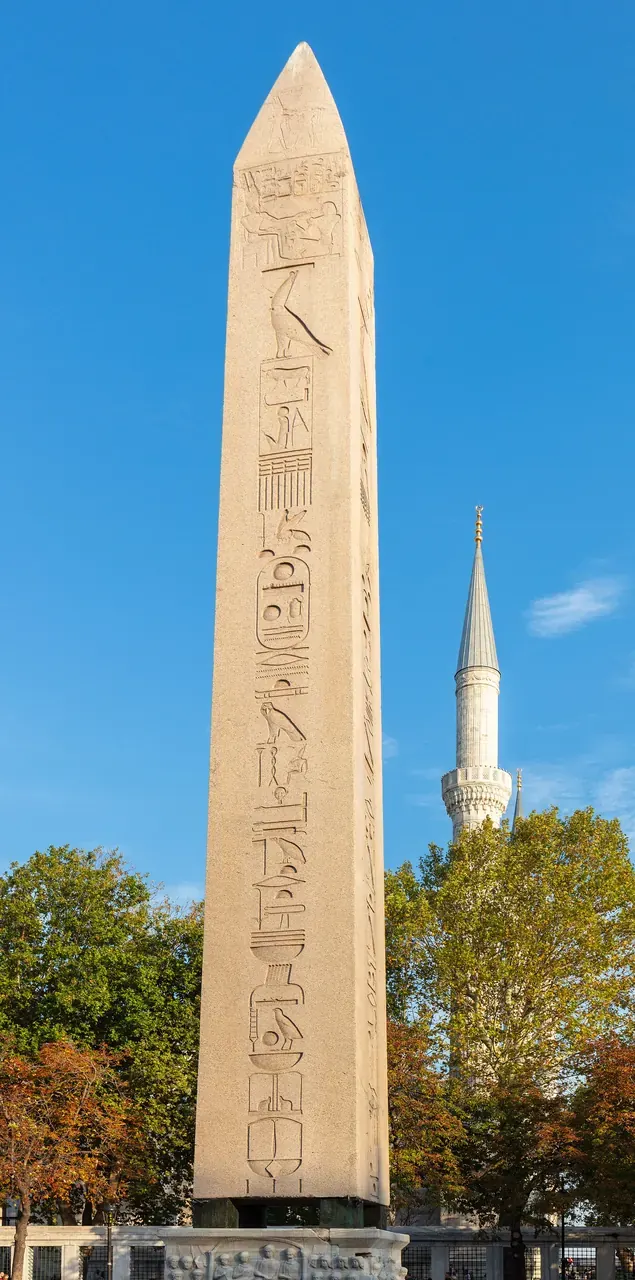
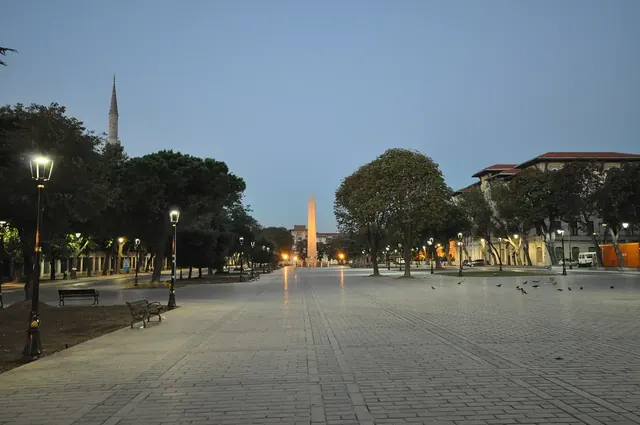
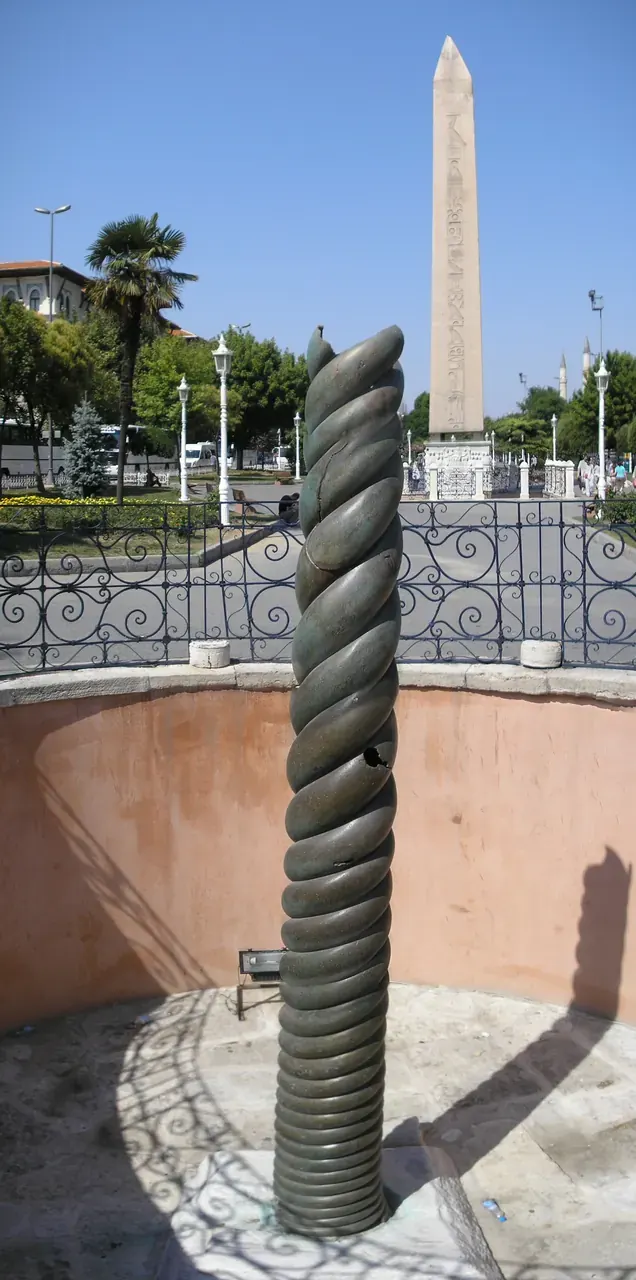
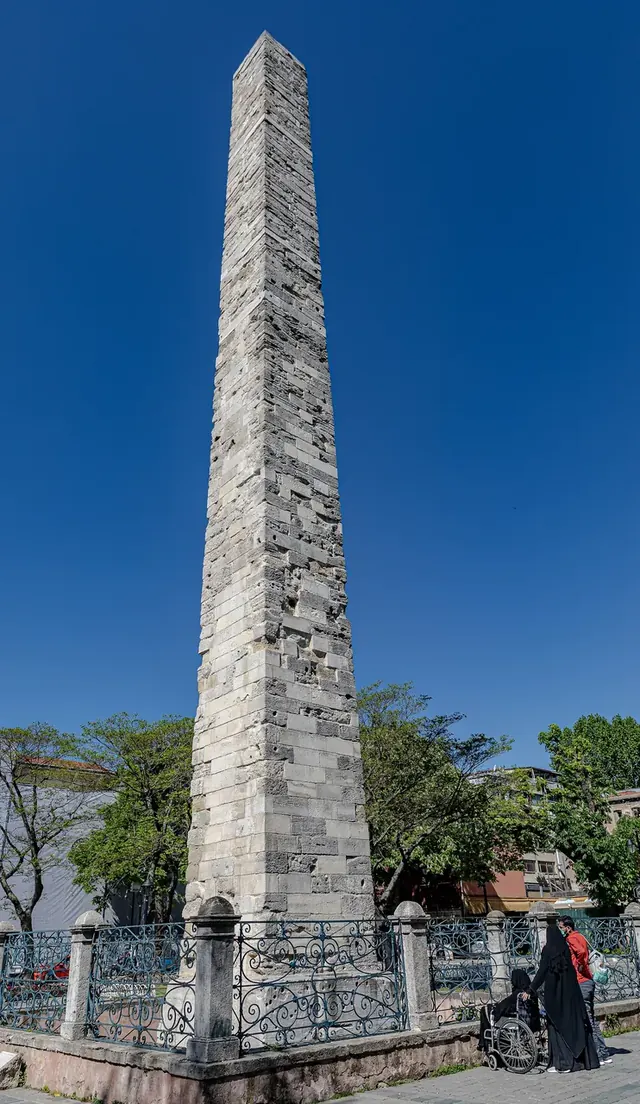
It is a comfortable walk from our hotel. Climb the slope past the Sokollu Mehmed Pasha Mosque to the southern end of the Hippodrome, then follow the square past the Walled Obelisk and the Obelisk of Theodosius to the western courtyard gate. Alternatively, walk through the Arasta Bazaar and arrive at the mosque's southern side. By tram, get off at the Sultanahmet stop on the T1 line.
Frequently asked questions
Is the Blue Mosque free to visit?
Yes, entry is free, with optional donation boxes inside. Visits are possible only outside prayer times.
Why is it called the Blue Mosque?
European travellers named it after the blue, green and turquoise Iznik tiles and painted decoration inside. Its official name is the Sultan Ahmed Mosque.
Can non-Muslims visit?
Yes, visitors of all faiths are welcome outside prayer times, provided they dress modestly and behave quietly inside.
Is the restoration finished?
Yes. The extensive restoration that began in 2018 was completed in 2023, and the whole interior is open again.