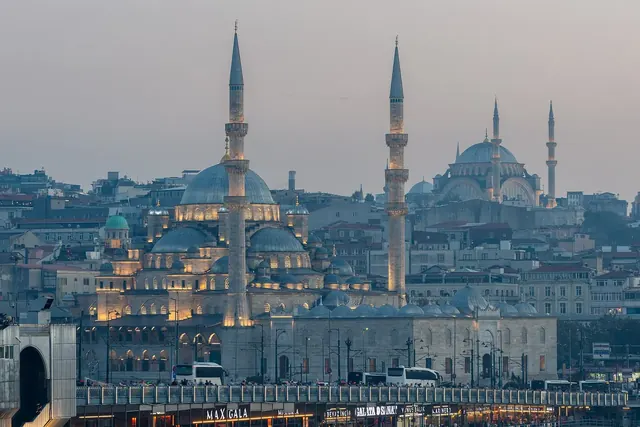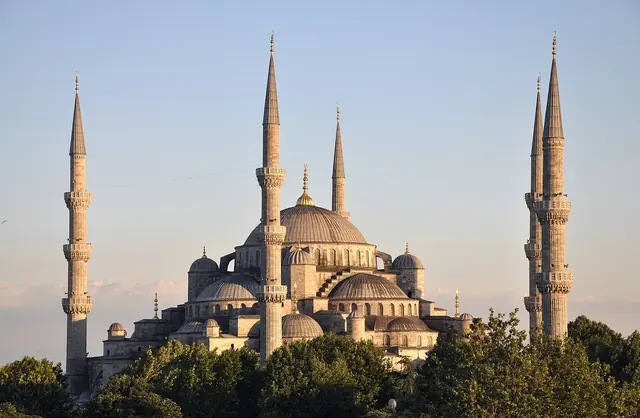
A mosque is a building where Muslims pray together, and in an Ottoman mosque every element has a job and a meaning. The mihrab points to Mecca, the minbar is for the Friday sermon, the minaret carries the call to prayer and the courtyard fountain serves ablutions. Once you can name the parts, every mosque visit in Istanbul becomes a lesson in reading architecture.
On this page7
Masjid and cami: what the words tell you
Masjid, Arabic for “place of prostration”, is the root of the English word mosque, which reached English via Spanish. Turks use cami (from the Arabic for “that which gathers”) for larger mosques with a pulpit where the Friday prayer is held, and mescit for small ones.
Strictly, a mosque needs very little: a clean floor and a known direction of prayer. Domes, minarets and tiles are a layer of beauty added over centuries on top of that simple need.
The mihrab: a niche that points to Mecca
The mihrab is the niche in the wall that marks the qibla, the direction of the Kaaba in Mecca, which Muslims everywhere face in prayer. From Istanbul it lies roughly to the south-east. The imam leads the prayer standing in or just in front of it.
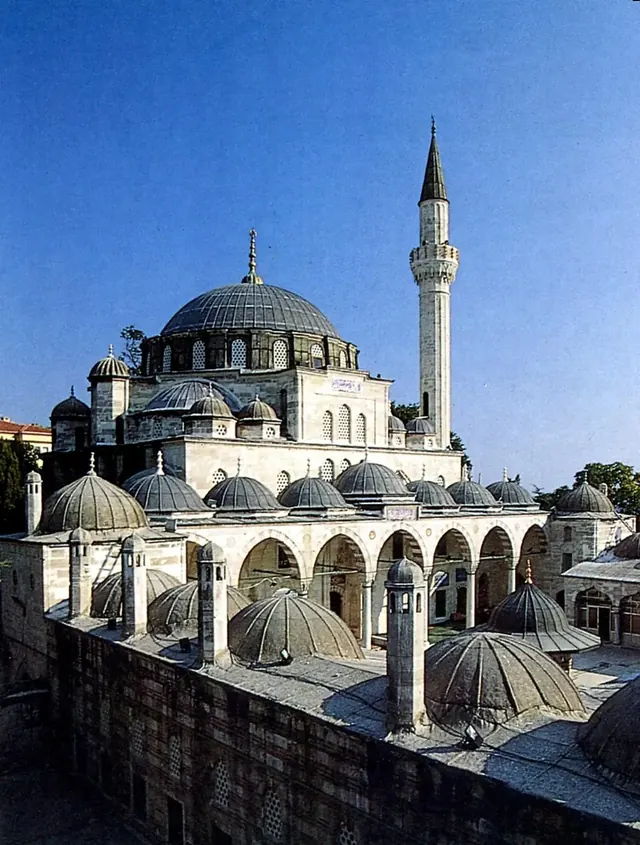
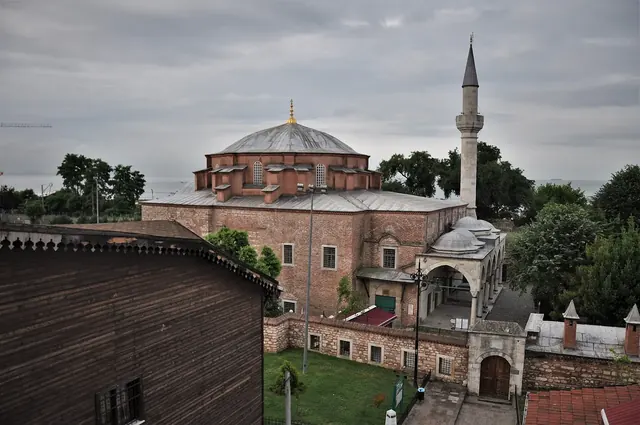
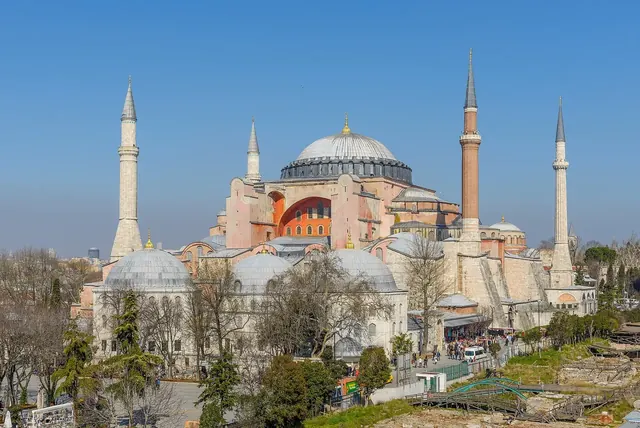
In former churches you can actually see the adjustment: in Hagia Sophia and in our neighbour the Little Hagia Sophia, the mihrab sits slightly off-centre in the east-facing apse, and the carpets run at an angle to the walls. In the Sokullu Mehmet Pasha Mosque, a small stone fragment set above the mihrab is said to come from the Black Stone of the Kaaba.
Minbar, kürsü and the raised galleries
- Minbar: the tall, steep staircase-pulpit to the right of the mihrab, from which the imam delivers the sermon (hutbe) at Friday and Eid prayers. The top step is traditionally left empty out of respect for the Prophet. Sokullu's marble minbar with its tiled cone is one of the loveliest.
- Kürsü: a lower, often wooden seat from which a preacher gives a teaching talk (vaaz), usually before the prayer and separate from the Friday sermon.
- Müezzin gallery: a raised platform where the muezzins relay the imam's words to the congregation; before loudspeakers it carried the voice to the back rows of vast halls.
- Imperial loge (hünkâr mahfili): a screened private gallery for the sultan in imperial mosques. The Blue Mosque and Yeni Cami both have one, reached from an attached royal pavilion.
- Women's section: the area where women pray, sometimes an upper gallery, sometimes the rear of the main hall behind a screen.
Minarets and balconies: why six minarets?
The minaret is the slender tower from which the call to prayer is given; the balconies around it are called şerefe. Today the adhan usually goes out through loudspeakers, but minarets remain each mosque's signature on the skyline.
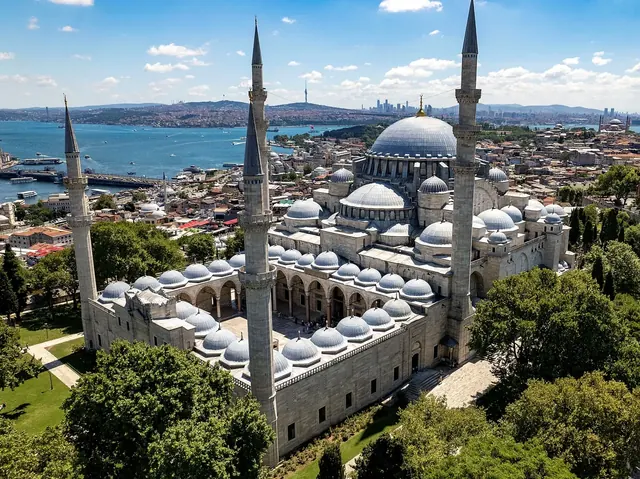
In Ottoman custom, more than one minaret was generally reserved for mosques founded by sultans and members of the dynasty, while a vizier's mosque such as Rüstem Pasha or Sokullu had just one. That makes the six minarets of the Blue Mosque a bold statement for its time. The ten balconies on the four minarets of Süleymaniye are traditionally said to mark Süleyman as the tenth Ottoman sultan.
The dome: bringing the sky inside
The soul of the Ottoman mosque is its great central dome, sheltering the whole congregation as one. Hagia Sophia's sixth-century dome was both inspiration and challenge for Ottoman architects, and Mimar Sinan's Süleymaniye is one of the high points of that quest.
Together with half-domes and rows of windows, the dome creates a single uninterrupted, light-filled space where everyone in the rows faces the same way under the same canopy. To see Sinan's work in sequence, follow our Mimar Sinan route.
Courtyard, ablution fountain and the outer portico
Large mosques are fronted by an arcaded courtyard. The fountain at its centre, the şadırvan, was built for ablutions; in many mosques today the working taps line the outside of the courtyard walls, and the central fountain is mostly ornamental.
The porch in front of the main door is called the son cemaat yeri, literally “place of the last congregation”, because latecomers and overflow crowds pray there. It is also a pleasant shady spot to pause before taking off your shoes.
The külliye: a neighbourhood around the mosque
A great Ottoman mosque was rarely built alone. It stood at the centre of a külliye, a complex with religious schools, a soup kitchen, a hospital, a bathhouse, a library, a primary school, fountains and the founder's tomb, all funded by a charitable endowment (vakıf).
Süleymaniye is among the most complete surviving examples, while the old student cells around the courtyard of Little Hagia Sophia show the same idea on a modest scale. Read more in our guide to külliye and vakıf culture.
Frequently asked questions
Do I need to perform ablutions before entering?
No. Ablution is for Muslims who are going to pray. Visitors just need to remove their shoes and dress modestly; see our mosque etiquette guide.
Can I walk up to the mihrab and minbar?
During tourist visiting hours the front of the prayer hall is usually roped off for worshippers. You can see the mihrab and minbar clearly from behind the barrier; please do not cross it.
Why are there no pews or chairs?
Prayer involves standing, bowing and prostrating, so it needs an open carpeted floor. A few chairs are usually kept at the back for elderly or unwell worshippers. The movements are explained in our guide to Muslim prayer.