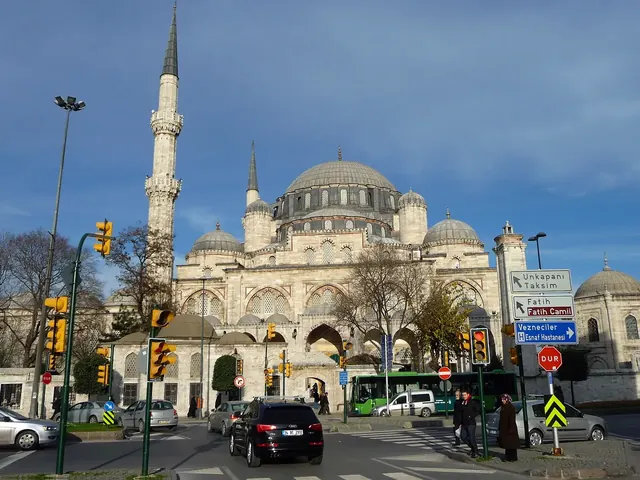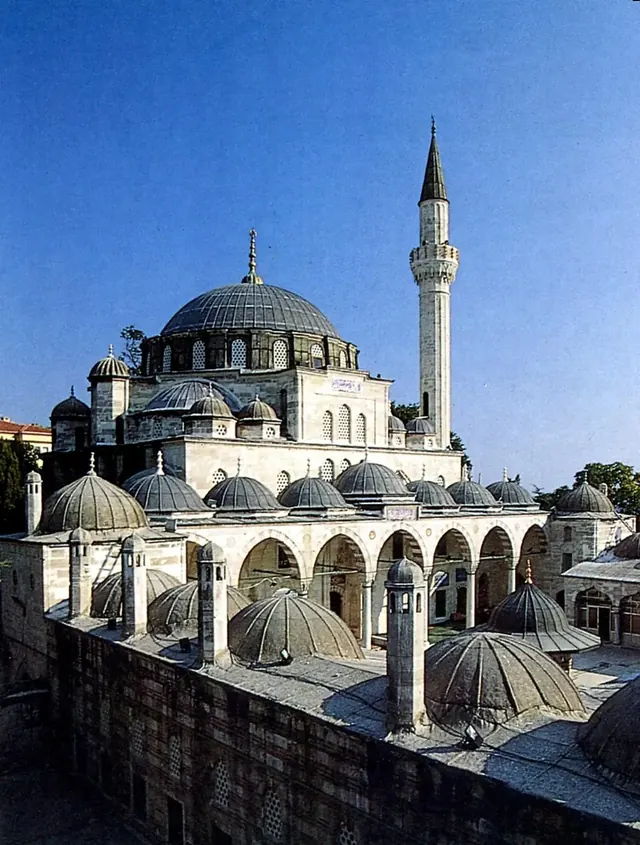
Mimar Sinan shaped Istanbul's skyline as chief architect of the Ottoman Empire for about half of the 16th century. This route starts at the Sokullu Mehmed Pasha Mosque, a few steps from our hotel in Küçük Ayasofya, and follows his development through the Şehzade Mosque, Süleymaniye and Rüstem Pasha in a single day, with an optional extension to his two Mihrimah Sultan mosques in Üsküdar and Edirnekapı.
On this page6
Half a century of one architect
Born near Kayseri in central Anatolia, Sinan was brought to Istanbul through the devshirme levy, trained as a soldier and military engineer in the Janissary corps and was appointed chief court architect in the late 1530s. He held the post until his death around 1588. Sources credit him with hundreds of works: mosques, madrasas, bathhouses, bridges and waterworks.
A saying attributed to Sinan gives this route its spine: the Şehzade Mosque was his apprentice work, Süleymaniye his journeyman work and the Selimiye in Edirne his masterpiece. The Selimiye lies outside Istanbul, but you can see the first two stages, plus some of his most refined small-scale work, in one day.
Morning: the neighbourhood's jewel and Sinan's traces in Sultanahmet
- Sokullu Mehmed Pasha Mosque (a few minutes' walk through the neighbourhood): built in the early 1570s for the grand vizier Sokullu Mehmed Pasha and his wife Esmahan Sultan. Reached by stairs beneath its madrasa courtyard on a steep slope, it shows how Sinan solved a difficult site. The İznik tiles and fragments said to come from the Kaaba make it small but flawless.
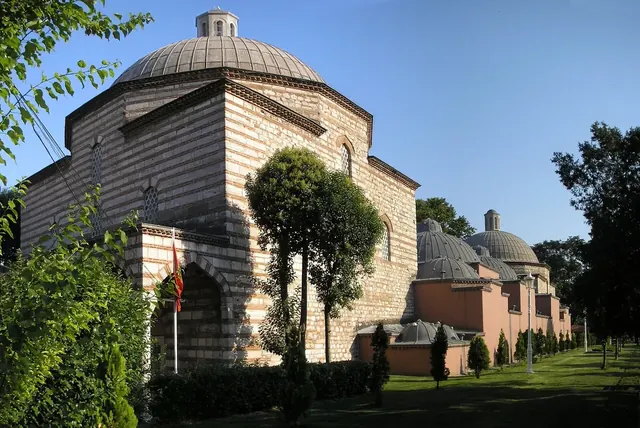
- Walk uphill to the Haseki Hürrem Sultan Hammam between Hagia Sophia and the Blue Mosque (about 10 minutes). Built for Hürrem Sultan in the mid-1550s, this double bathhouse with mirrored men's and women's sections is one of Sinan's most elegant hammams. It operates as a bathhouse again today; if you are curious about the experience, read our hammam guide.
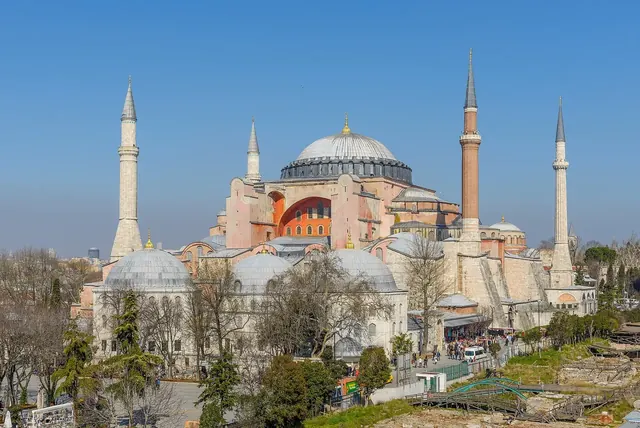
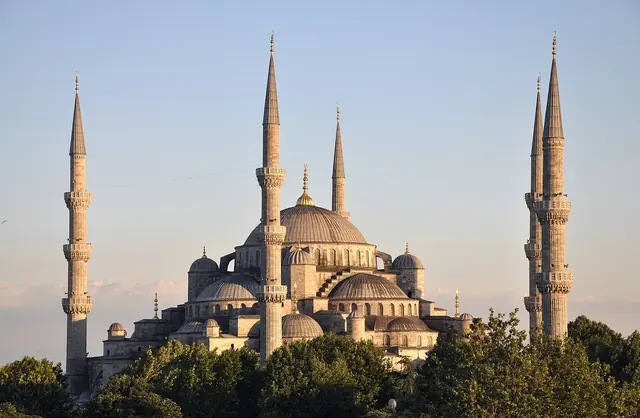
- Next door, the tomb of Selim II in the Hagia Sophia garden is also attributed to Sinan. Across the square, the Blue Mosque is the work of his pupil Sedefkâr Mehmed Ağa, who applied, on a grand scale, the four-half-dome plan his master had tested at Şehzade.
Midday: the apprentice work, Şehzade Mosque
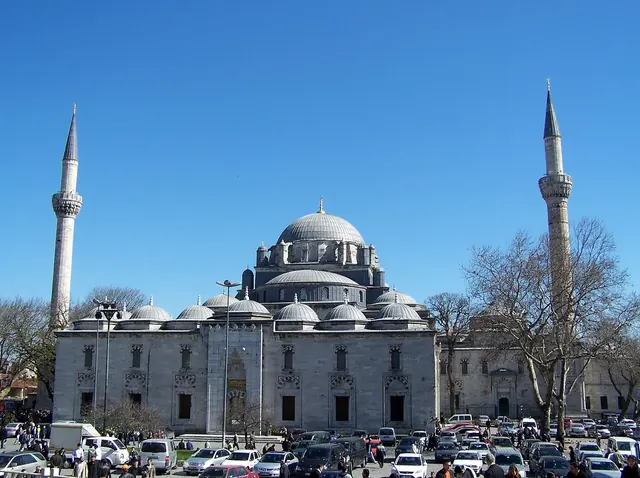
- Take the T1 tram to Beyazıt. On the way, look at the Beyazıt Mosque, a classic of the generation before Sinan and a useful point of comparison.
- Walk from Beyazıt to Şehzadebaşı (10 to 15 minutes). The Şehzade Mosque was built in the 1540s in memory of Suleiman's son Prince Mehmed, who died young. Its perfectly symmetrical plan, with a central dome ringed by four half-domes, was the young Sinan's bold experiment.
- Explore the courtyard and the tombs in the garden, then have lunch at one of the simple canteens nearby.
Afternoon: the journeyman work at Süleymaniye and the tiles of Rüstem Pasha
- Walk from Şehzade toward Süleymaniye (10 to 15 minutes). Süleymaniye Mosque (1550 to 1557) is not just a mosque but a whole complex of madrasas, hospital, soup kitchen and bathhouse. Take time for the light beneath the dome, the acoustics that carry the silence, and the garden above the Golden Horn.
- On a modest triangular plot at the complex's northwest corner, find Mimar Sinan's own tomb. The simple grave of the man who built some of the largest structures of his age is the most moving moment of the route.
- Wind downhill through the historic market streets to Rüstem Pasha Mosque (about 15 minutes). Raised above a row of shops and completed in the early 1560s, it is lined inside and on its portico with one of the richest collections of İznik tiles anywhere. Look closely at the tulip, carnation and pomegranate motifs.
- Finish in Eminönü or carry on with the extension. If you want to combine this with the classic old-city sights, day two of our two-day itinerary follows part of the same path.
Extension: two Mihrimah Sultan mosques on two shores
Sinan built two mosques for Mihrimah Sultan, Suleiman's daughter, and together they show two different stages of his career. Legend has it that Sinan's admiration for Mihrimah is reflected in the play of light between them; the story cannot be proven, but the buildings are persuasive on their own.
- In Üsküdar: take the ferry from Eminönü and the Mihrimah Sultan (İskele) Mosque greets you opposite the pier. An early work from the 1540s, it opens toward the sea with a broad portico.
- At Edirnekapı: on one of the city's highest hills beside the land walls, the Edirnekapı Mihrimah Sultan Mosque was completed in the 1560s. Its walls are almost entirely windows and the interior is flooded with light all day. It pairs easily with a visit to Chora.
Reading Sinan's architectural language
- Dome and light: rows of windows around the base of the dome make it look as if it floats rather than rests.
- The complex idea: a mosque was conceived together with its school, hospital, soup kitchen and bathhouse as the heart of a neighbourhood.
- Dialogue with the site: the slope at Sokullu, the ridge above the Golden Horn at Süleymaniye and the bustle of the market at Rüstem Pasha are all part of the design.
- Visiting etiquette: most buildings on this route are working mosques. Visits are not possible during prayer times, especially at Friday noon; see our mosque etiquette guide for dress rules.
Frequently asked questions
What is Mimar Sinan's most important building in Istanbul?
The Süleymaniye Mosque and its complex are his largest and best-known work in the city. For tile lovers, Rüstem Pasha is just as impressive, and Sokullu Mehmed Pasha is a perfect balance of scale and detail.
Where is Mimar Sinan buried?
In a simple tomb he designed himself at the northwest corner of the Süleymaniye complex. It is a few minutes' walk from the mosque entrance.
Can I do this route on a Friday?
Yes, with a different order: be at a non-mosque stop such as the hammam exterior, the tram ride or lunch during the midday prayer, and save Süleymaniye for the afternoon.
Did Mimar Sinan build the Blue Mosque?
No. The Blue Mosque was built between 1609 and 1616 by Sinan's pupil Sedefkâr Mehmed Ağa. Its plan clearly echoes the layout his master used at the Şehzade Mosque.