Hearing the call to prayer five times a day or stepping into a mosque for the first time naturally raises questions. Here we answer the ones our guests ask us most, based on the Sunni Hanafi practice that is common in Türkiye, in plain and neutral language. The aim is not to persuade anyone but to help you make sense of what you see and hear in Istanbul.
On this page11
What is Islam, and who is Allah?
The word Islam comes from the Arabic root s-l-m, linked to “submission” and to “peace”; a Muslim is “one who submits to God”. At its heart is a firm belief in one God, called tawhid.
“Allah” is simply the Arabic word for God, used by Arabic-speaking Christians too. Islam honours Abraham, Moses and Jesus as prophets of God, and Muslims see their faith as the continuation of that same line of prophets rather than a completely separate tradition.
What are the five pillars of Islam?
The core practices of a Muslim are traditionally summed up as five pillars:
- Shahada (declaration of faith): sincerely affirming “There is no god but God, and Muhammad is His messenger”.
- Salah (prayer): five daily prayers with set words and movements.
- Sawm (fasting): no food, drink or intimacy from dawn to sunset throughout the month of Ramadan.
- Zakat (almsgiving): those whose savings exceed a set threshold for a full year give a share, usually one-fortieth, to people in need.
- Hajj (pilgrimage): a once-in-a-lifetime pilgrimage to Mecca for those physically and financially able, during the Islamic month of Dhu al-Hijjah.
What does “Allahu Akbar” mean?
It means “God is the Greatest”, that is, nothing is greater than God. It opens the call to prayer, it begins every prayer, and it is chanted together in mosques on the mornings of the two Eids.
In everyday life Muslims also say it to express wonder, joy or gratitude. You will hear it many times a day in the call to prayer; our guide to the adhan explains the rest of the words line by line.
Why do Muslims pray five times a day?
The five daily prayers are an obligation based on the Qur'an and the example of Prophet Muhammad. According to Islamic tradition they were prescribed during the Prophet's night journey, known as the Mi'raj.
Prayer times follow the sun rather than the clock: dawn, just after midday, mid-afternoon, sunset and nightfall. That is why they shift through the year. Many Muslims describe them as five pauses that pull the day back to God. More in our guide to Muslim prayer.
What is the Qur'an, and why is it recited in Arabic?
Muslims believe the Qur'an is the word of God, revealed to Muhammad through the angel Gabriel over about 23 years. It has 114 chapters (suras) and was revealed in Arabic.
Because Muslims regard the Arabic wording itself as divine, prayers are recited in the original Arabic everywhere in the world. Translations are valued but treated as interpretations of the meaning. Most Turkish Muslims do not speak Arabic; they memorise short suras for prayer and learn their meaning from translations.
Who was Prophet Muhammad?
Muhammad was born in Mecca around 570 CE. Muslims believe he received his first revelation around 610 and that he is the last of the prophets. His migration to Medina in 622, the Hijra, marks year one of the Islamic calendar; he died in Medina in 632.
When Muslims mention him they add a blessing, “peace be upon him”. Mosques contain no images of him or of any prophet. Relics associated with him are kept in the Holy Relics chamber of Topkapı Palace; see our Holy Relics guide.
Why are there no pictures in mosques, and what do the big round panels say?
Sunni tradition avoids images of people and animals in places of worship, so decoration relies on calligraphy, tiles and geometry. The large round panels in Istanbul mosques usually read Allah, Muhammad and the names of the first four caliphs, Abu Bakr, Umar, Uthman and Ali, often joined by the Prophet's grandsons Hasan and Husayn.
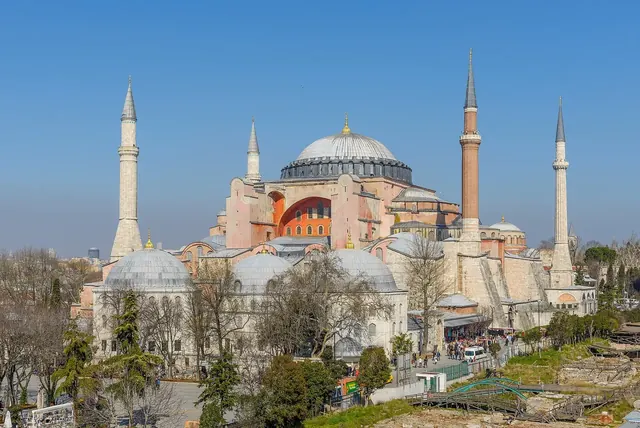
The giant roundels in Hagia Sophia are the most famous example; domes and friezes usually carry verses from the Qur'an. Our guide to reading mosque walls goes deeper.
Can non-Muslims visit mosques?
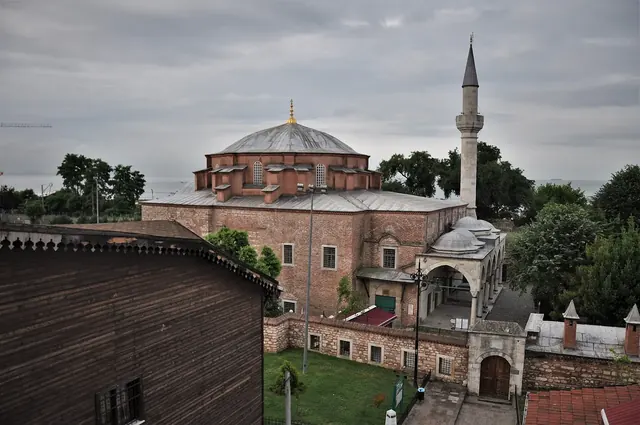
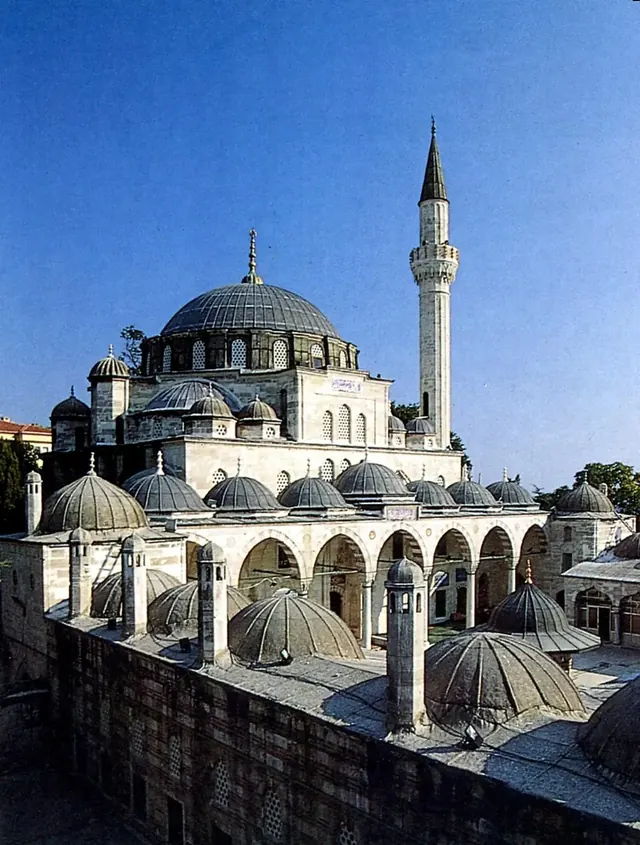
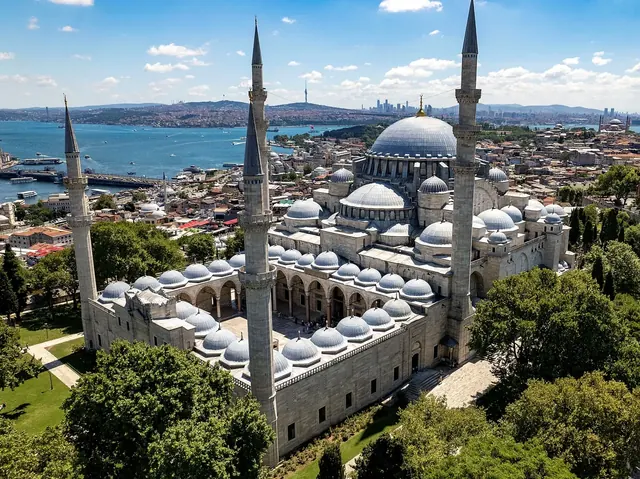
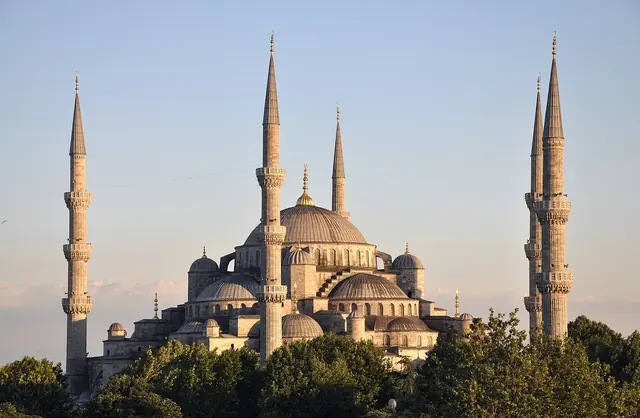
Yes. Istanbul's mosques welcome visitors of every faith outside prayer times, and entry is generally free. The Blue Mosque, Süleymaniye and the Little Hagia Sophia right beside our hotel receive visitors all day.
What is asked is respect: shoes off, shoulders and knees covered, hair loosely covered for women, quiet voices and no photos of people praying. Our mosque etiquette guide has the full checklist.
Why take off shoes, and why do women cover their hair?
Prayer is performed directly on the carpet, with the forehead touching the floor, so the prayer hall is kept clean and shoes stay at the door. You will find plastic bags or shelves for them at the entrance.
Muslim women cover their hair when they pray, and visiting women are asked to do the same inside as a sign of respect for the space; large mosques lend scarves at the door. Outside the mosque, wearing a headscarf in Türkiye is a personal choice, so you will see women with and without one walking side by side.
What is Ramadan?
Ramadan is the ninth month of the Islamic lunar calendar, during which Muslims fast from dawn to sunset. It is believed to be the month in which the Qur'an began to be revealed. Because the lunar year is shorter, Ramadan moves about 11 days earlier every year.
Our Ramadan and fasting guide explains the meaning of the fast and customs such as iftar, tarawih and the mahya lights.
What does halal mean?
Halal means “permitted”; its opposite is haram, “forbidden”. The best-known examples concern food: pork and alcohol are forbidden, and other meat should come from animals slaughtered in a prescribed way. But the idea reaches far beyond the kitchen, to earning, trade and conduct.
The vast majority of restaurants in Türkiye do not serve pork. For practical detail see our halal guide.
Frequently asked questions
Is it all right to walk in front of someone who is praying?
Try not to cross directly in front of a person praying, within the space where they bow down. Walk around behind them or wait a moment; if you do it by accident, nobody will mind.
What are the bead strings people hold?
They are prayer beads (tesbih), usually with 33 or 99 beads, used to count short phrases of remembrance such as “Subhanallah” and “Alhamdulillah” after prayer. Many people also simply fidget with them out of habit.
Is Friday a day off in Türkiye?
No, the weekend is Saturday and Sunday. On Friday around midday, men go to the mosque for the congregational Friday prayer, and big mosques close to sightseeing for a while. See our Friday prayer guide.
Is it rude to ask a Muslim about their faith?
A respectful, curious question is usually welcomed, and many people enjoy explaining their traditions. Just avoid starting conversations with people who are praying or sitting in worship inside a mosque.