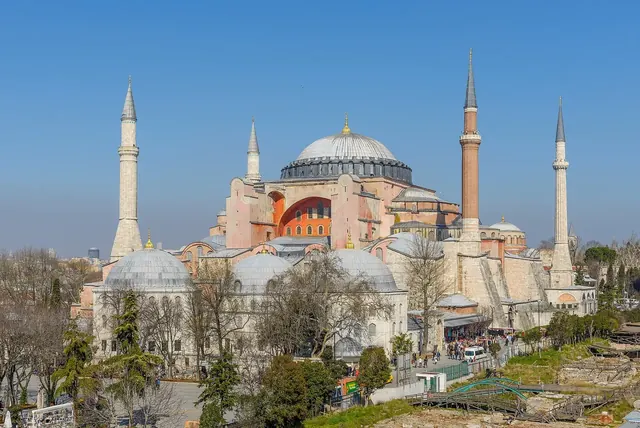
Topkapı Palace was the home of the Ottoman sultans and the seat of their government for nearly four centuries, begun by Mehmed II in the years after the 1453 conquest. It occupies the tip of the historic peninsula right behind Hagia Sophia, laid out as four successive courtyards, pavilions and the Harem. Between the Sacred Relics, the Treasury and terraces overlooking the Bosphorus and Golden Horn, it deserves at least half a day.
On this page5
Gates that lead ever deeper
Construction began around 1459 on the headland where ancient Byzantion's acropolis once stood, and the core was finished by about 1478. Rather than one building, the palace is a cluster of structures that grew over time, with each sultan adding his own pavilion, apartment or bath.
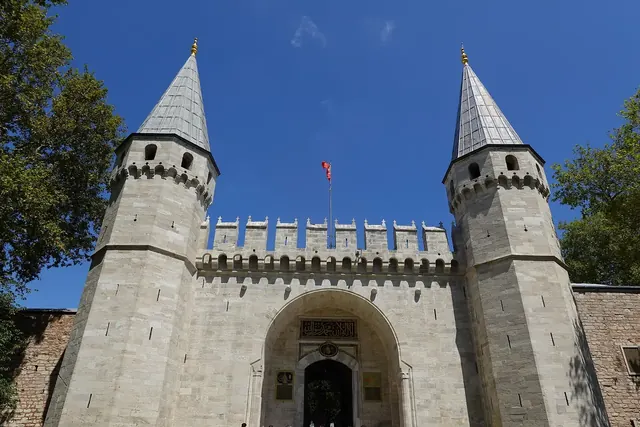
The layout moves from public to private. The Imperial Gate opens onto the first courtyard, which anyone could enter. The Gate of Salutation leads into the second courtyard, where the empire was administered. The Gate of Felicity marks the sultan's private world beyond. The court moved to Dolmabahçe Palace in 1856, and Topkapı became a museum in 1924.
Courtyard by courtyard
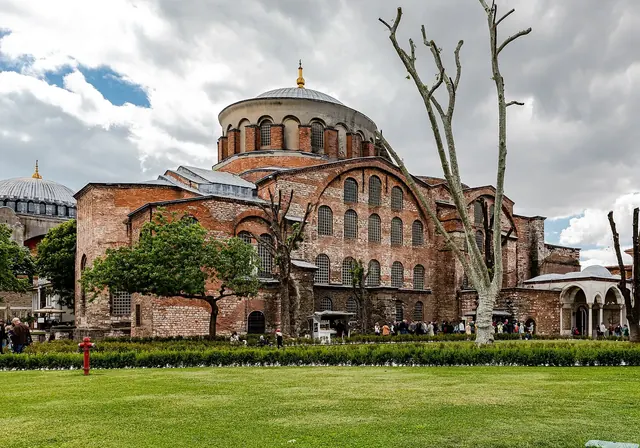
- First courtyard: A leafy open space with the Byzantine church of Hagia Irene and the old mint. Tickets are checked at the Gate of Salutation, so this area is free.
- Imperial Council Hall: Where viziers met under the domes. A latticed window high on the wall let the sultan listen unseen; the Tower of Justice rises beside it.
- Palace kitchens: Tall chimneys mark the kitchens, now home to one of the world's great collections of Chinese and Japanese porcelain.
- Audience Chamber: Just inside the Gate of Felicity, where the sultan received ambassadors and ministers.
- The Treasury: Look for the Spoonmaker's Diamond and the emerald-set Topkapı Dagger, made as a gift for Nader Shah of Persia and kept in the palace after his assassination.
- Sacred Relics: The mantle and standard of the Prophet Muhammad and other revered relics, often viewed to the sound of live Quran recitation.
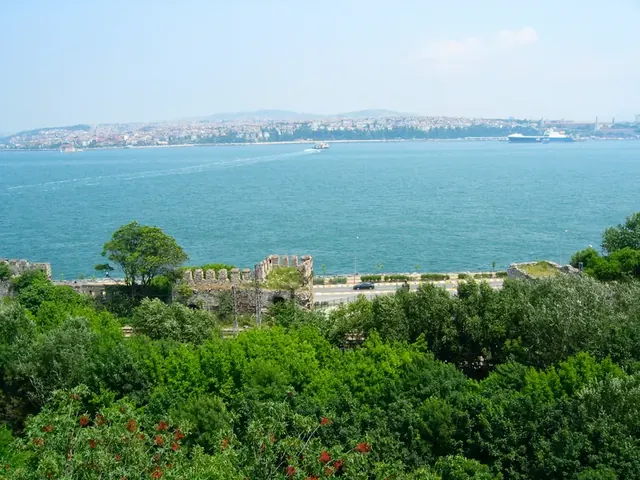
- Fourth courtyard: The Baghdad and Revan kiosks, the gilded iftar canopy and the tiled Circumcision Room, with sweeping views over the Golden Horn and Bosphorus.
The Harem needs its own ticket
The Harem was the private quarter of the sultan's family, a maze of corridors, courtyards and apartments, only part of which is open. The entrance is in the second courtyard and requires a separate ticket. Don't skip it: the Queen Mother's apartments, the domed Imperial Hall, the Privy Chamber of Murad III attributed to Sinan and the Twin Kiosks of the crown princes hold some of the finest tilework in Istanbul.
Our museum pass guide explains combined tickets and whether a pass is worth it for your itinerary.
Planning your visit
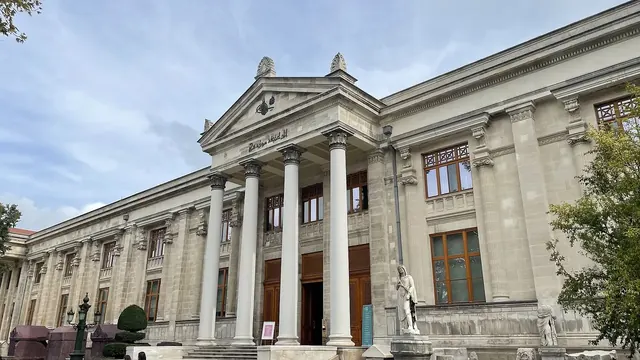
The palace closes one day a week and hours change with the season, so check the official website before you go. Head to the Harem first, as its queue grows by early afternoon, then continue to the third and fourth courtyards. The Sacred Relics room expects modest dress and quiet, and photography is not allowed there. Wear comfortable shoes for cobbles and steps. When you leave, Gülhane Park and the Istanbul Archaeology Museums are right next door.
Getting there from Sareban Hotel
Walking from our hotel is the nicest approach: cross the Hippodrome, pass Hagia Sophia and enter through the monumental Imperial Gate at the top of Soğukçeşme Street. If your legs are tired afterwards, the Gülhane and Sultanahmet stops on the T1 tram are a short stroll away.
Frequently asked questions
Is the Harem included in the Topkapı ticket?
Usually not; the Harem requires a separate ticket, although some combined tickets and passes include it. Check the current options on the official website.
How long does Topkapı Palace take?
Plan two and a half to three hours without the Harem, and close to four hours with it.
Where are the Sacred Relics?
In the Privy Chamber in the third courtyard. They are covered by the main palace ticket; photography is not allowed and modest dress is expected.
Is there food inside the palace?
There is a café-restaurant with a view in the fourth courtyard and small kiosks elsewhere, but it is wise to carry water.