Halal is an Arabic word meaning “permitted” or “lawful”, and in Islam it describes anything religiously acceptable; its opposite, haram, means forbidden. The idea is not limited to food: it touches earnings, behaviour and everyday speech. In Türkiye, halal food is the norm rather than a niche: virtually all meat is slaughtered according to Islamic practice, and pork is almost never encountered in daily life.
On this page7
Halal, haram and the grey area in between
Islamic law places actions on a scale between two ends: halal (permitted) and haram (forbidden). In between are makruh acts, discouraged though not forbidden, and doubtful matters whose ruling is unclear. A well-known saying of the Prophet explains that the lawful is clear and the unlawful is clear, and that whoever avoids the doubtful things in between protects their faith. That is why many Muslims prefer to be cautious when unsure.
The underlying principle is generous: everything is permitted unless there is a specific prohibition. The list of forbidden things is short and defined; everything else is allowed.
Halal beyond food: earnings, rights and everyday Turkish
The concept reaches well beyond the dinner table. Halal earnings are money made honestly, without cheating anyone or taking what is not yours, and they carry great weight in Islamic ethics. Income from theft, bribery or gambling is considered haram.
This way of thinking runs deep in everyday Turkish, and you will hear it often:
- “Hakkını helal et”: said when parting, before a long journey or when leaving a job. It means “If I have wronged you in any way, please forgive me.” The usual reply is “Helal olsun”.
- “Helal olsun!”: also used to mean “Well done!” or “Bravo!” You will hear it after a great goal in football or a delicious meal.
- “Ana sütü gibi helal”: “as lawful as mother's milk”, said of something completely deserved or honestly earned.
- Helalleşmek: when two people mutually forgive any rights they owe each other, often before a long parting.
Halal and haram in food: the basic rules
- Pork and pork products are haram, including lard and gelatin made from pigs.
- Alcoholic drinks and other intoxicants are haram.
- Blood and meat from animals that were not properly slaughtered are not eaten.
- Slaughter: permitted animals such as cattle, sheep, goats and chickens are slaughtered with a swift cut to the throat using a sharp knife while God's name is invoked, allowing the blood to drain. Avoiding cruelty to the animal before slaughter is part of the same rules.
- Seafood: fish is halal in all schools of Islamic law. Views differ between schools on other seafood such as prawns and mussels; in Türkiye they are widely eaten.
The animal sacrifice at Eid al-Adha follows the same rules; our article on the two Eids explains the traditions.
Halal food in Türkiye: the everyday norm
In a country whose population is overwhelmingly Muslim, virtually all red meat and poultry sold by butchers, supermarkets and restaurants is slaughtered according to Islamic practice. Pork is very rare, sold only in a few specialist outlets and clearly labelled; you are highly unlikely to encounter it in an ordinary restaurant or grocery store.
There is also a formal halal certification system, used especially for exports and for consumers who want extra assurance. Türkiye has an official body that accredits halal certifiers, and you will see halal logos on many packaged foods. Certification is voluntary: most local products without a logo are still halal, but the logo is a handy signal if you want certainty.
Questions visitors often ask
- Gelatin: gummy sweets, jellies and marshmallows made in Türkiye usually use beef gelatin, while Turkish delight is traditionally set with starch. Look for “sığır jelatini” (beef gelatin) or a halal logo on the label; imported products may differ.
- Alcohol in food: traditional Turkish cooking very rarely uses alcohol. In international cuisines, watch out for wine sauces and some cakes and desserts; if unsure, ask “İçinde alkol var mı?” (“Does it contain alcohol?”).
- Vinegar: vinegar, in which alcohol has been transformed through fermentation, is considered halal by the great majority of scholars and is common in Turkish food.
- For vegetarians: some vegetable dishes and soups are cooked with meat stock. Asking “Etsiz mi?” (“Is it meat-free?”) or “Et suyu var mı?” (“Is there meat stock?”) helps.
- Medicines and cosmetics: capsules may contain gelatin and some products contain alcohol. Halal certification now appears on cosmetics and personal care products too.
Practical dining tips in Istanbul
For Muslim travellers, Istanbul is one of the easiest cities in the world to eat halal. The one thing to keep in mind is alcohol: some restaurants in tourist areas serve it. If you prefer an alcohol-free setting, traditional esnaf lokantası (tradesmen's canteens serving home-style dishes), kebab houses, pide bakeries, soup restaurants and dessert shops usually do not serve alcohol; check the menu or simply ask. Neighbourhoods such as Fatih and Zeyrek and Üsküdar have an especially high share of alcohol-free places.
Non-Muslim visitors can enjoy every dish in the city with no special precautions, since the food on the table is halal anyway. It simply helps to know that alcohol is not available everywhere, and that drinking in public near mosques or in conservative neighbourhoods is frowned upon. During Ramadan restaurants stay open, but being considerate towards people who are fasting is a kind gesture.
Where to start
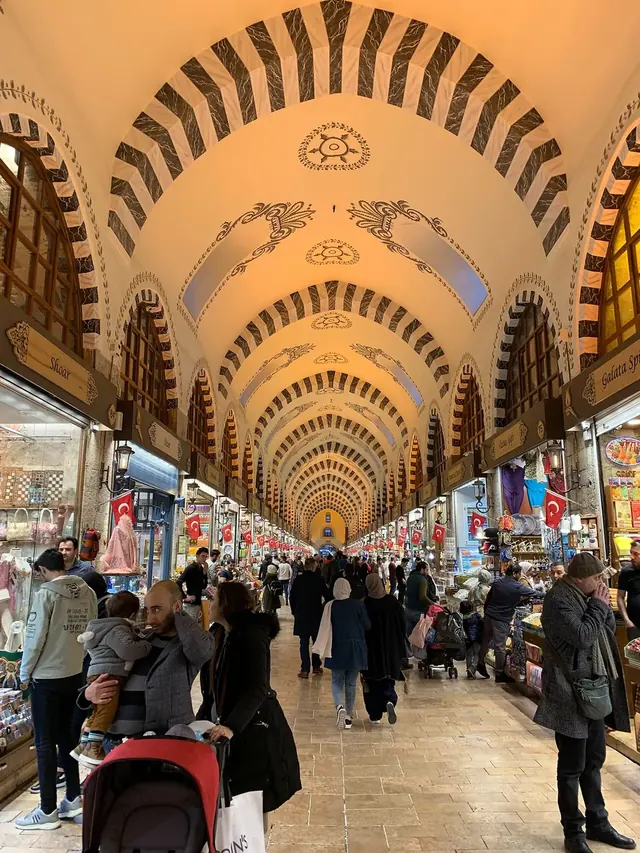
For an overview of Turkish cuisine, read our Istanbul food guide; for snacks on the go, see Istanbul street food; and for sweets, our guide to Turkish desserts. The Spice Bazaar is a fun place to pick up Turkish delight and spices. For prayer spaces and halal travel in general, see Istanbul for Muslim travellers.
A note for families who look for the same care in their accommodation: our hotel is designed as an alcohol-free, family-friendly boutique hotel.
Frequently asked questions
Is the meat in Türkiye halal?
Yes, virtually all meat sold by butchers, supermarkets and restaurants in Türkiye is slaughtered according to Islamic practice. For extra assurance, look for a halal logo on packaged products.
Is pork sold in Istanbul?
Only very rarely, in a few specialist outlets where it is clearly labelled. You are highly unlikely to come across it in ordinary restaurants or supermarkets.
Is the gelatin in Turkish sweets halal?
Products made in Türkiye usually use beef gelatin. Check the label for “sığır jelatini” or a halal logo, as imported products may differ.
How can I find an alcohol-free restaurant?
Traditional tradesmen's canteens, kebab houses, pide bakeries and dessert shops usually do not serve alcohol. To be sure, ask “Alkol servisi var mı?” (“Do you serve alcohol?”).