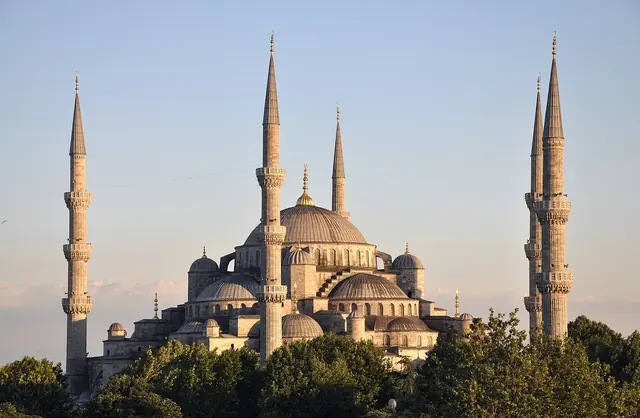
Ramadan is the ninth month of the Islamic lunar calendar, when Muslims fast from first light until sunset. The fast is not only about hunger: it is a practice of self-discipline, of empathy with people in need and of gratitude for everyday blessings. In Istanbul the month has its own atmosphere of pre-dawn drummers, shared iftar tables, packed night prayers and messages in lights strung between minarets.
On this page8
Why Muslims fast: discipline, empathy, gratitude
Fasting (sawm) is one of the five pillars of Islam. The Qur'an says it was prescribed for Muslims as it was for earlier communities, so that they may grow in taqwa, a mindful awareness of God.
From dawn to the sunset call, a fasting person takes no food or drink (not even water), does not smoke and abstains from intimacy. Yet many Muslims say the real challenge is holding one's tongue and temper. Hunger during the day is meant to build empathy with the poor, and the first sip of water at sunset to remind you what the most ordinary blessings are worth.
Who does not fast?
Fasting is required of adult Muslims who are healthy and of sound mind. In general terms, the following are exempt or may postpone it:
- Children before puberty; many families let them try half-day fasts for practice.
- The ill, if fasting would harm them; they make up the missed days after recovering.
- Travellers, who may postpone the fast and make it up later.
- Pregnant and nursing women, if they fear harm to themselves or the baby, making up the days later.
- Women during menstruation, who make up the days afterwards.
- The elderly and chronically ill who cannot fast; they give fidya, feeding a person in need for each day missed.
A month that moves 11 days a year
The Islamic calendar follows the moon, and a lunar year is about 11 days shorter than a solar one. So Ramadan starts roughly 11 days earlier each year and travels through all the seasons in about 33 years.
That changes the length of the fast too: it is short in a winter Ramadan but can exceed 17 hours in Istanbul in midsummer. In Türkiye the start and end dates are set in advance in the official calendar of the Diyanet, so if you are planning a trip, check the dates for your year.
Sahur and the Ramadan drummers
Sahur is the meal eaten in the last hours of the night, before the fast begins. People favour light but filling food, plenty of water and tea; the Prophet is reported to have encouraged it.
One of Istanbul's best-loved Ramadan traditions is the davulcu, the drummer who walks the neighbourhood streets before sahur, beating a drum and singing rhymes to wake people up. Even in the age of alarm clocks the custom survives, and at the end of the month drummers knock on doors for tips. Staying in the old city, you may well hear a drum in the small hours.
Iftar: the table that opens at sunset
Iftar is the breaking of the fast at the sunset call to prayer. Following the Prophet's example, many break it with a date or a sip of water, followed by soup, olives, cheese, the round Ramadan flatbread (Ramazan pidesi) and main dishes. Güllaç, a light dessert of paper-thin sheets soaked in milk, belongs to this month.
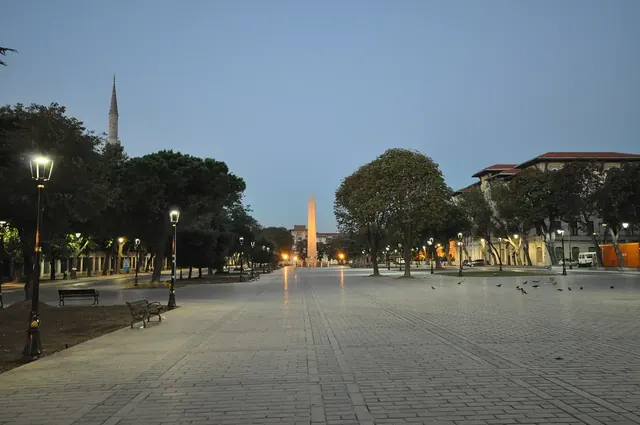
Just before sunset the city is at its busiest, with queues for fresh pide at bakeries and heavy traffic. When the call sounds, the streets fall suddenly quiet. For public iftar tables and Ramadan events on Sultanahmet Square, see Ramadan in Istanbul.
Tarawih prayers and the Night of Power
On Ramadan nights, after the night prayer, congregations pray tarawih (teravih). In Hanafi practice it is twenty units, and some mosques recite a portion of the Qur'an each night so the whole book is completed over the month.
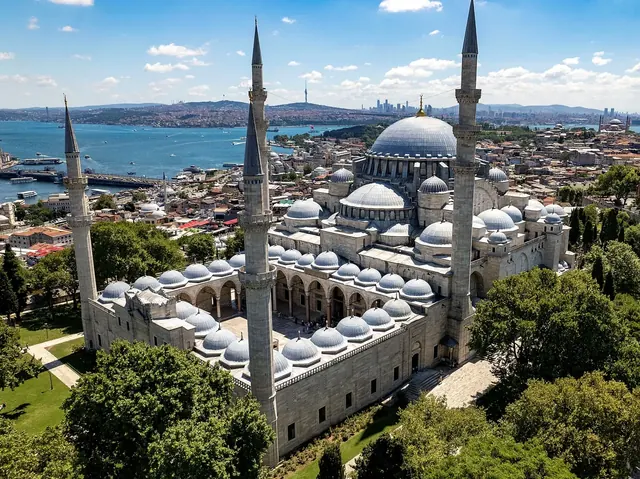
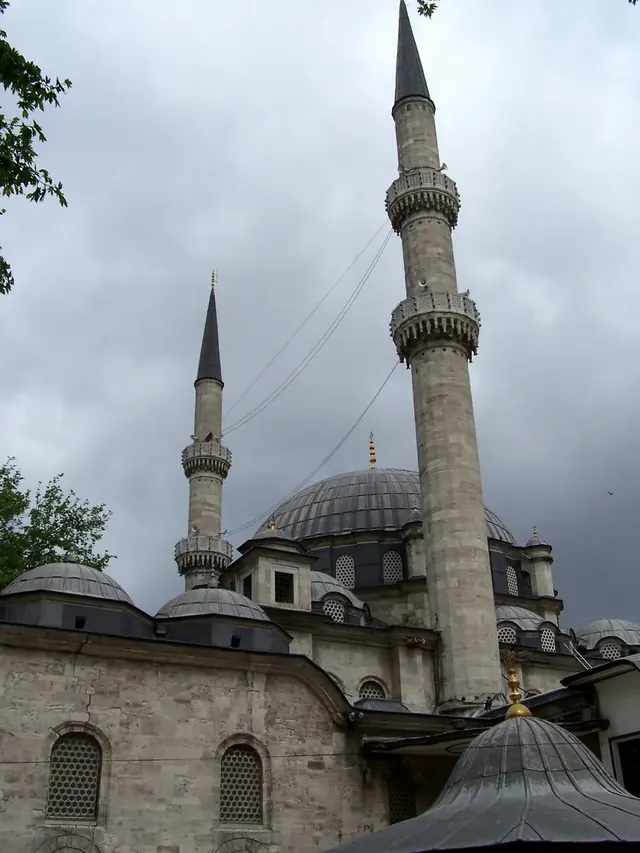
Mosques such as the Blue Mosque, Süleymaniye and Eyüp Sultan overflow into their courtyards. The Night of Power (Kadir Gecesi), believed to be the night the Qur'an's revelation began, falls in the last ten nights and is observed in Türkiye on the 27th night; see holy nights and kandils.
Mahya: messages in light between minarets
Mahya is the art of writing words or drawing pictures in the sky with lights strung on ropes between two minarets, a tradition peculiar to Ottoman Istanbul. According to tradition the first mahyas were hung in the early 17th century. Oil lamps have given way to bulbs, but the craft is still in the hands of a few masters.
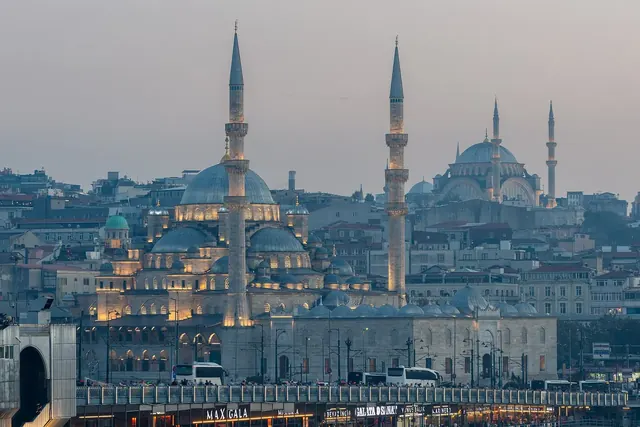
Because a mahya needs at least two minarets, you will mostly see them on imperial mosques. On Ramadan nights, greetings such as “Welcome, Ramadan” or short reminders about sharing and compassion glow between the minarets of the Blue Mosque, Süleymaniye and Yeni Cami.
Tips for visiting Istanbul in Ramadan
- Restaurants, cafés and museums stay open; it is completely normal for non-fasting visitors to eat and drink.
- Eating discreetly on the street, near mosques and on public transport is appreciated as a courtesy, but it is not required.
- Traffic and transport get very busy in the hour before iftar, and restaurants fill up at sunset, so plan dinner ahead.
- An iftar invitation is a real gesture of hospitality. Saying “Hayırlı Ramazanlar” (blessed Ramadan) is always warmly received.
- Ramadan ends with the three-day Eid al-Fitr, when the city can get very crowded; see our Eid guide.
Frequently asked questions
Do non-Muslim tourists have to fast during Ramadan?
No. Fasting is a religious practice for Muslims. Visitors eat and drink normally; a little discretion in crowded places and near mosques is simply seen as good manners.
Are mosques open to visitors in Ramadan?
Yes, outside prayer times. After the night prayer, tarawih crowds make sightseeing visits generally impossible, so go during the day.
Is Ramadan a good time to visit Istanbul?
For many visitors, yes: evenings are lively and you experience iftar, tarawih and mahya lights, which you cannot see at other times. Daytime is a little quieter, while the hour before iftar is busy on the roads.