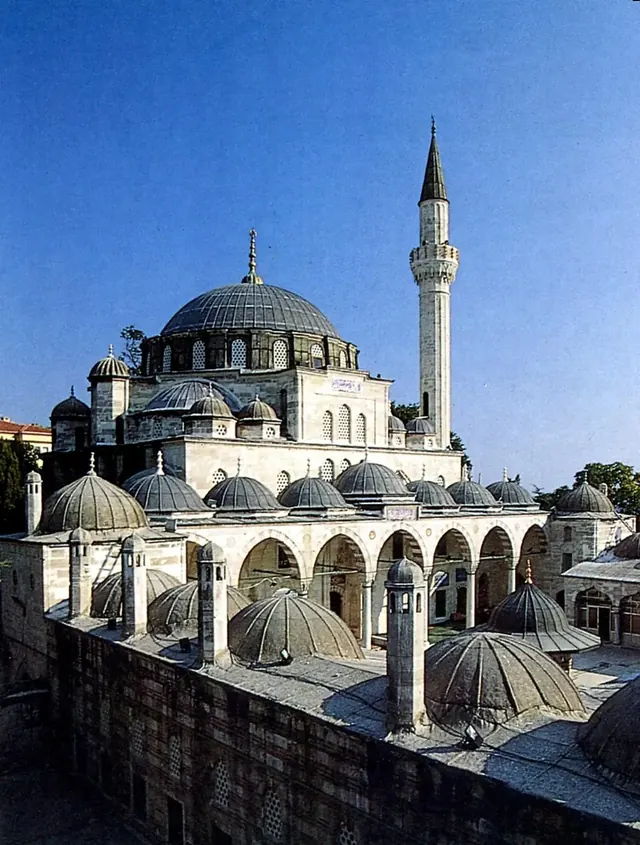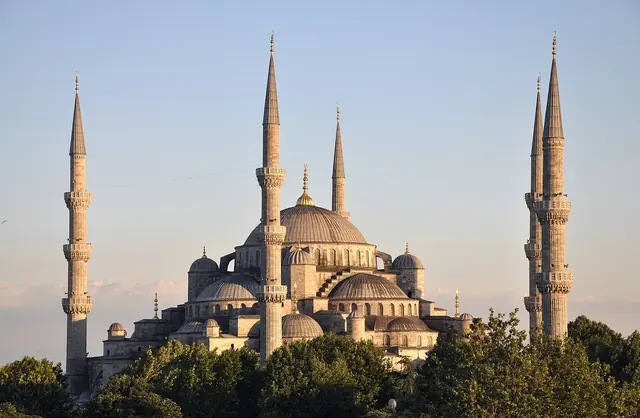
Istanbul's mosques welcome everyone, and visitors of any faith can go inside outside prayer times to admire the architecture up close. In return, you are asked to follow a few simple courtesies suited to a place of worship: covered clothing, shoes off, quiet voices and respect for people praying. We wrote this guide for guests who are visiting a mosque for the first time and want to get it right.
On this page7
Quick answer: who can go in, and is it free?
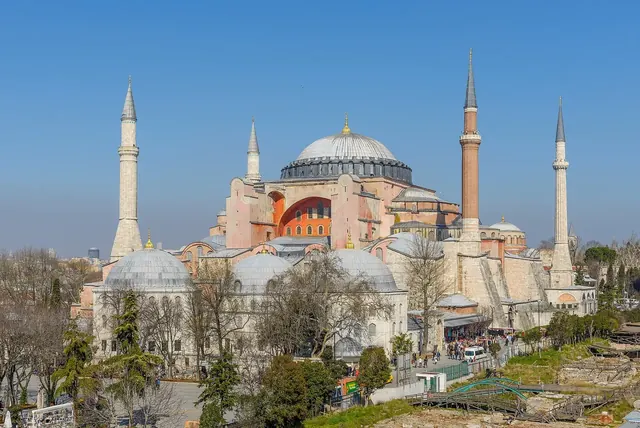
Mosques are open to people of all faiths and entry is, as a rule, free. The one major exception is Hagia Sophia: since becoming a mosque again in 2020, worshippers use the ground-floor prayer area while foreign visitors follow a separate, ticketed route to the upper gallery. Kariye (Chora), converted in the same way, also separates the visitor route from the prayer space. Check the current arrangement at the door.
You will see donation boxes near the entrances. Giving is entirely optional and helps with upkeep.
What to wear: women and men
- Women: Cover your hair with a scarf or shawl, and keep shoulders, arms and knees covered. A long skirt, loose trousers or a dress below the knee all work; avoid tight or short clothing.
- Men: Wear trousers that cover the knees; shorts are not appropriate. Choose a T-shirt or shirt over a sleeveless vest.
- Children: Rules are relaxed for small children, but older kids dressing modestly is appreciated.
- Forgot a scarf? Busy mosques such as the Blue Mosque usually lend head coverings and wraps at the entrance, but carrying a light shawl in your day bag is the easiest solution.
- Socks matter: Shoes come off before the carpet begins. Clean socks are a good idea, and even in summer it helps to keep a thin pair in your bag.
What to do with your shoes
There are shoe racks or cubbies at the entrance, and busy mosques may hand out plastic bags. If you carry your shoes in, keep the bag in your hand or backpack rather than on the carpet. A small queue can build at the threshold while people take shoes off and on, so avoid arriving at the same moment as a large tour group.
Timing: work around prayer times
Mosques hold five daily prayers, and tourist visits pause briefly during each one. When you hear the adhan, the call to prayer, you know the visitor area is about to close; it usually reopens once the prayer ends and the congregation leaves. Prayer times follow the sun and change every day, so check an official timetable rather than relying on fixed hours.
The midday Friday prayer lasts longer and draws the biggest crowds, so avoid sightseeing in mosques at that time. The most relaxed windows are usually late morning and the stretch between the midday and afternoon prayers.
- Check the day's prayer times in the morning.
- Plan mosque visits between two prayers, ideally in the late morning.
- If you hear the adhan, wrap up your visit or wait quietly in the courtyard.
- On Fridays, use the midday hours for a museum or bazaar instead.
How to behave inside
- Stay in the visitor area: In the big mosques a low barrier marks the section for tourists; the front is reserved for worshippers.
- Keep it quiet: Speak softly and silence your phone; no video calls or loud clips.
- Don't walk in front of people praying: Passing directly in front of someone at prayer is considered disrespectful, so go around behind them.
- Photography: Photos of the architecture are generally fine. Skip the flash and avoid close-ups of people praying.
- Sitting is fine: Sitting on the carpet to take in the dome is normal, but avoid stretching your feet towards the mihrab.
- No food or drink: Keep your water bottle in your bag while inside.
Tombs and other special cases
Many mosques have the tombs (türbe) of sultans, statesmen or revered figures beside them. These are treated as sacred spaces too: the same dress code applies, silence is expected and you should not block people who are praying. The most visited is the tomb of the Companion Abu Ayyub al-Ansari beside Eyüp Sultan Mosque, where queues form and the atmosphere is especially devout.
Muslim travellers will find more on prayer, halal food and spiritual sites in our Muslim-friendly Istanbul guide.
Good mosques for a first visit
If this is your first time, these mosques are both impressive and comfortable places to put the etiquette into practice:
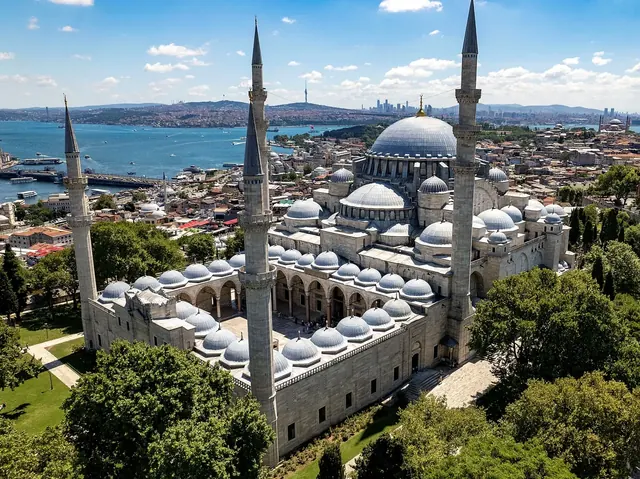
- Süleymaniye Mosque: Mimar Sinan's crowning work, with a vast, light-filled interior and a peaceful courtyard; usually calmer than the Blue Mosque.
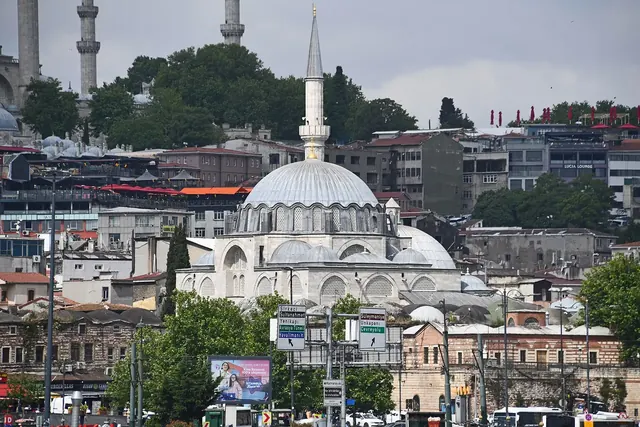
- Rüstem Pasha Mosque: Near the Spice Bazaar, raised above a row of shops and lined inside with Iznik tiles. You reach it by a flight of stairs.
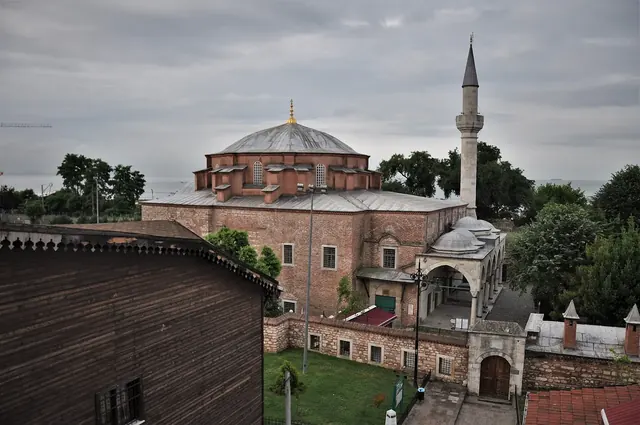
- Little Hagia Sophia and Sokollu Mehmet Pasha: Two quiet mosques in our own Küçük Ayasofya neighbourhood, well away from the tour groups.
- New Mosque and Ortaköy Mosque: One on Eminönü square, the other on the Bosphorus shore; both slot easily into a day of sightseeing.
- Our Mimar Sinan route adds more.
Frequently asked questions
Can non-Muslims visit mosques in Istanbul?
Yes. Mosques are open to everyone outside prayer times. Dress modestly, take off your shoes and keep your voice down.
Do non-Muslim women need to cover their hair?
Yes, all women are expected to cover their hair inside a mosque. If you have no scarf, busy mosques usually lend one at the entrance.
Do I have to pay to enter a mosque?
Generally no. The exception is Hagia Sophia, where foreign visitors take a separate, ticketed route to the upper gallery; people coming to pray do not pay.
Can I take photos inside a mosque?
Photos of the architecture are usually fine. Don't use flash, don't photograph during prayers and avoid close-ups of worshippers.