Congregational prayer means Muslims praying together in rows behind an imam, and the Friday prayer is the weekly gathering held at midday every Friday, with a sermon. That is why Istanbul's great mosques are at their fullest around Friday noon and close to sightseeing for longer than usual. Planning your Friday around it makes the day easier for you and for worshippers.
On this page7
Praying together
Prayer can be performed alone, but praying in congregation is considered far more meritorious; a well-known saying of the Prophet puts it at twenty-seven times the reward. So neighbourhood mosques welcome small congregations all day, especially at sunset and night prayers.
Congregation is the everyday form of community in Islam: neighbours meet in the same place several times a day, ask after one another and notice who is missing. In the Ottoman city, a neighbourhood was often defined by the congregation of its mosque.
Shoulder to shoulder: the rows and the imam
Just before the prayer the muezzin calls the iqama (kamet), a short second call, and the congregation stands in straight rows, shoulder to shoulder and foot to foot. Rows fill from the front, and gaps are closed.
In the row nobody is richer, poorer, local or foreign. Even in Ottoman times, the sultan's screened gallery aside, a pasha and a shopkeeper could in principle stand side by side. Many people find this the most striking thing about congregational prayer.
The imam stands at the front, in line with the mihrab, recites the Qur'an and leads each movement, which the congregation follows. In Türkiye imams are trained officials of the Presidency of Religious Affairs (Diyanet). In big mosques muezzins relay the imam's words from their raised gallery so the back rows can follow.
Friday prayer: the weekly gathering
Cuma, the Turkish word for Friday, comes from the Arabic for “gathering”. The Qur'an tells believers to leave off trade and hasten to the remembrance of God when called to prayer on Friday. The Friday prayer replaces that day's midday prayer.
In Hanafi practice it is obligatory for adult, healthy men who are not travelling. Women, travellers and the sick are exempt but welcome to attend; those who do not attend pray the normal midday prayer. Friday is a working day in Türkiye, and many people slip out to the mosque over lunch and go back to work.
How a Friday prayer unfolds
In Turkish mosques Friday midday usually runs in this order:
- Talk: in many mosques a preacher gives a talk in Turkish from the kürsü before the call.
- Sela and adhan: the sela is sung from the minaret, followed by the midday call to prayer.
- Individual prayer: worshippers each pray four voluntary units.
- Second call and sermon: the imam climbs the minbar, a second call is made inside, and the sermon (hutbe) is delivered in two parts with a short pause seated between them.
- Obligatory prayer: the iqama is called and everyone prays two units behind the imam.
- Closing: further voluntary units and prayers follow, and the doorways briefly fill with people greeting one another.
The sermon from the minbar
The sermon is an essential part of the Friday prayer and is delivered standing, from the minbar. It opens in Arabic with a Qur'anic verse or a saying of the Prophet; in Türkiye the main body is in Turkish. Topics range from ethics, family and charity to social issues and religious occasions.
Sermon texts in Türkiye are generally prepared by the Diyanet, so the same sermon is usually read across the country's mosques in a given week. The congregation listens in silence, and if you happen to be inside at that moment, you should stay quiet too.
Women's sections
Women pray in a separate area from men. In large mosques this is usually an upper women's gallery or the back of the main hall behind a wooden screen, and some mosques have a separate women's entrance.
As Friday prayer is not obligatory for women, Friday congregations are mostly male, though women attending is perfectly normal. Outside prayer times, women visitors tour the main hall just like everyone else.
Planning your Friday
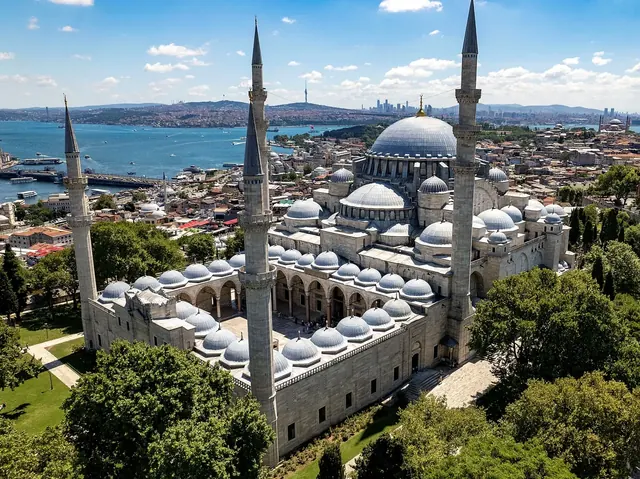
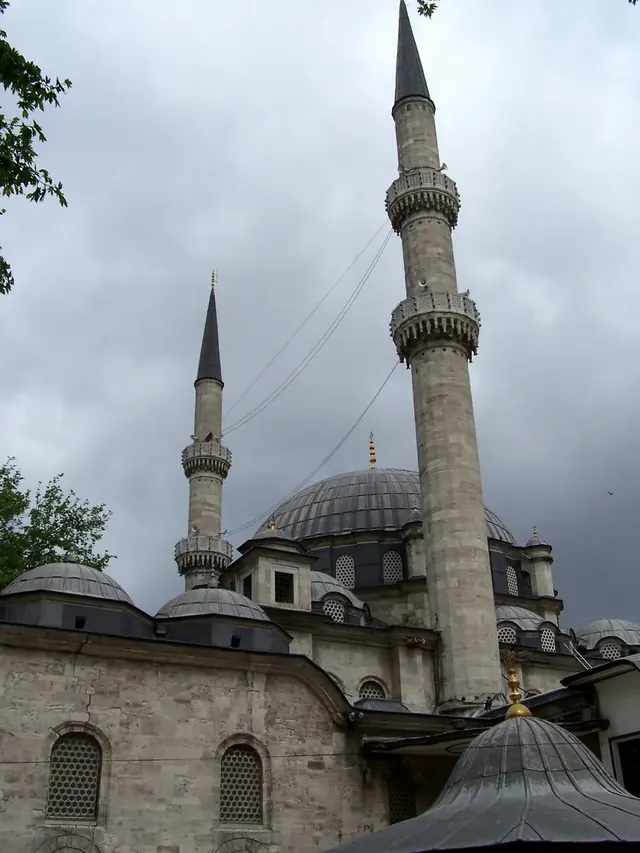
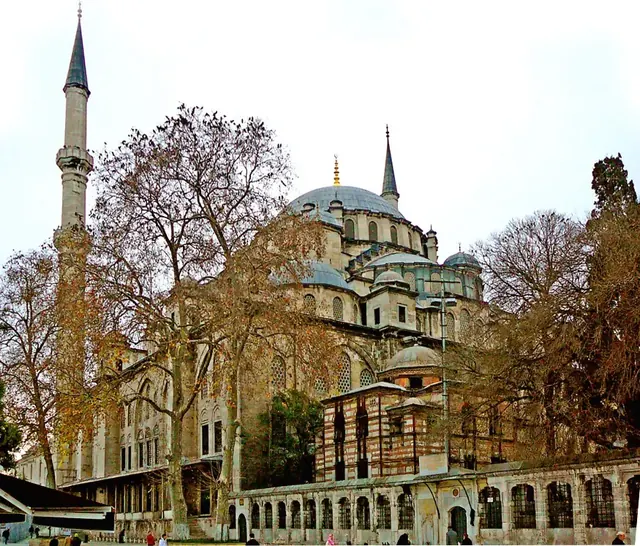
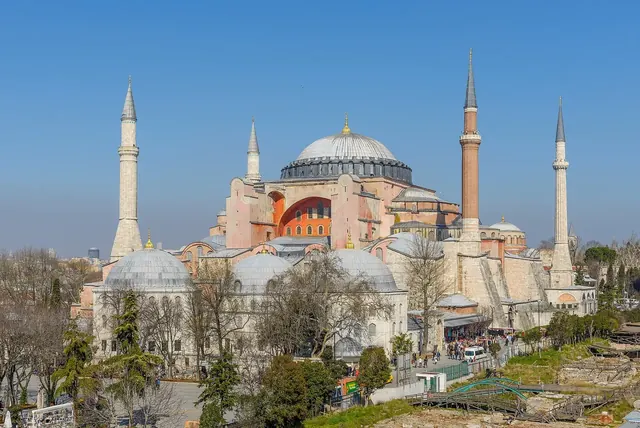
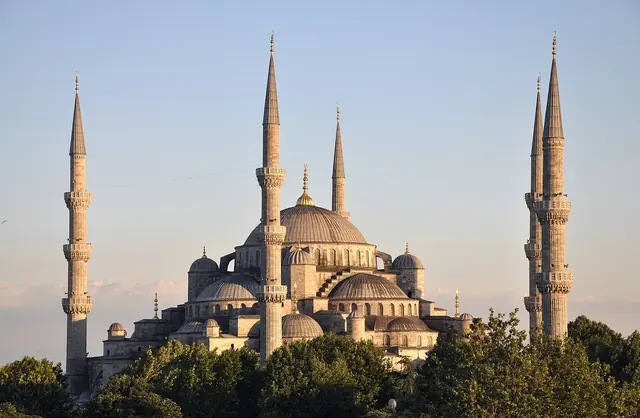
Around Friday noon, big mosques such as the Blue Mosque, Hagia Sophia and Süleymaniye close to visitors for longer than on other days. Worshippers fill the courtyards and porches, sometimes spilling onto pavements with their prayer rugs, a sight especially striking around Eyüp Sultan and Fatih Mosque.
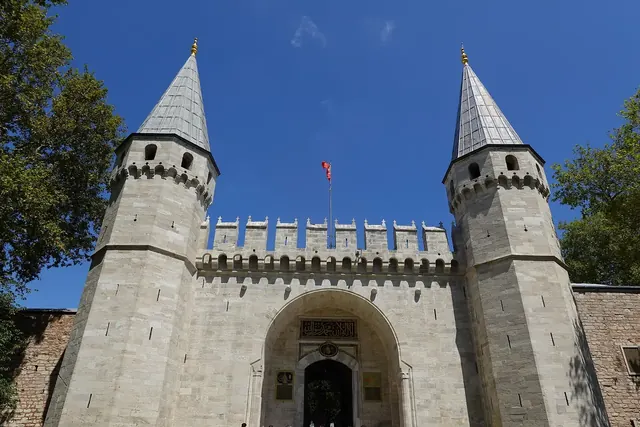
The easy fix is to visit mosques early on Friday morning or later in the afternoon and to spend the midday hours at Topkapı Palace or the Basilica Cistern. If you like, you can watch from a corner of the courtyard, out of the worshippers' way and without photos; it is one of Istanbul's memorable sights. Our mosque etiquette guide covers the basics.
Frequently asked questions
Are mosques closed all day on Friday?
No, only around the midday prayer. In the morning and afternoon you can visit as on other days, outside prayer times. The exact closure varies by mosque, so check signs or ask the attendants at the door.
Can non-Muslims attend the Friday prayer?
During the prayer only worshippers are inside and tourist entry is paused. Watching respectfully from the courtyard or outside is generally fine.
I am a Muslim traveller. Can I join the Friday prayer?
Of course. Travellers are exempt but welcome, and attending replaces the midday prayer. Big mosques fill up early, so arrive well before the call. See Istanbul for Muslim travellers for more tips.
Are there other congregational prayers?
Yes. Any of the five daily prayers can be prayed in congregation, as can the tarawih prayers on Ramadan nights and the Eid prayers on the two festival mornings. See our guides to Ramadan and the Eid festivals.