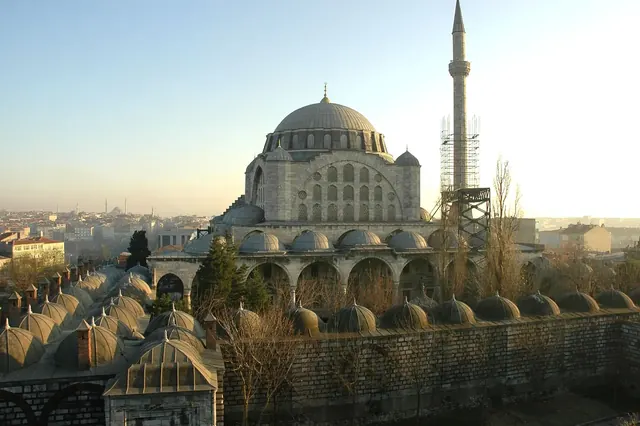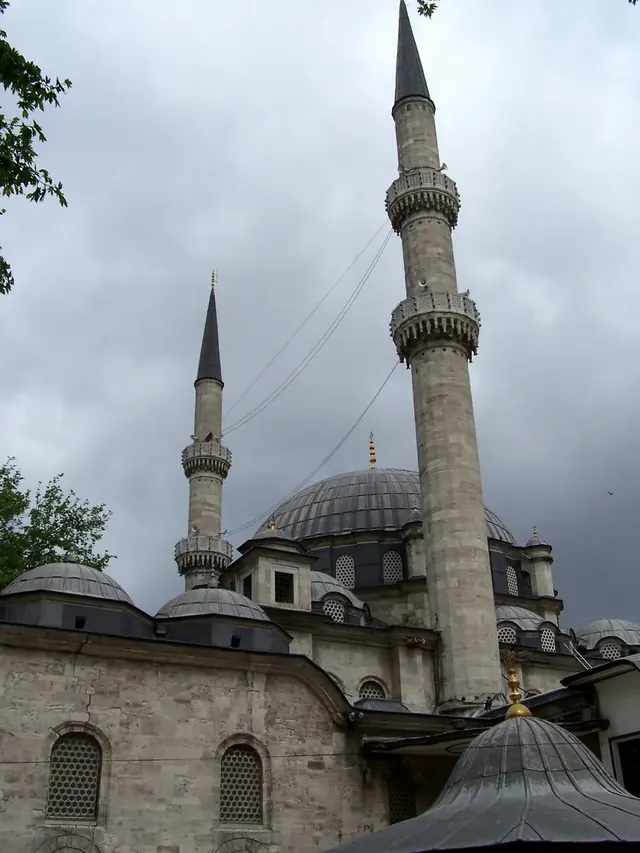
The Eyüp Sultan Mosque stands beside the tomb of Abu Ayyub al-Ansari, a companion of the Prophet Muhammad, at the far end of the Golden Horn, and is regarded as the holiest shrine in Istanbul. Sultan Mehmed II founded the complex in 1458, the first major Ottoman foundation after the conquest, while the present mosque was rebuilt in 1800. Thousands come here to pray every day, so visit quietly and with respect.
On this page5
A companion of the Prophet at the walls of Constantinople
Abu Ayyub al-Ansari, whose given name was Khalid ibn Zayd, was one of the Ansar of Medina. When the Prophet migrated from Mecca to Medina, it was in Abu Ayyub's house that he stayed until his own home and mosque were built, which gives him a cherished place in Islamic history.
Despite his advanced age, he joined an Umayyad army that besieged Constantinople in the second half of the 7th century and died of illness during the campaign. Tradition says he asked to be buried as close to the city walls as possible. After the Ottoman conquest in 1453, Mehmed II's spiritual teacher Akşemseddin is said to have identified the grave, and in 1458 the sultan built a tomb, mosque, madrasa, soup kitchen and bath around it.
Sword-girding ceremonies and a rebuilt mosque
Eyüp became one of the spiritual anchors of the Ottoman state. Newly enthroned sultans came here to be girded with the sword, a ceremony that served much like a coronation, which made Eyüp a symbol of legitimacy and blessing rather than just a neighbourhood.
The original mosque was badly damaged by 18th-century earthquakes and was rebuilt under Selim III, reopening in 1800. The current building shows the lighter, baroque-influenced lines of late Ottoman architecture, with pale stone, large windows and a bright interior. Ancient plane trees in the courtyard and flocks of pigeons complete the calm atmosphere.
What to see
- The tomb of Abu Ayyub al-Ansari: Across the courtyard from the mosque, its interior walls are covered in tiles from different periods. Visitors usually recite a short prayer in silence.
- The tomb's courtyard window: On busy days, those who cannot enter pray in front of this window.
- The courtyards: Plane trees, fountains and arcades, especially peaceful in the morning.
- Nearby tombs and complexes: Eyüp also holds Sinan's tomb for the grand vizier Sokollu Mehmed Pasha and the complex of Mihrişah Valide Sultan, mother of Selim III.
- The historic cemetery: Rising behind the mosque, with Ottoman-era headstones along a path that leads up to Pierre Loti Hill.
Visiting etiquette at a sacred site
Eyüp Sultan is first and foremost a living place of worship and prayer. Women are expected to cover their hair, and everyone should wear loose clothing that covers shoulders and knees. Shoes come off before entering the mosque and the tomb. Inside the tomb, avoid talking loudly, walking in front of people who are praying, and taking photographs. You may notice some visitors stepping backwards as they leave, a traditional gesture of respect.
Crowds swell on Fridays, on holy nights, during the Eid holidays and throughout Ramadan. At weekends you may see little boys in ceremonial outfits brought by their families before their circumcision, and newly married couples stopping to pray. Our guides to mosque etiquette and Istanbul for Muslim travellers have more detail.
Getting there from Sareban Hotel
Eyüp lies at the inner end of the Golden Horn and is not on the tram line from our hotel. The most enjoyable route is to take the T1 tram to Eminönü and then board a Golden Horn ferry from the nearby piers. It calls at stops such as Fener, Balat and Hasköy before reaching Eyüp; departures are infrequent, so check the current timetable. See our ferry guide for tips.
Buses along the Golden Horn shore road from Eminönü and taxis are the alternatives. Eyüp combines naturally with a visit to Balat and Fener, and our Eyüp neighbourhood guide covers the wider area.
Frequently asked questions
Who was Eyüp Sultan?
Abu Ayyub al-Ansari was the companion of the Prophet who hosted him in Medina after the migration from Mecca. He took part in a 7th-century siege of Constantinople and died here. His tomb is one of the most important pilgrimage sites in Istanbul.
Can non-Muslims visit Eyüp Sultan Mosque?
Yes. Visitors of any faith are welcome outside prayer times if they dress modestly and behave respectfully. Silence and discretion are especially important inside the tomb.
When is the best time to visit?
Weekday mornings are calmest. If you would like to experience the devotional atmosphere at its most intense, Fridays and holy nights are memorable, though very crowded.
Can I combine Eyüp Sultan with Pierre Loti Hill?
Easily. The hill is a short walk uphill through the cemetery, or a few minutes by cable car from the lower station near the shore.