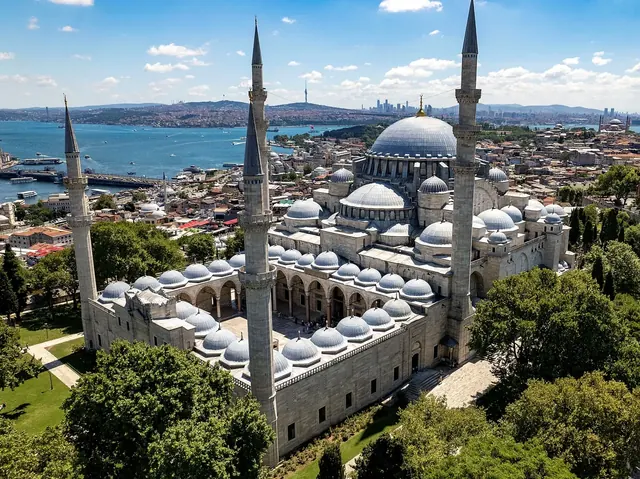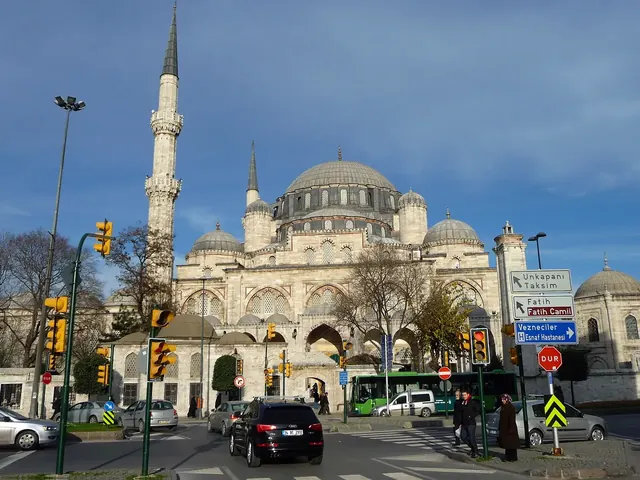
The Şehzade (Prince's) Mosque was built by Mimar Sinan between 1543 and 1548 in memory of Şehzade Mehmed, the son of Suleiman the Magnificent who died young in 1543, and it was Sinan's first major imperial mosque. Its perfectly symmetrical plan, with a central dome surrounded by four semi-domes, later became the model for the Blue Mosque. It stands beside the Valens Aqueduct, well away from the tourist crowds.
On this page5
A father's grief and an architect's first great test
Prince Mehmed, Suleiman's son by Hürrem Sultan, died in 1543 while serving as governor in Manisa, still only in his early twenties. The grieving sultan commissioned a mosque complex in his name and gave the task to Sinan, then recently appointed chief architect. Sinan is said to have called it his apprentice work, and it was his first great imperial mosque in the capital.
Here Sinan used a fully symmetrical plan, bracing the central dome with semi-domes on all four sides. The same scheme would reappear in the next century at the Blue Mosque. Sinan himself soon moved on to less symmetrical but more fluid solutions, which makes Şehzade a valuable record of where his search began.
Carved minarets and outward-facing galleries
The two slender minarets are among the most decorated in Ottoman architecture, with geometric relief carving and inlays of coloured stone. Small turrets at the corners of the domes and semi-domes animate the roofline.
Sinan added arcaded galleries along the side facades, which hide the buttresses and lighten the building's mass. The colonnaded courtyard is almost as large as the prayer hall, and its fountain and quiet garden take you away from the traffic within a few steps.
What to see
- The prayer hall: A balanced, bright interior that opens equally in every direction.
- Carved minarets: Geometric relief work and polychrome stone inlays.
- Tomb of Prince Mehmed: An octagonal tomb in the garden, known for its early, richly coloured tiles.
- Other tombs: The garden also holds the tombs of leading figures of the age, including the grand vizier Rüstem Paşa.
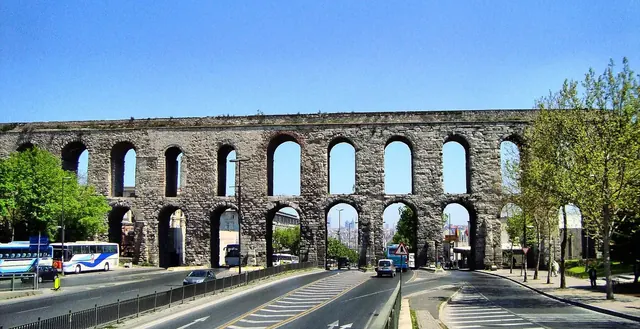
- Aqueduct views: From around the complex you get a fine perspective of the Roman arches of the Valens Aqueduct.
Visiting tips
The tombs are not always open; if they are closed, you can still look through the windows and enjoy the calm of the garden. As a working mosque, it closes briefly to visitors at prayer times, so follow our mosque etiquette guide.
Şehzade is the perfect first stop if you want to compare Sinan's apprentice and journeyman works in one day, as the Süleymaniye Mosque is an easy walk away. Our Mimar Sinan route links them in a single itinerary.
Getting there from Sareban Hotel
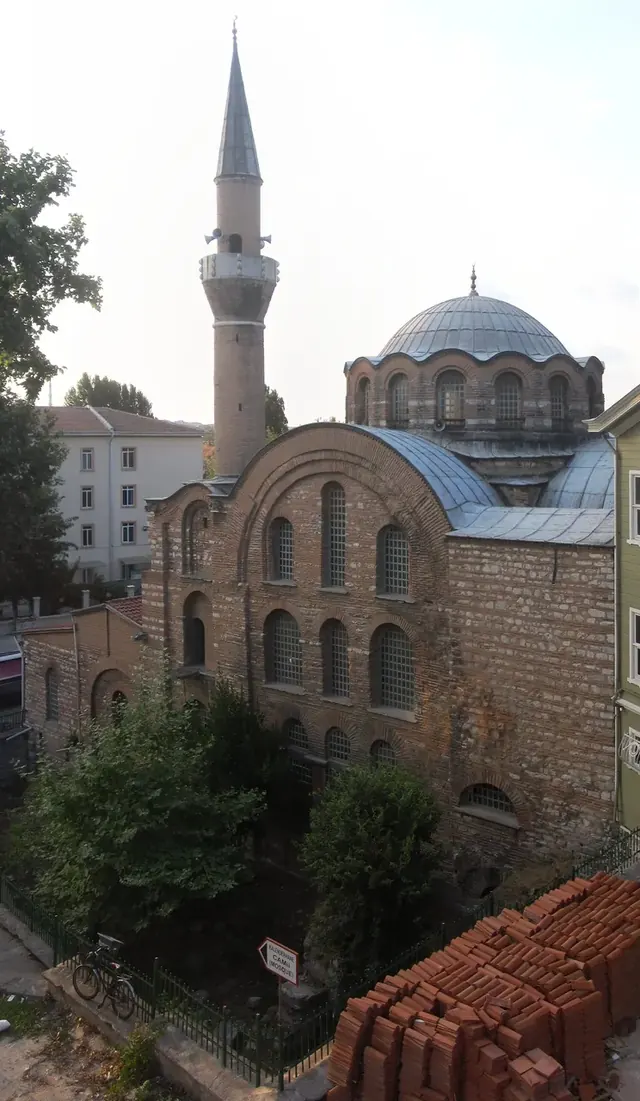
From the hotel, follow Divanyolu and Ordu Caddesi past Beyazıt Square and continue towards Şehzadebaşı Caddesi until the minarets come into view. It is a longer walk, but lined with historic buildings the whole way. For a shortcut, take the T1 tram to Laleli-Üniversite and walk a few blocks north. The mosque shares its neighbourhood with the Valens Aqueduct and Kalenderhane Mosque, so all three fit easily into one walk.
Frequently asked questions
Who was the Şehzade Mosque built for?
It commemorates Prince Mehmed, the son of Suleiman the Magnificent, who died young in 1543.
Who was the architect?
Mimar Sinan. He is said to have described it as his apprentice work.
How is it related to the Blue Mosque?
Both use a symmetrical plan with a central dome surrounded by four semi-domes. The Blue Mosque applied the scheme on a larger scale about 70 years later.