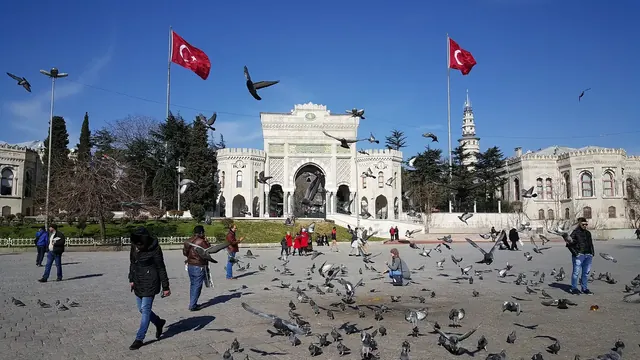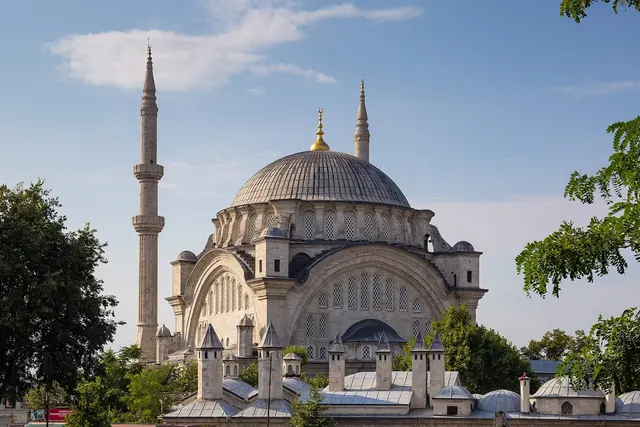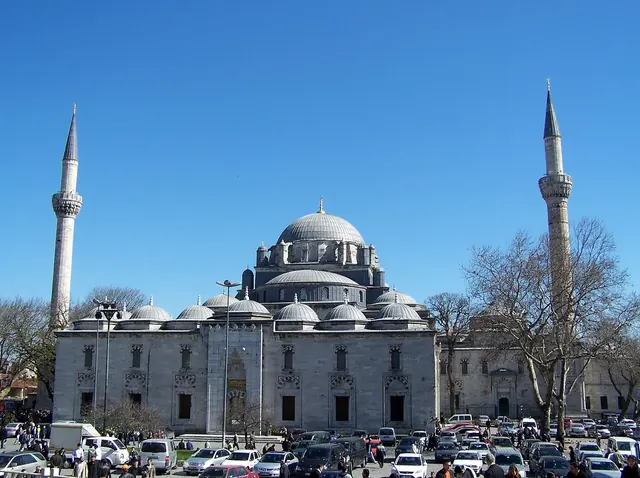
Beyazıt Mosque was built for Sultan Bayezid II between 1501 and 1506 on the eastern side of Beyazıt Square, and it is the oldest imperial mosque in Istanbul still standing in its original form. Sitting between the Grand Bazaar and Istanbul University, it shows Ottoman architecture just before the age of Mimar Sinan, and its colonnaded courtyard is one of the calmest in the old city.
On this page5
The step before Sinan
The first Fatih Mosque was destroyed in the earthquake of 1766 and rebuilt, so Beyazıt is regarded as the oldest imperial mosque in the city to keep its original plan. Sources name either Yakubşah bin Sultanşah or an architect called Hayreddin as its designer; the attribution is still debated.
The layout is an Ottoman reading of Hagia Sophia: a central dome extended by two semi-domes along the prayer axis, flanked by aisles under smaller domes. Half a century later Mimar Sinan would take the same idea to its peak at the Süleymaniye Mosque. Seeing Beyazıt first helps you appreciate how far that journey went.
A courtyard of recycled columns
The highlight for most visitors is the arcaded courtyard. Its columns are a mix of coloured marble, granite and porphyry, many of them believed to have been salvaged from Byzantine buildings, and the patterned stone paving and central ablution fountain give the space a quiet, orderly beauty.
From outside, notice how far apart the two minarets stand: they rise at the ends of the side wings, which once served as lodgings for travelling dervishes. In the garden behind the prayer wall lies the tomb of Bayezid II himself.
What to see
- The courtyard arcades: Look closely at the columns; the stone changes from one to the next.
- The prayer hall: A long, airy interior under one main dome and two semi-domes.
- Tomb of Bayezid II: A restrained, elegant mausoleum in the garden behind the mosque.
- Bayezid II Hamam: The complex's old bathhouse, restored and now used as a museum of hamam culture; check whether it is open before you go.
- The former soup kitchen: In 1884 it became home to the Beyazıt State Library, one of the first public libraries in Turkey.
Visiting etiquette
This is a working mosque, and tourist visits pause briefly during the five daily prayers. Women are asked to cover their hair, and everyone should cover shoulders and knees; shoes come off at the entrance. Our mosque etiquette guide explains the details.
Far fewer tour groups come here than to the Sultanahmet mosques, which makes the courtyard a pleasant place to rest after the bazaar. Avoid Friday midday prayers, when the mosque and courtyard fill completely.
Getting there from Sareban Hotel
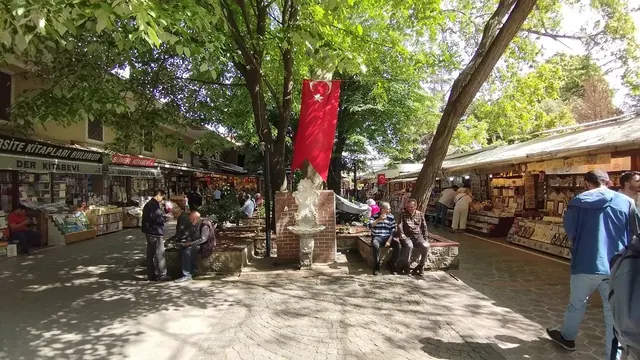
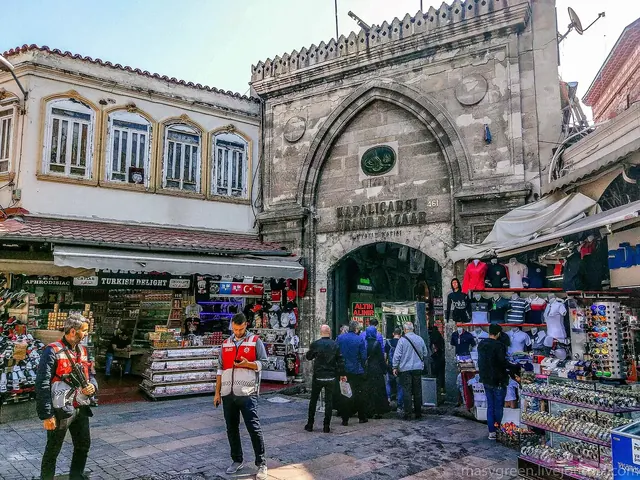
From the hotel, head up to Divanyolu and continue west past the Column of Constantine; the avenue opens onto Beyazıt Square and the mosque stands on its eastern side, next to the Sahaflar book bazaar. By T1 tram, get off at Beyazıt-Kapalıçarşı. You can also leave the Grand Bazaar by its Beyazıt Gate and walk through the book market straight into the courtyard.
Frequently asked questions
Who built Beyazıt Mosque?
Sultan Bayezid II, son of Mehmed the Conqueror. Construction began in 1501 and was completed in 1506.
Is there an entrance fee?
No, the mosque is free to visit. Tourist visits pause briefly during prayer times.
Was Beyazıt Mosque designed by Mimar Sinan?
No. It predates Sinan; sources credit either Yakubşah bin Sultanşah or Hayreddin as the architect.
How do I get from the Grand Bazaar to Beyazıt Mosque?
Exit through the bazaar's Beyazıt Gate and walk a few minutes through the Sahaflar book market to reach the mosque courtyard.