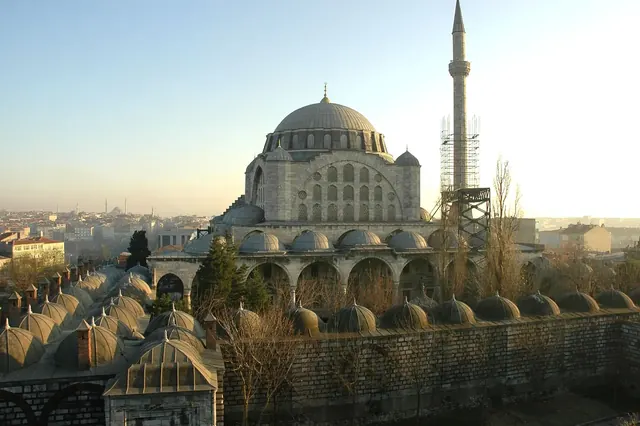
The Mihrimah Sultan Mosque at Edirnekapı was built by Mimar Sinan in the 1560s for Mihrimah, daughter of Süleyman the Magnificent, on the sixth hill, the highest point of the historic peninsula, right beside the city gate. Its single dome rests on walls pierced with windows, making it one of the brightest and most daring interiors Sinan ever designed.
On this page5
A sultan’s daughter and her architect
Mihrimah Sultan was the daughter of Süleyman and Hürrem Sultan and the wife of the grand vizier Rüstem Pasha, and one of the wealthiest patrons of her age. She commissioned two mosques from Sinan: the Mihrimah Sultan Mosque in Üsküdar by the ferry landing, built when she was young, and this one. Sources differ on exact dates, but it is usually placed in the mid-1560s, after Rüstem Pasha died in 1561.
The mosque anchors a small complex: madrasa rooms around the courtyard, a historic bathhouse nearby, and a row of vaulted shops beneath the high terrace on which the mosque stands. Its position was deliberate. Travellers arriving on the road from Edirne saw it rising above the gate as their first great landmark of Istanbul.
A dome built of light
Sinan set a single great dome over a square hall, carrying it on four huge arches that spring from corner piers. The walls beneath the arches do no heavy lifting, so he filled them with windows, well over a hundred in total. The effect is of a canopy floating over a lantern, with light shifting around the room through the day.
Compared with the cascading semi-domes of the imperial mosques, the design is strikingly spare, and architectural historians often read it as one of Sinan's most experimental works. The slender single-balcony minaret keeps the silhouette crisp and vertical.
Earthquakes and a romantic legend
High on its hill with thin, window-filled walls, the mosque was badly damaged by earthquakes in 1719, 1766 and 1894; in the last, the collapsing minaret brought down parts of the building. It has been repaired several times, most recently in a modern restoration.
A popular legend says Sinan loved Mihrimah without hope and placed her two mosques to speak to each other across the city: on certain evenings, as the sun sets behind the Edirnekapı minaret, the moon rises over the one in Üsküdar. No document supports the tale, but the two hilltop mosques at opposite ends of Istanbul keep it alive.
What to notice
- The window walls: stand in the centre of the hall and turn slowly to each of the four arches to see how light dissolves the structure.
- The arcaded courtyard: a quiet space framed by madrasa cells, good for a pause before entering.
- The terrace and shops: on the Fevzipaşa Avenue side, the vaulted shops tucked beneath the raised platform.
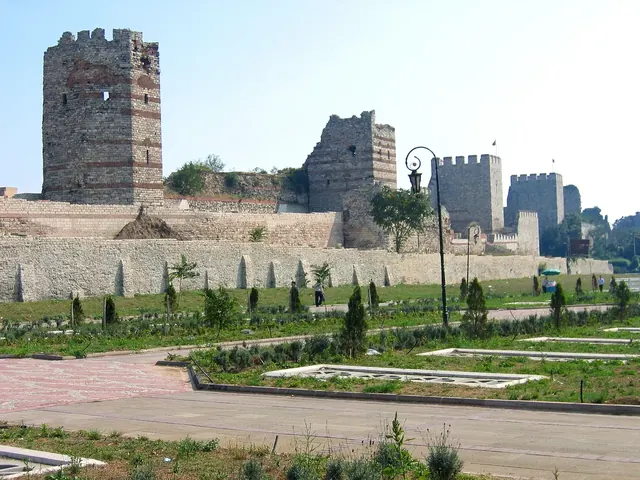
- The walls next door: step through Edirnekapı to the outside of the Theodosian Walls for a photo of the mosque above the ramparts.
Getting there from Sareban Hotel
A taxi from the hotel straight to Edirnekapı is the easiest option. By public transport, take the T1 tram to Aksaray or Topkapı and change for Edirnekapı, or ride one of the buses from Eminönü along Fevzipaşa Avenue; the mosque is a few minutes' walk from the stops.
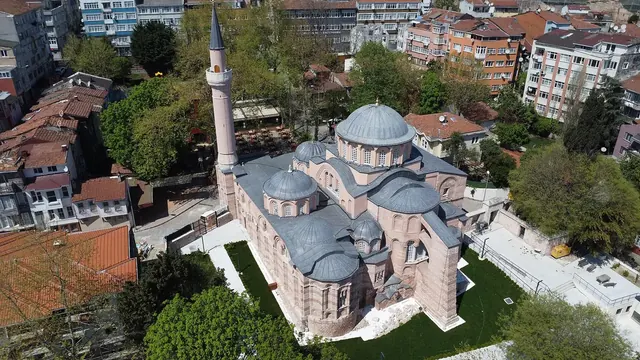
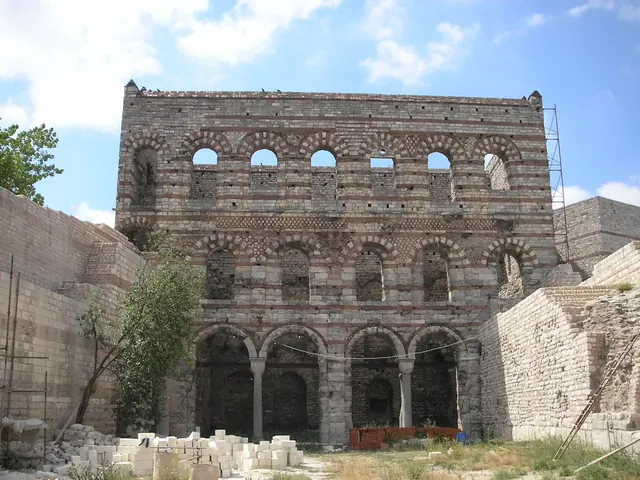
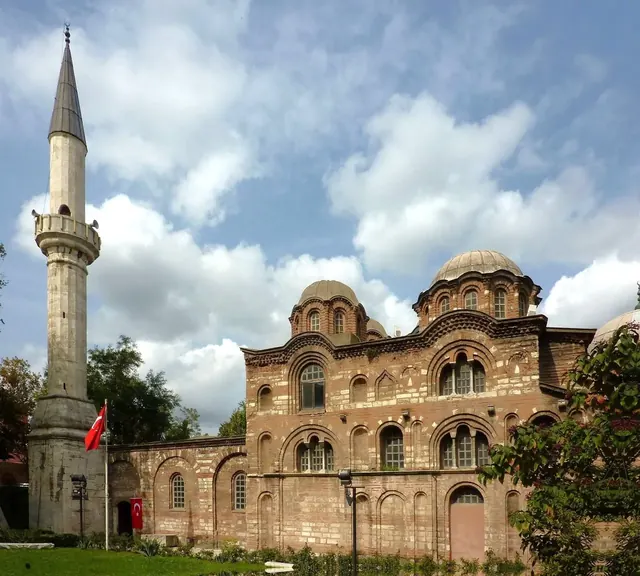
The Chora Church is a short walk away, and with the Tekfur Palace the three make an easy half-day around Edirnekapı and Kariye. For more of Sinan's work, see our Mimar Sinan route.
Frequently asked questions
Are there two Mihrimah Sultan mosques in Istanbul?
Yes. One is by the ferry landing in Üsküdar, the other here at Edirnekapı. Both were designed by Mimar Sinan for the same princess.
Is the Sinan and Mihrimah love story true?
It is a popular legend with no documentary evidence, but it is a charming way to connect the two mosques.
Is the Chora Church nearby?
Yes, it is a short walk away, and most visitors see both on the same trip.