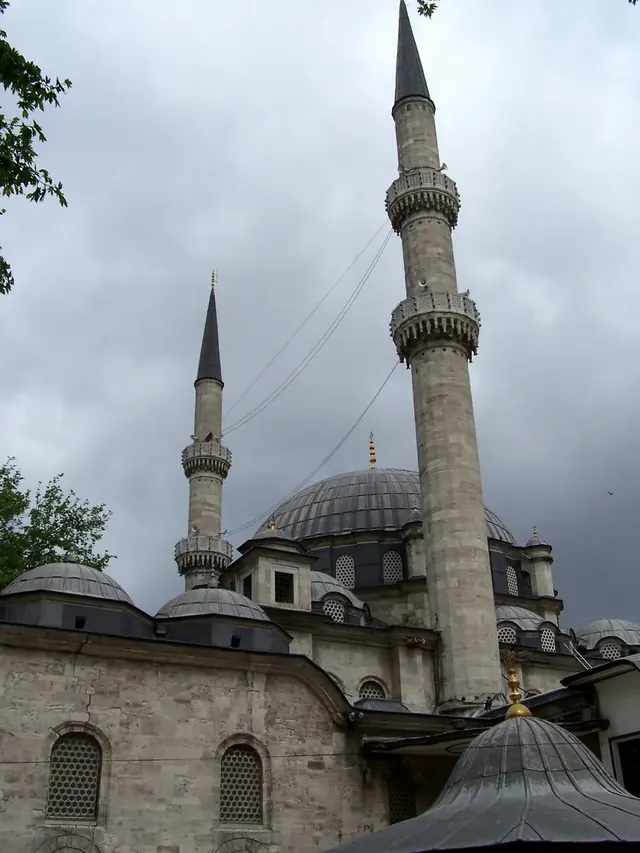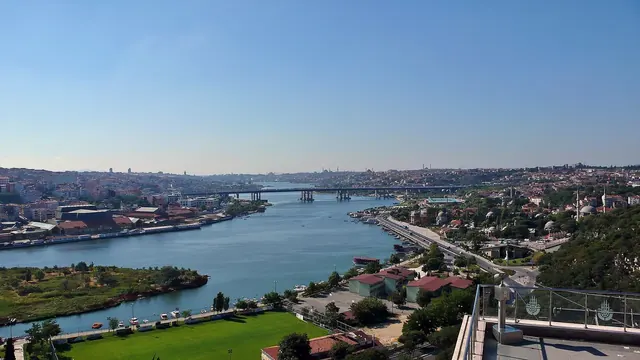
Eyüp is a historic district at the far end of the Golden Horn, just outside the old city walls, and is widely considered Istanbul's most sacred quarter. It grew around the tomb of Abu Ayyub al-Ansari, a companion and standard-bearer of the Prophet Muhammad, and the mosque Mehmed II built beside it after 1453. After visiting the shrine, a short cable-car ride takes you up to Pierre Loti Hill for one of the finest views over the Golden Horn.
On this page7
A pilgrimage quarter with a gentle rhythm
Eyüp feels different from the rest of the city. Pigeons crowd the square, families pray at the shrine window, stalls sell prayer beads and skullcaps, and on Fridays the congregation spills out across the courtyard. At weekends you may see small boys in white satin and feathered caps being brought to the shrine before their circumcision celebration, a tradition that goes back centuries.
Yet a few steps away, the hillside cemetery with its tall cypresses is almost silent. This is a place Istanbul residents hold dear rather than a sightseeing stop, and visitors who come with that in mind tend to enjoy it most.
A companion's tomb and the girding of the sword
Abu Ayyub al-Ansari hosted the Prophet in his home in Medina after the migration from Mecca. According to Islamic sources, he died outside the walls of Constantinople during the Arab sieges of the seventh century and was buried here. After the conquest, tradition says the grave was identified by Akşemseddin, the spiritual teacher of Mehmed II, and in 1458 the sultan built the tomb and mosque.
For centuries, every new Ottoman sultan came to Eyüp to be girded with a sword, a ceremony that served as a kind of coronation. That made the district fashionable among the elite, who endowed mosques, fountains and their own mausoleums near the shrine. The mosque you see today was rebuilt at the end of the eighteenth century under Selim III.
What to see in Eyüp
- Eyüp Sultan Mosque and shrine: the tiled walls of the mausoleum, the ancient plane tree in the courtyard and the light, late-Ottoman interior.
- Pierre Loti Hill: named after the French novelist who, it is said, liked to sit here in the late nineteenth century; terraces look down the entire curve of the Golden Horn.
- The Eyüp cemetery: the path up the hill winds past carved Ottoman gravestones whose turbans, fezzes and floral motifs tell you about the person buried beneath.
- Zal Mahmud Pasha Mosque: a work of the architect Sinan, notable for its two-level courtyard and tall, solid mass.
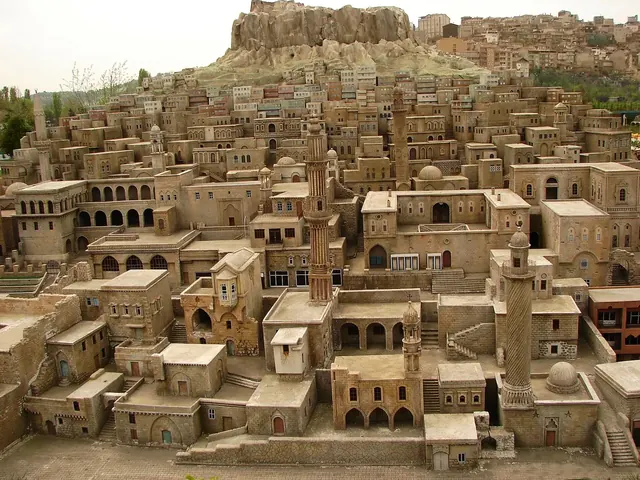
- Miniatürk: an open-air park on the Golden Horn with scale models of landmark buildings from Türkiye and former Ottoman lands.
Half a day in Eyüp
- Arrive at Eyüp Sultan Mosque in the morning; visit the shrine quietly and rest under the plane tree by the ablution fountain.
- Explore the lanes around the square and walk to Zal Mahmud Pasha Mosque.
- Take the cable car up to Pierre Loti Hill and enjoy the view over a glass of tea.
- Walk back down through the cemetery, or, if you have children, spend the afternoon at Miniatürk.
What to eat: breakfast with clotted cream and charity sweets
Eating in Eyüp revolves around pilgrims and families. Around the square you'll find traditional restaurants serving kebab, pide and köfte, and small shops offering breakfast with kaymak (clotted cream) and honey. On religious holidays and holy nights, people hand out lokma (syrup-soaked fritters), helva and sherbet near the shrine as charity. Up on Pierre Loti Hill, tea in a tulip-shaped glass with a simit or a toasted sandwich is the classic order. Halal food is the norm throughout the area.
Tips for families and first-time visitors
Kids usually love the cable car, which is short but scenic. The footpath down the hill is steep with steps in places, so if you have a pushchair take the cable car both ways. Women are expected to cover their hair in the mosque and shrine, and everyone should cover shoulders and knees. Our mosque etiquette guide explains the details, and our guide for Muslim travellers has more suggestions for faith-focused visits.
Getting there from Sareban Hotel
You have two pleasant choices. Take the tram to Eminönü or Karaköy and board the Golden Horn ferry, which calls at Balat and Fener before reaching the Eyüp pier. Alternatively, use the tram line that runs from Eminönü along the Golden Horn shore to Eyüp. Many visitors take the ferry out for the views and the faster tram back. Our ferry guide covers the practical details.
Frequently asked questions
Can non-Muslims visit Eyüp Sultan Mosque and the shrine?
Yes, as long as you dress modestly and behave respectfully. Tourist visits pause during prayer times, and the shrine is a place for quiet reflection.
Can I walk up to Pierre Loti Hill?
Yes. A path starts behind the mosque and climbs through the cemetery. It's fine for most adults, but in summer heat or with small children the cable car is the better option.
Can I combine Eyüp and Balat in one day?
Easily. Both lie on the Golden Horn. Explore Balat in the morning, continue to Eyüp by ferry or tram, and finish at Pierre Loti Hill.
How far is Miniatürk from Eyüp?
Miniatürk lies just south of Eyüp on the Golden Horn shore, a quick ferry hop or short taxi ride away.