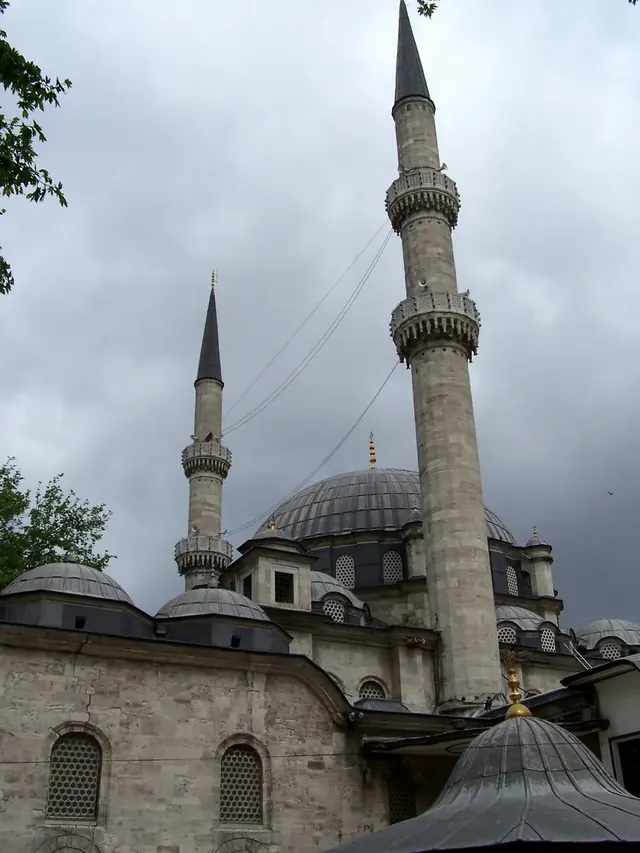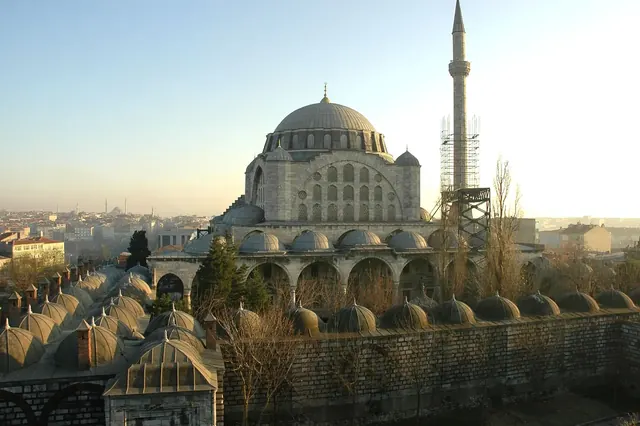
Pierre Loti Hill rises just above the Eyüp Sultan Mosque and looks down the full length of the Golden Horn. It is named after the French writer Pierre Loti, who fell in love with Istanbul in the late 19th century. You can reach it by walking up through a historic cemetery or by a short cable car ride, and it is at its best at sunset with a glass of tea.
On this page6
The Frenchman who lost his heart to Istanbul
Pierre Loti was the pen name of Julien Viaud, a French naval officer and novelist. He first arrived in Istanbul in 1876 and turned a love affair in Eyüp into his novel Aziyadé, published in 1879. He returned many times and wrote about Ottoman life in richly romantic prose.
Because he defended the Turkish cause in the European press around the time of the Balkan Wars and afterwards, Loti is remembered fondly in Turkey. A street near our hotel, running between Çemberlitaş and Kadırga, still bears his name. Legend has it that he spent long hours writing in a small coffeehouse on this hilltop overlooking the water, and the hill gradually took his name.
Climbing through the old cemetery
The most atmospheric way up is the stone path that starts behind the Eyüp Sultan Mosque and winds through the historic Eyüp cemetery. Under the cypresses you can read the language of Ottoman gravestones: the carved turbans and headdresses on men's stones indicate rank and profession, while women's stones are decorated with flowers and leaves.
The path is steep but short, taking around fifteen to twenty minutes at a steady pace. This is a place of remembrance, so walk quietly, keep off the graves and give space to mourners.
The easy way: the cable car
For anyone who would rather not climb, including families with small children, a short cable car line runs from the Eyüp waterfront to the top. The ride takes only a few minutes and floats over the cemetery with the Golden Horn opening out below. It accepts the Istanbulkart, and queues build at weekends and toward sunset. Riding up and walking down through the cemetery is a lovely combination.
What you can see from the top
- The Golden Horn: The estuary curving away toward the Galata Bridge, crossed by a series of bridges.
- The far shore: The northern bank and Hasköy, where sharp eyes can pick out the area of Miniatürk and the Rahmi M. Koç Museum.
- The Old City skyline: On clear days the domes of Süleymaniye appear in the distance.
- Eyüp below: The minarets of the Eyüp Sultan Mosque and the cypress-covered slope.
- Sunset: The water turns gold as the sun drops behind the hill, a highlight of our sunset spots guide.
What to do up there
The classic experience is simply sitting in one of the open-air tea gardens with strong black tea or Turkish coffee and a simple snack while the view does the rest. The atmosphere is relaxed and family-friendly, a place for tea and conversation. To learn more about the rituals, read our guide to Turkish coffee and tea culture.
Getting there from Sareban Hotel
First you need to reach Eyüp. Take the T1 tram to Eminönü and continue by Golden Horn ferry to the Eyüp pier, or use a bus along the Golden Horn shore road or a taxi from Eminönü. In Eyüp, visit the Eyüp Sultan Mosque first, then walk up through the cemetery or ride the cable car from the station near the shore. Our Eyüp neighbourhood guide covers all the options.
Frequently asked questions
How do I take the cable car to Pierre Loti Hill?
The lower station is on the Eyüp waterfront, close to the Eyüp Sultan square. Pay with an Istanbulkart; the ride takes a few minutes. Operating hours can vary by season.
Can I walk up to Pierre Loti Hill?
Yes. A path starting behind the Eyüp Sultan Mosque climbs through the historic cemetery in about fifteen to twenty minutes. It is steep, so families with young children may prefer the cable car.
Who was Pierre Loti?
A French naval officer and novelist, born Julien Viaud, who lived in Istanbul in the late 19th century, wrote about the city in his novels and defended Turkish interests in the European press.