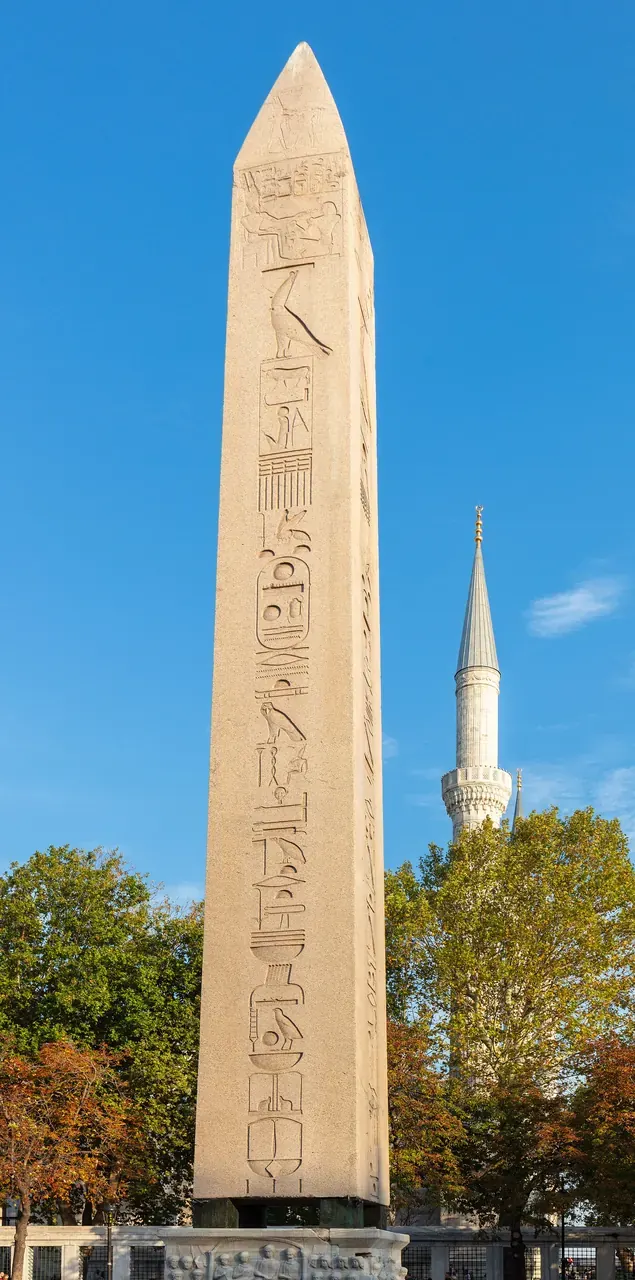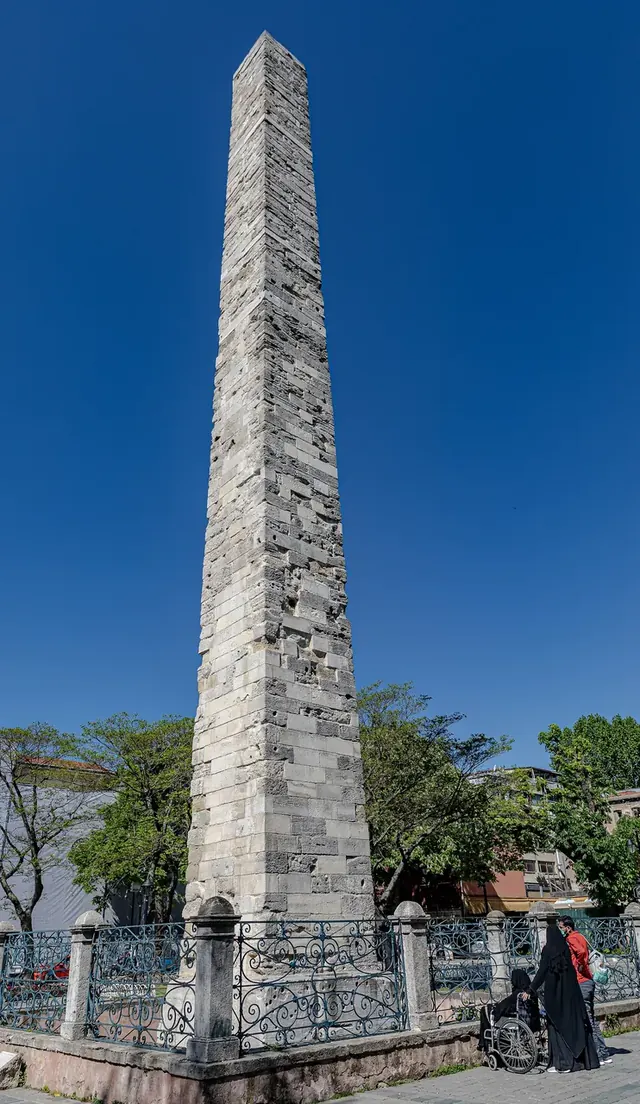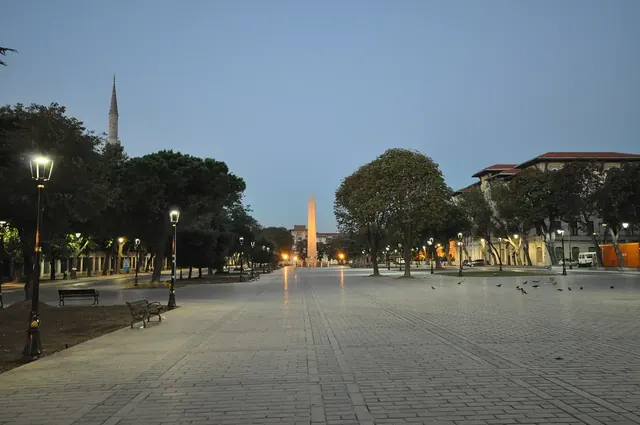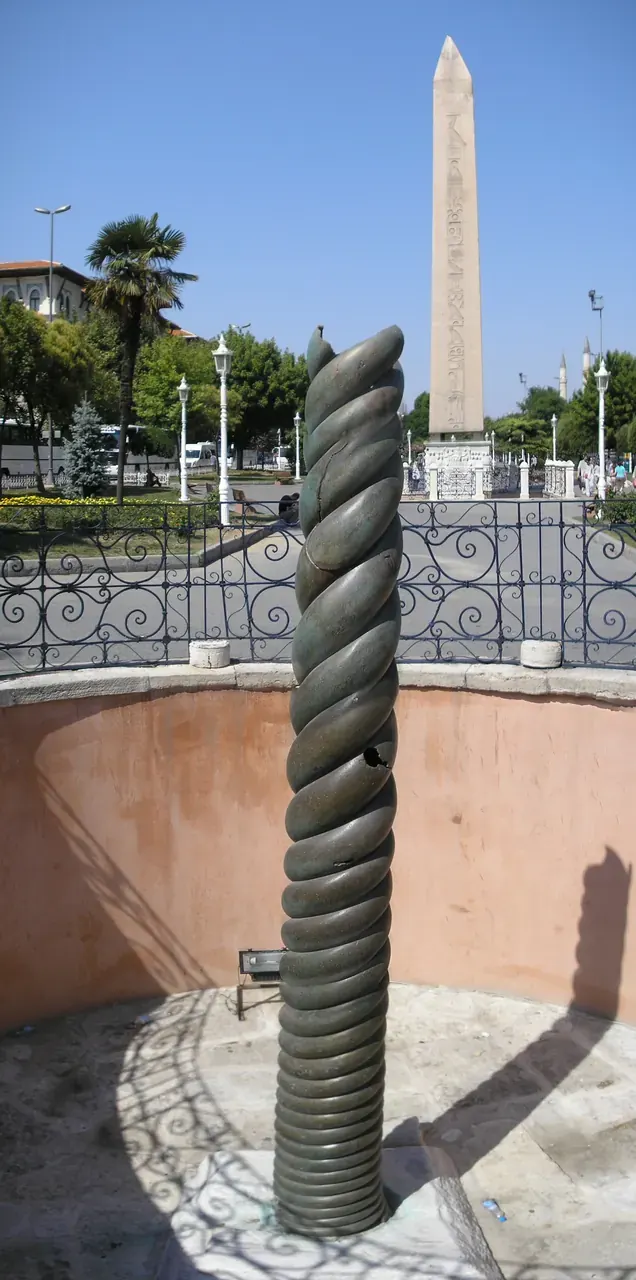
The Serpent Column is the bronze trunk of three intertwined snakes, made to celebrate the Greek victory over the Persians at Plataea in 479 BC and dedicated to Apollo at Delphi. Constantine the Great brought it to his new capital and set it in the middle of the Hippodrome. Some 2,500 years old, it is one of the oldest Greek monuments in Istanbul, standing in a sunken enclosure between the Obelisk of Theodosius and the Walled Obelisk.
On this page4
A trophy cast from Persian bronze
According to Herodotus, part of the spoils taken from the Persians at Plataea was dedicated to Apollo at Delphi, and a bronze monument was cast for the offering. Three snakes coiled around one another, their heads supporting a golden bowl on a tripod. Ancient sources say the gold was later carried off and melted down during a 4th-century BC war over Delphi, while the bronze body stayed put.
The coils were inscribed with the names of 31 Greek city-states that fought the Persians, headed by the Spartans, Athenians and Corinthians. The list became readable again in the mid-19th century, when the earth around the base was dug away. Most of the inscribed coils sit below today's street level, inside the railed enclosure.
From Delphi to Constantinople, and the lost heads
Constantine wanted his new capital to be filled with the most venerable treasures of the ancient world, so he had the column shipped from Delphi and set on the Hippodrome's central barrier. A symbol of Greek unity became a showpiece of the new Rome.
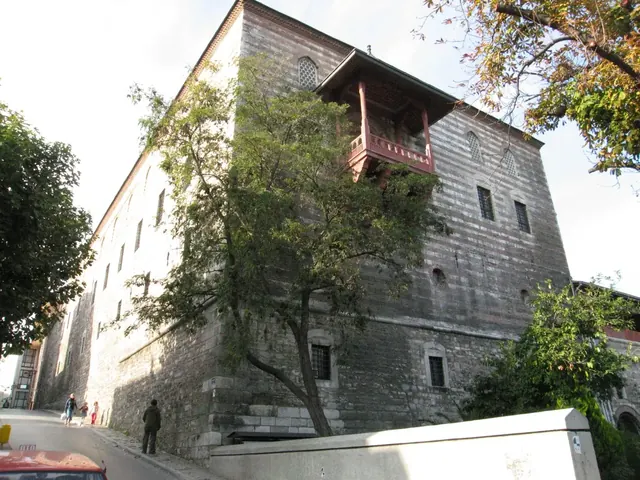
The heads survived for centuries, and Ottoman miniatures clearly show a three-headed column. Folklore held that it protected the city from snakes, and one legend says Mehmed II knocked off a serpent's jaw with his mace. The heads broke off sometime around 1700, for reasons that remain unclear. The upper jaw of one head is now in the Istanbul Archaeology Museums, and tracking it down there makes a satisfying end to the story.
What to look for
- The twisting coils: Walk slowly around the column to see how the three bodies wind together.
- The sunken base: Proof of how far below today's square the Byzantine track lay.
- The broken top: Where the heads and tripod once rested.
- Its position: Standing between the Obelisk of Theodosius and the Walled Obelisk, it helps you picture the ancient spina.
Getting there from Sareban Hotel
Walk up from our hotel to the southern end of the Hippodrome; a few steps north of the Walled Obelisk you'll find the Serpent Column in its railed pit. Continue north to the German Fountain to complete the line of monuments, then cross to the Blue Mosque.
Frequently asked questions
Where are the heads of the Serpent Column?
They broke off around 1700. The upper jaw of one head is displayed at the Istanbul Archaeology Museums.
Why is the column in a pit?
Centuries of debris raised the ground by several metres. The column still stands at the original Byzantine level.
How old is the Serpent Column?
About 2,500 years old. It was made after the Battle of Plataea in 479 BC and brought to Constantinople in the 4th century AD.