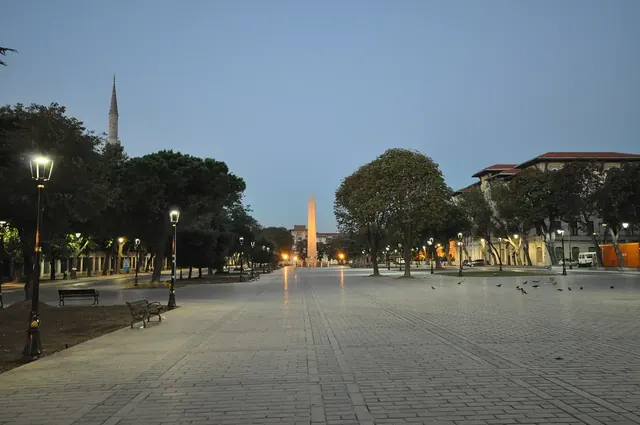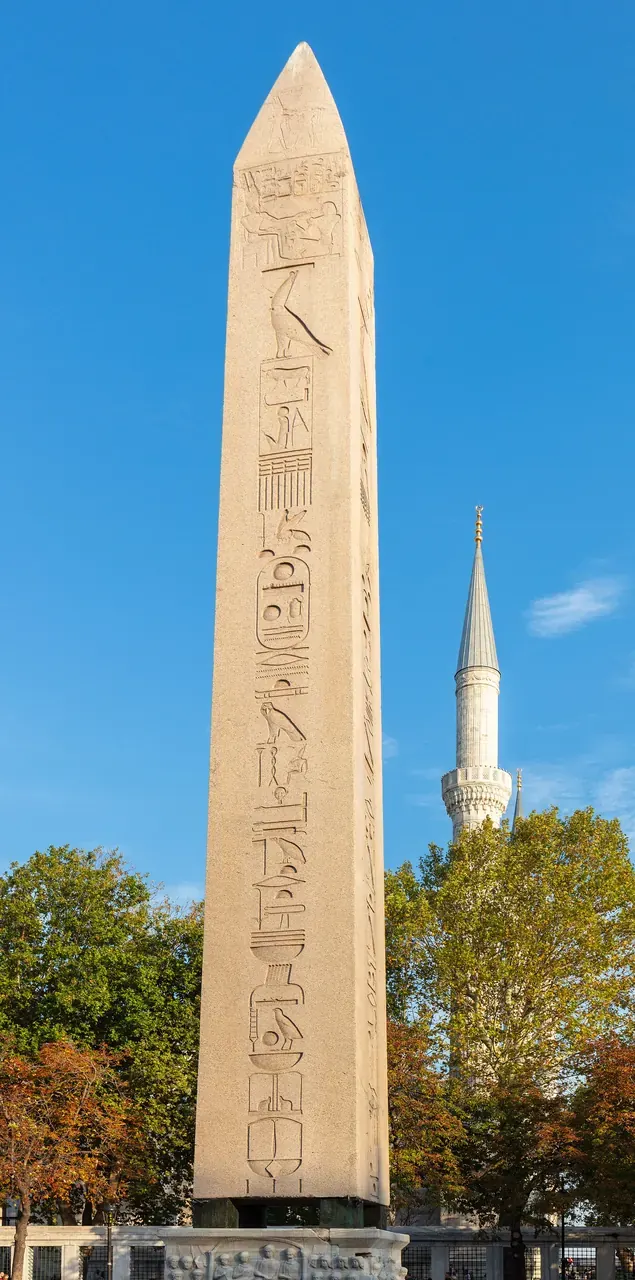
The Obelisk of Theodosius is a pink granite obelisk carved in Egypt for Pharaoh Thutmose III around 3,500 years ago and raised in Constantinople's Hippodrome by Emperor Theodosius I in 390 AD. It stands in the middle of Sultanahmet Square, opposite the Blue Mosque. It is among the oldest objects in Istanbul, and its marble base is a rare snapshot of life in the Byzantine Hippodrome.
On this page4
From the Nile to the Bosphorus
Cut from a single block of Aswan granite, the obelisk originally stood at the great temple of Amun at Karnak. Its hieroglyphs name Thutmose III, accompanied by the falcon god Horus, and celebrate his campaigns that reached beyond the Euphrates. In the 4th century it was taken down and shipped to Alexandria, where it waited for years before Theodosius finally brought it to his capital.
What you see is only the upper part of the original shaft; the lower section is thought to have broken during transport or erection. Even so, it stands close to 20 metres tall. It rests on four bronze cubes set on the marble pedestal and has come through more than 1,600 years of earthquakes without toppling.
Reading the Byzantine base
The real story is on the marble base. Its four faces show Theodosius in the Kathisma, the imperial box of the Hippodrome, surrounded by family, courtiers and guards. On one side he holds the victor's wreath for a race winner; on another, envoys of foreign peoples kneel with gifts. Musicians and dancers line the lower registers.
The lower plinth shows the obelisk being hauled upright with ropes and winches, along with chariot-racing scenes. It carries two inscriptions, one in Latin and one in Greek: one says the raising took 30 days, the other 32. The small discrepancy is a nice reminder that even ancient monuments don't always agree with themselves.
What to look for
- The hieroglyphs: Scenes near the top show the pharaoh before the god Amun; low sun sharpens the carving.
- The bronze cubes: Four corner supports between shaft and pedestal.
- The imperial box: The emperor's lodge and the shields of his guards on the reliefs.
- The old ground level: The sunken enclosure shows how far below today's square the Byzantine track lay.
Getting there from Sareban Hotel
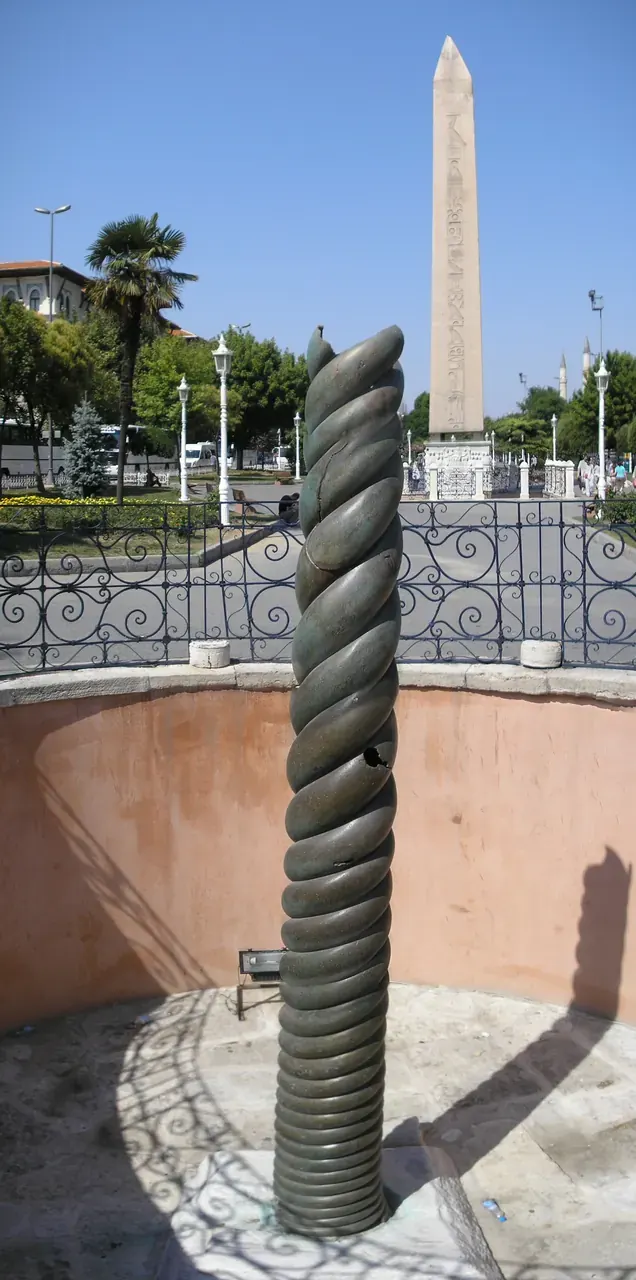
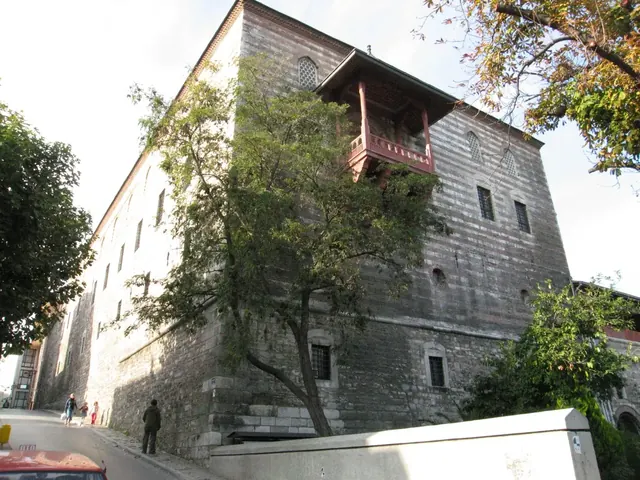
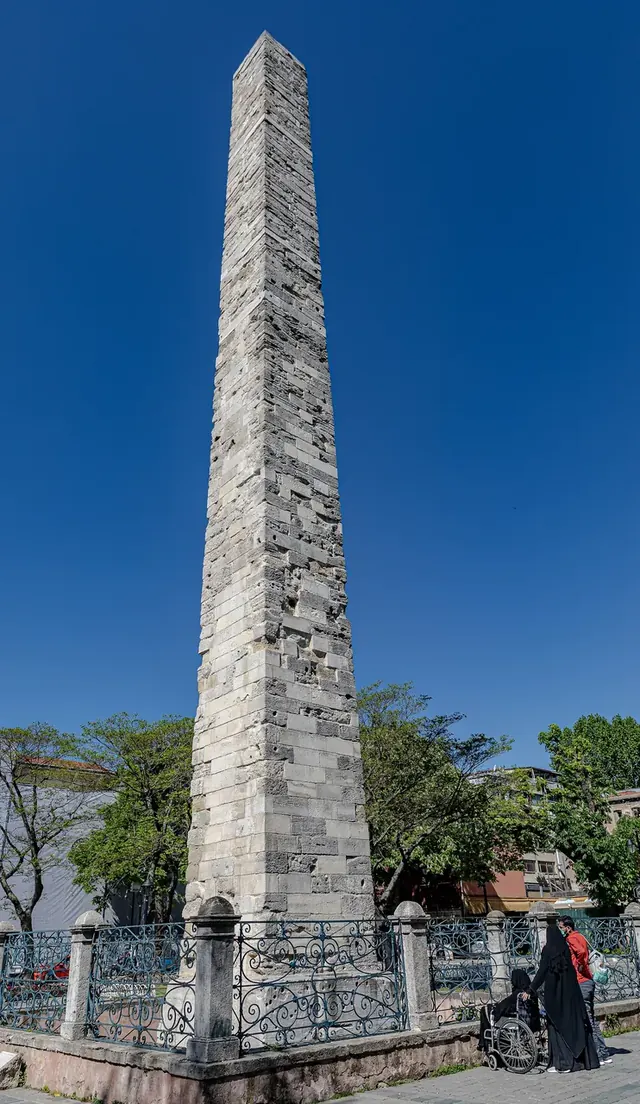
Walk up the slope from our hotel to the southern end of the Hippodrome and follow the square north: you pass the Walled Obelisk and the Serpent Column first, and the Obelisk of Theodosius is the third monument, right opposite the courtyard gate of the Blue Mosque. The Museum of Turkish and Islamic Arts is a few steps away on the western side.
Frequently asked questions
How old is the Obelisk of Theodosius?
About 3,500 years old. It was made in the 15th century BC under Thutmose III and raised in Constantinople in 390 AD.
Why does the obelisk look shorter than others?
The lower part of the original shaft broke off, probably during transport or erection, so only the upper section stands today.
Do I need a ticket?
No. It stands in open-air Sultanahmet Square and can be seen at any time for free.