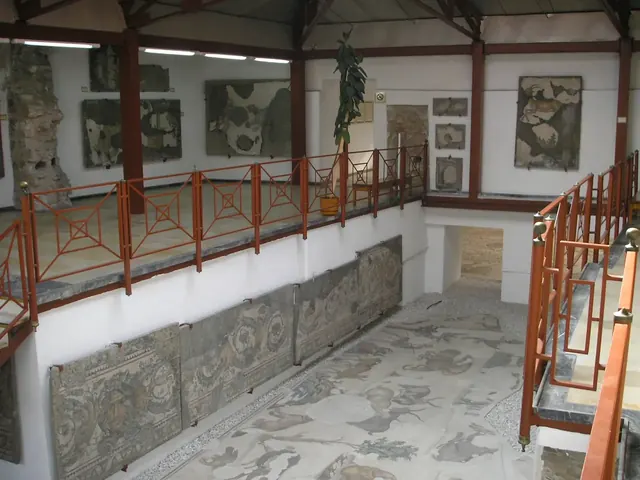
The Great Palace Mosaic Museum, tucked inside the Arasta Bazaar behind the Blue Mosque, preserves in place a large stretch of floor mosaic from the Great Palace of the Byzantine emperors. Its hunting scenes, pastoral vignettes and children at play are usually dated to the early 6th century and rank among the liveliest late-antique art anywhere in Istanbul. It is small and quick to see, yet many visitors call it a highlight.
On this page5
The floor of a vanished palace
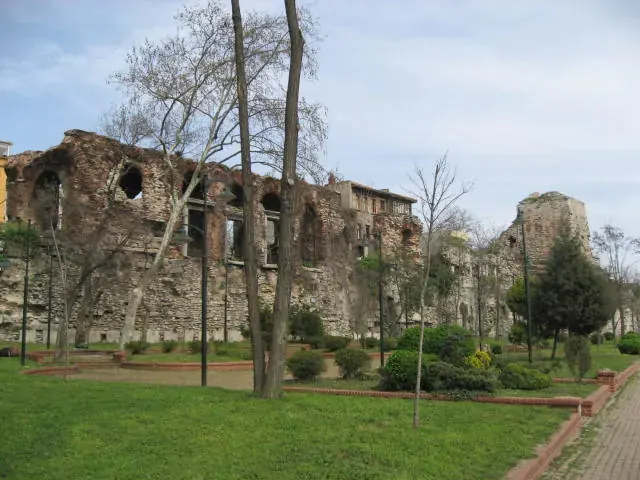
For some 800 years the Great Palace was the seat of Byzantine power: a sprawling complex of halls, courtyards, chapels and gardens that grew from Constantine's time in the 4th century and stepped down in terraces from the Hippodrome to the Sea of Marmara. Almost all of it now lies beneath the houses, streets and mosques of Sultanahmet and Cankurtaran. Down by the shore, the ruins of the Bukoleon Palace and the sea walls are among its few visible traces.
The mosaics once paved the porticoes around a vast colonnaded courtyard (peristyle). Excavations by a team from the University of St Andrews in Scotland uncovered them in the 1930s and 1950s, and the museum was built over the pavement so it could stay where it was laid. A major conservation project with the Austrian Academy of Sciences in the 1980s and 1990s cleaned and stabilised the surface. Scholars still debate the exact date, but most place it around the reign of Justinian or shortly before.
Vignettes on a white ground
There is no single narrative here. Instead, dozens of self-contained scenes float on a white background: an elephant grappling with a lion, hunters bracing against wild beasts, a shepherd milking a goat, boys rolling hoops, figures gathering fruit. The mix of drama and idyll reflects the courtly taste for an idealised countryside and the aristocratic thrill of the hunt.
Get close and you will see how tiny the stone and glass cubes are; shading on faces and animal coats is so fine that from a step back it reads like painting. The border of curling acanthus leaves hides a large, moustached and bearded face, one of the most photographed details in the museum.
Scenes to look for
- Children riding a camel: a simple, charming panel that kids tend to love.
- The kicking mule: a mule throwing its rider, full of movement and unexpected humour.
- Eagle and serpent: a tense struggle that has been read in several symbolic ways.
- The bearded face: search the acanthus border for the great mask-like head.
- Excavation panels: explanations of the likely palace layout and how the pavement was saved in situ.
A short but rewarding stop
The museum is compact and on one level, which makes it manageable for visitors with limited mobility and families with small children. You view the mosaics from walkways around them, never stepping on the floor, and being indoors it works well on a wet day. It is run by the Ministry of Culture and Tourism; check the official site for current hours, tickets and museum-pass validity.
If Byzantine Constantinople is your interest, start here: once you picture the palace spreading below the Hippodrome, the ruins by the sea make much more sense. Our Byzantine Istanbul route links these sites into one walk.
Getting there from Sareban Hotel
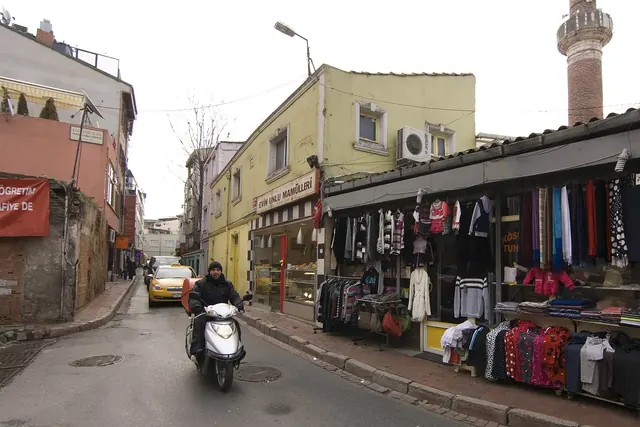
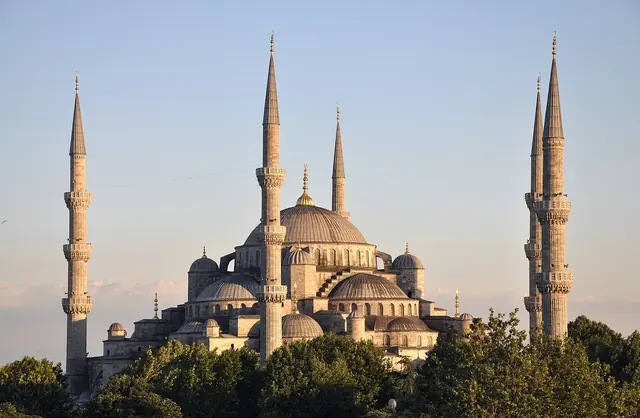
This is one of the closest museums to our hotel. From Küçük Ayasofya, walk uphill towards the back of the Blue Mosque and enter the Arasta Bazaar; the museum entrance sits partway along the lane between the shops. Leaving from the far end of the bazaar brings you straight to the Blue Mosque courtyard.
Frequently asked questions
Where exactly is the Mosaic Museum?
Behind the Blue Mosque on its south-east side, inside the Arasta Bazaar. You enter from the bazaar lane.
How old are the mosaics?
Most scholars date them to the early 6th century, when they decorated a courtyard of the Great Palace, although some propose a slightly earlier or later date.
How much time should I allow?
Thirty minutes to an hour is enough for most visitors.