Inshallah comes from the Arabic "in sha' Allah" and means "if God wills". People say it when they talk about a plan or a hope for the future: they intend to do their part, while accepting that the outcome rests with God. In Türkiye it is one of the most common words in everyday speech, and in Istanbul you will hear it in the bazaar, in taxis and at hotel reception desks.
On this page7
The literal meaning: "if God wills"
The phrase has three parts: "in" (if), "sha'a" (wills) and "Allah" (God), so it translates as "if God wills". In Arabic it is written إن شاء الله. In Turkish it is usually spelled "inşallah", sometimes "inşaallah", and in English you will see inshallah, insha'Allah or in sha Allah. They all mean the same thing.
The speaker means to do something and will make the effort, but also acknowledges that the future is not entirely in human hands. In Islam this attitude is called tawakkul: doing your best and leaving the result to God.
Where it comes from: guidance in the Qur'an
The practice is rooted in verses 23 and 24 of Surah al-Kahf, which say, in meaning: "Never say of anything, 'I will do this tomorrow,' without adding, 'if God wills.'" According to a report found in classical Qur'an commentaries, the verses were revealed after the Prophet Muhammad told people he would answer their questions the next day and did not add inshallah.
That is why Muslims see adding inshallah to a future plan as both good manners and a habit. Over time the word also moved beyond religious contexts, and in Turkish it is often used simply to mean "hopefully".
How it is used in everyday life
- Plans and intentions: "We're going to Topkapı tomorrow morning, inshallah." The speaker really does plan to go.
- Good wishes: "Inshallah you'll feel better soon." "Inshallah you'll have a good trip." Here it is close to "I hope".
- Waiting for an outcome: "Inshallah the weather will be nice tomorrow." It expresses hope for something beyond our control.
- Only for good things: Inshallah is always attached to a positive wish. People don't say it when wishing for something bad.
Does inshallah mean "maybe"? A common misunderstanding
Some first-time visitors hear inshallah as a polite "maybe" or even "probably not". In most cases it is the opposite: the person intends to do it and is saying so. Adding inshallah is a way of staying humble while making a promise.
If a shopkeeper tells you "It'll be ready this evening, inshallah," your order will be ready this evening. People who want to say that something is genuinely uncertain usually say so in plain words. If you need certainty, just ask for a time or a day; nobody will find that rude.
How to reply when someone says inshallah
- Inshallah: The most common reply is simply to repeat it, which shows you share the wish.
- Amin: If it was said as a prayer or a good wish, "Amin" (amen) is a natural answer.
- If you're not Muslim: A smile and "inshallah" or "I hope so" is perfectly fine. A respectful reply is always appreciated.
Other phrases you'll hear in Istanbul
- Maşallah (mashallah): "God has willed it." Said when admiring something beautiful and to ward off the evil eye: "Mashallah, what a lovely child!" You'll see "Maşallah" plaques in shops and homes.
- Bismillah: "In the name of God." Said before eating, setting off on a journey or starting a task.
- Elhamdülillah (alhamdulillah): "Praise be to God." A common answer to "How are you?" is "Fine, elhamdülillah."
- Allah razı olsun: "May God be pleased with you", a heartfelt thank-you. The reply is "Sizden de" (and with you) or "Amin".
- Hayırlı olsun: A good wish for a new home, job or purchase. Reply with "Sağ olun" (thank you).
- Kolay gelsin: "May it come easy", a friendly greeting to someone at work. It isn't religious; reply "Sağ olun".
- Allah kabul etsin: "May God accept it", said after prayer or fasting. The reply is "Amin, cümlemizin" (amen, for all of us) or simply "Amin".
Where you'll hear these words
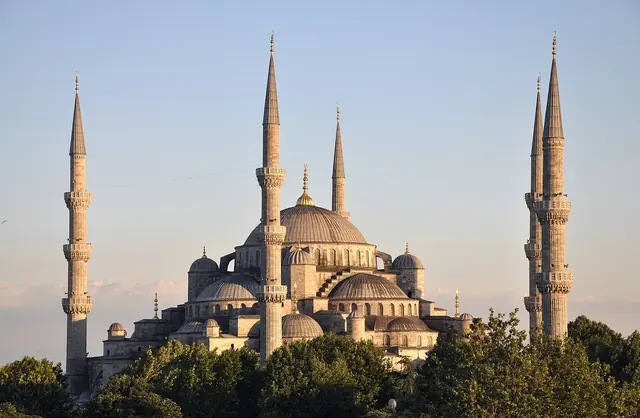
Almost everywhere: at the end of a haggle in the Grand Bazaar, when your taxi sets off, after a mosque visit or around the breakfast table. Similar prayers also appear in the calligraphy on the walls of mosques such as the Blue Mosque; our guide to Islamic calligraphy helps you read them.
At our hotel in Küçük Ayasofya you may hear "inshallah" from our team almost as often as "welcome". If you'd like to explore Istanbul with Islamic sensitivities in mind, see our guide for Muslim travellers and our article on halal food.
Frequently asked questions
How do you spell inshallah?
There is no single English spelling. Inshallah is the most common, and insha'Allah and in sha Allah are also widely used. In Turkish it is "inşallah" or "inşaallah". All mean "if God wills".
What is the difference between inshallah and mashallah?
Inshallah looks to the future and means "if God wills". Mashallah is said about something that has already happened or that you can see, and means "God has willed it"; it expresses admiration and a wish for protection from the evil eye.
Can non-Muslims say inshallah?
Yes. The word is part of everyday speech in Türkiye and expresses a good wish. Used respectfully, it is welcomed, and many non-Muslims in Türkiye and the Arab world use it too.
When someone says inshallah, do they mean no?
Usually not. Most of the time the person genuinely intends to do it and is adding a humble prayer to their word. If you need a firm plan, simply ask for a time or a day.