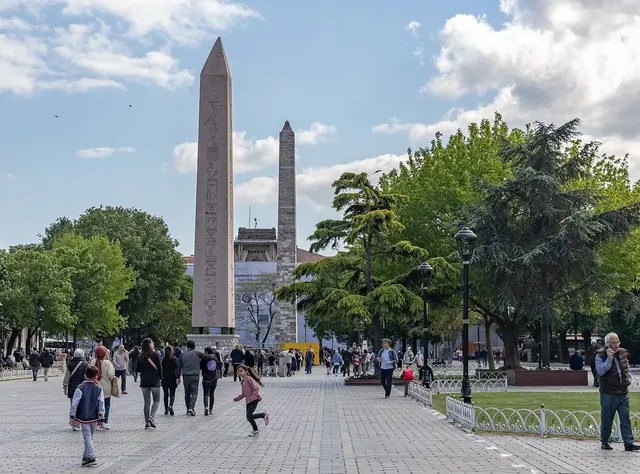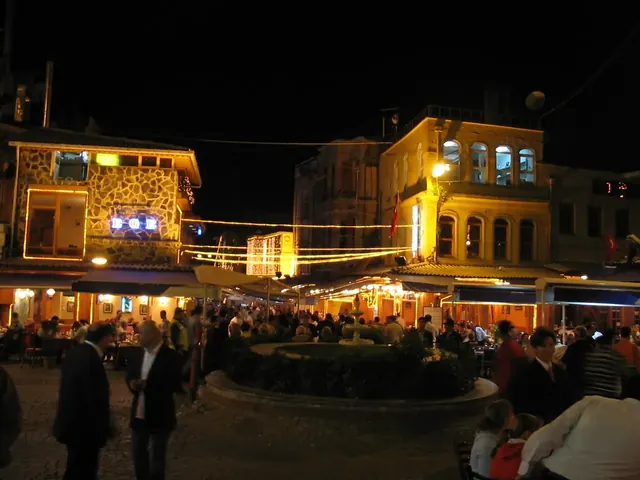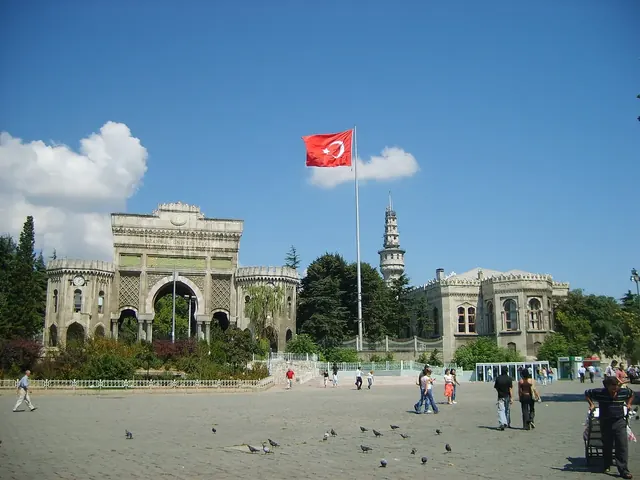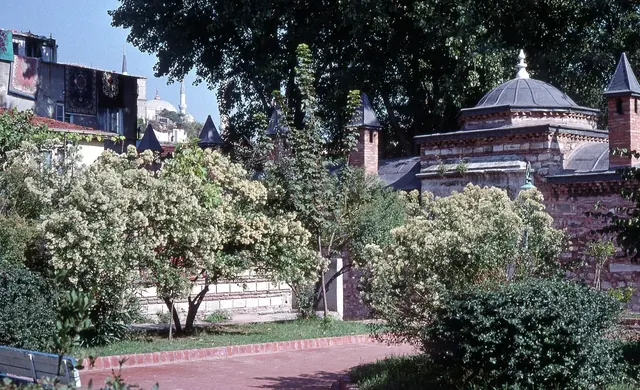
Küçük Ayasofya and Kadırga form a quiet residential neighbourhood just south-west of Sultanahmet Square, sloping down to the Sea of Marmara. Justinian's Little Hagia Sophia, Sinan's Sokullu Mehmed Pasha Mosque and the outline of a filled-in Byzantine harbour sit among washing lines and corner grocers. It is where our hotel is, a few streets from the tour groups and a world away from them.
On this page7
A few streets from the crowds, a different city
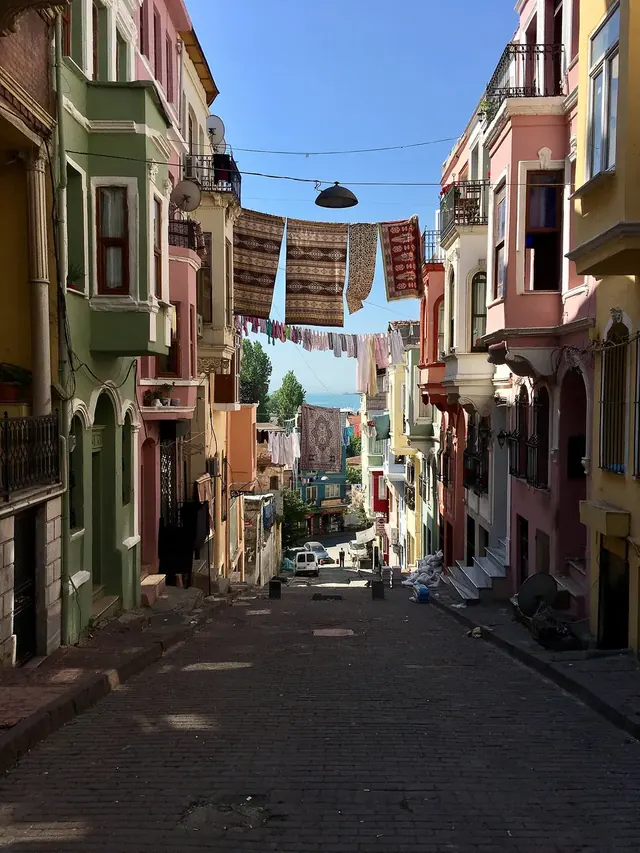
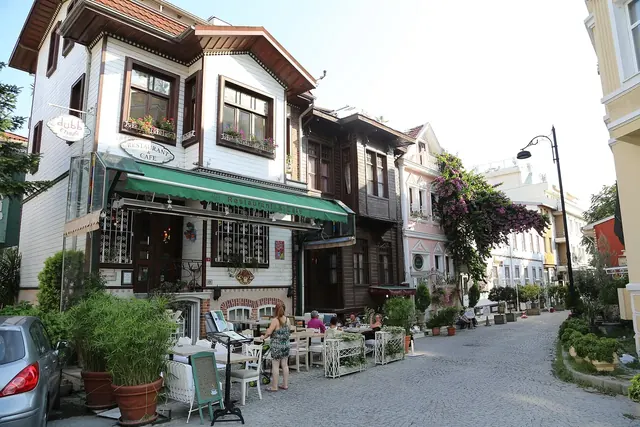
Walk downhill from the back of the Blue Mosque for a few minutes and the soundtrack changes. Loudspeakers and tour-guide patter give way to children kicking a football, neighbours chatting on doorsteps, the smell of bread from the local bakery and cats asleep on warm car bonnets. Küçük Ayasofya is one of the few corners of the Historic Peninsula where people still genuinely live: they grow up here, walk to dawn prayer and call out to each other from window to window.
The streetscape is a patchwork of restored timber and stone houses, plain mid-century apartment blocks and buildings resting on Byzantine foundations. Most lanes are narrow and one-way, with little traffic and quiet nights. On the south side the ground falls away steeply, and from many rooftops you can see, beyond the coast road, the cargo ships anchored in the Marmara waiting their turn to enter the Bosphorus.
Justinian's church and a harbour that disappeared
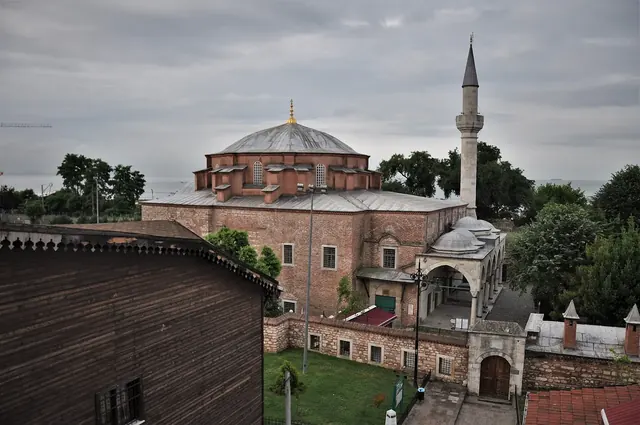
The neighbourhood takes its name from the Church of Saints Sergius and Bacchus, built between 527 and 536 under Justinian and Theodora. According to historical sources it stood beside the Palace of Hormisdas, where Justinian lived before becoming emperor. Its octagonal domed plan is often described as a rehearsal for Hagia Sophia, built a few years later, which is why locals call it Little Hagia Sophia. Around 1500, under Sultan Bayezid II, the palace official Hüseyin Ağa converted it into a mosque.
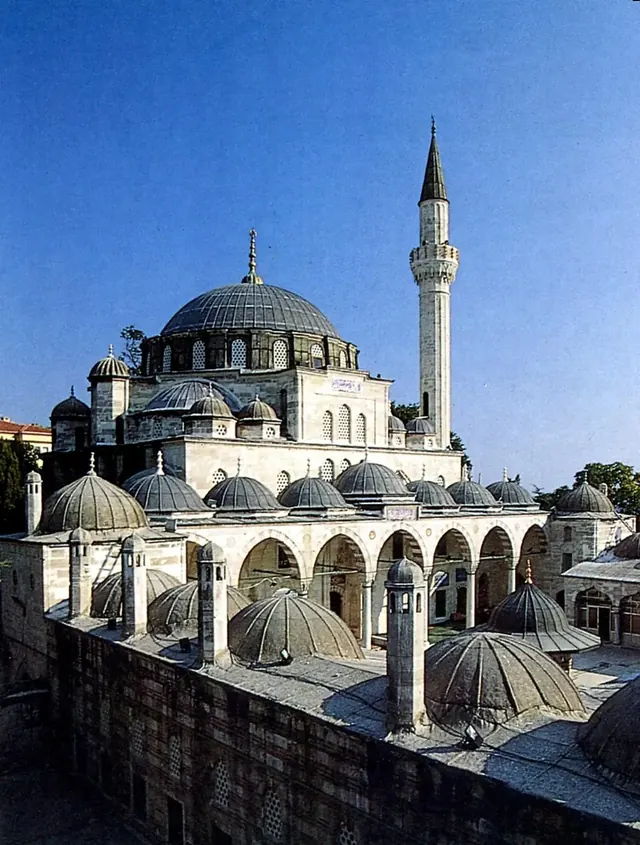
The low-lying ground of today's Kadırga Square was once a Byzantine harbour, known as the Julian Harbour and later named after the Empress Sophia. The Ottomans used it for a time to shelter their galleys, called kadırga in Turkish, and the name stuck long after the basin silted up and was filled in. You can still sense the old waterline in the curve of the streets. Further up the slope, in 1571–1572, the architect Sinan built a small, near-perfect complex for Grand Vizier Sokullu Mehmed Pasha and his wife Esmahan Sultan.
What to see in the neighbourhood
- Little Hagia Sophia Mosque: the carved Greek frieze inside still names Justinian, Theodora and Saint Sergius. Its shady courtyard, ringed by former madrasa cells, is one of the most peaceful spots on the peninsula.
- Sokullu Mehmed Pasha Mosque: Sinan's masterclass in building on a slope. You climb a stairway beneath the madrasa into the courtyard, and inside are İznik tiles from the very best period. Tradition holds that fragments of the Black Stone of the Kaaba are set into the entrance, the mihrab and the minbar.
- Kadırga Square and Harbour: the open space on the site of the old harbour basin, where local kids play football and older residents claim the benches.
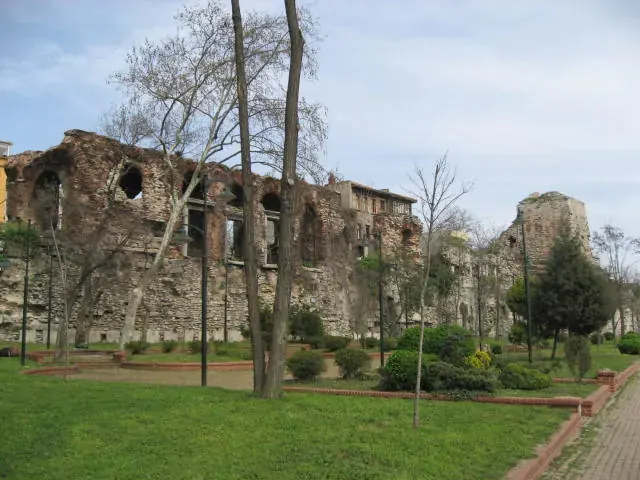
- Bukoleon Palace ruins: the sea-facing façade of the Byzantine imperial palace, with marble window frames embedded in the Marmara sea walls. Best seen from the coast road.
- Kennedy Avenue seafront promenade: the neighbourhood's back garden, with lawns and open sea views at the foot of the hill.
Downhill to the sea: a one-hour neighbourhood loop
- Begin in the courtyard of Little Hagia Sophia and walk round the arcades and the tomb of Hüseyin Ağa before going inside.
- Head west through the narrow lanes and climb to the Sokullu Mehmed Pasha Mosque. The moment you step out from under the madrasa arch into the courtyard, you'll see how Sinan turned an awkward slope into a stage.
- Walk down from Sokullu to Kadırga Square and look for the rounded outline of the former harbour.
- Use one of the underpasses beneath the railway line to cross to the shore, then turn east along the Kennedy Avenue promenade.
- Follow the sea walls to the windows of the Bukoleon Palace, then climb back into the neighbourhood behind Little Hagia Sophia to close the loop.
Neighbourhood food: bakeries, stews and tea by the sea
This is not a restaurant district; it is a place for everyday local food. In the morning the bakeries turn out fresh bread, simit and soft poğaça pastries, and a simple breakfast of white cheese, olives and tomatoes from the corner shop suits the pace of the neighbourhood perfectly. At lunchtime the nearby tradesmen's canteens serve home-style dishes such as white beans in tomato sauce, vegetable stews, stuffed aubergines and olive-oil vegetables.
In the late afternoon, local families carry flasks of tea down to the seafront lawns and share simit while the ships go by, one of Istanbul's best free rituals. If you want fish, the historic fishermen's quarter of Kumkapı is a short walk west.
For families: quiet streets and space by the water
For families the big advantage is calm. With little traffic in the lanes, walking is easy, and nights are genuinely quiet. After a day of museums, the open ground of Kadırga Square and the wide grassy strips along the seafront give children room to run within minutes of the door.
Two things to know: the neighbourhood is hilly, so wheeling a pushchair down to the sea is easy but the climb back is a workout. And Kennedy Avenue is a fast coastal road, so always cross using pedestrian crossings or underpasses. Our family page has more ideas for travelling with children.
Getting there from Sareban Hotel
Sareban Hotel is on Cinci Meydanı Street, a few lanes from Little Hagia Sophia, with the Sokullu Mehmed Pasha Mosque close by and the seafront a few minutes downhill. In other words, everything on this page starts at our front door. Sultanahmet Square, Hagia Sophia and the Blue Mosque are an uphill walk of around 10–15 minutes.
The real benefit of staying here is spending your days in the middle of the old city and your evenings somewhere calm. Watching the ships on the Marmara from our sea-view rooftop terrace at sunset is one of the neighbourhood's small pleasures. For a self-guided day out, try our Historic Peninsula walking route from the hotel.
Frequently asked questions
How close is Küçük Ayasofya to Sultanahmet?
Very close: the neighbourhood lies just south-west of Sultanahmet Square. Hagia Sophia, the Blue Mosque and the Hippodrome are usually a 10–15 minute walk, and the Arasta Bazaar and Mosaic Museum are nearer still.
Can visitors go inside Little Hagia Sophia?
Yes. It is a working mosque that welcomes visitors outside prayer times, with free entry and the usual dress code. Our mosque etiquette guide explains what to wear.
Is the area quiet and safe at night?
Küçük Ayasofya feels like a residential neighbourhood rather than a tourist strip. Streets calm down in the evening and there are no nightlife venues. The usual big-city common sense is all you need.
Can I walk to the sea from here?
Yes. From the southern edge of the neighbourhood you drop down to Kennedy Avenue and a long seaside promenade that runs east to Cankurtaran and Ahırkapı and west towards Kumkapı.