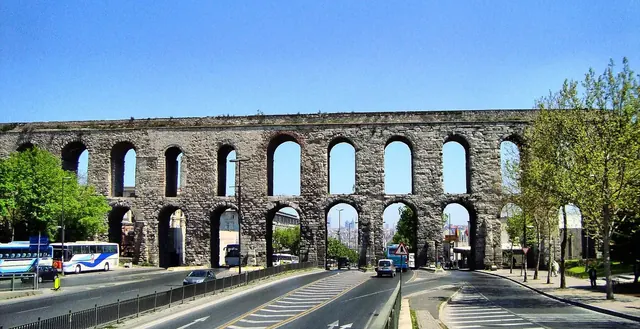
The Valens Aqueduct is a monumental Roman water channel completed in the 4th century under Emperor Valens, carrying water across the valley between Istanbul's third and fourth hills. Locals know it as the Bozdoğan Kemeri. With traffic on Atatürk Boulevard still passing beneath its arches, it is the most impressive piece of Roman engineering in the city, standing for more than 1,600 years.
On this page5
Bringing water to an imperial capital
A hilly site and a fast-growing population made water one of Constantinople's biggest challenges from the start. A long water-supply system brought water from springs in Thrace, and this aqueduct carried it over the valley into the heart of the city. It is generally dated to around AD 368, under Emperor Valens. The water fed a network that also relied on great cisterns such as the Basilica Cistern and the Cistern of Philoxenos.
The aqueduct was repaired many times in both the Byzantine and Ottoman eras. Work under Mehmed II after the conquest, and later the Kırkçeşme water system projects carried out by Mimar Sinan under Suleiman the Magnificent, kept it working for centuries. That is why the walls show a patchwork of stone and brick from different periods.
Scale and the view today
The surviving section runs for more than 900 metres, and at its highest point it stands roughly 29 metres tall. The double tier of arches is at its most dramatic over the lowest part of the valley, exactly where Atatürk Boulevard now runs. When the boulevard was built in the 1940s, traffic was routed under two of the great arches, turning an ancient monument into part of the city's daily rhythm.
The origin of the Turkish name Bozdoğan is uncertain and several folk explanations exist. Whatever you call it, the aqueduct offers one of the strongest photographs in the old city, especially in the late afternoon and after dark when it is lit up.
What to see
- The boulevard view: The classic shot, with cars passing beneath the two central arches.
- Saraçhane Park side: A calmer angle on the southern face, framed by trees.
- Layers of repair: Changes in the courses of cut stone and brick reveal centuries of restoration.
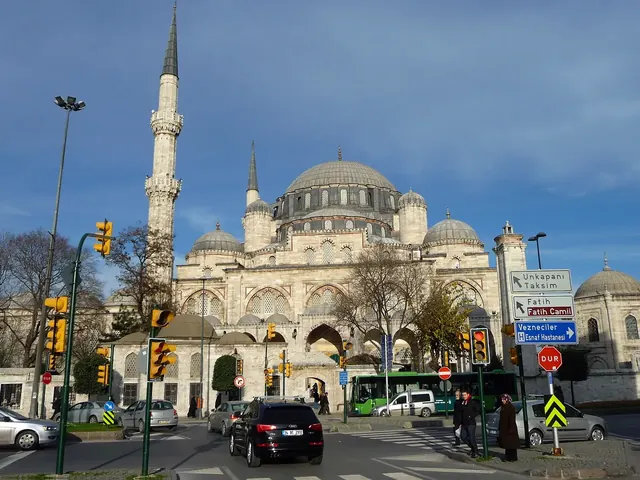
- With the Şehzade Mosque: From the eastern end you can frame the minarets of the Şehzade Mosque together with the arches.
- Evening lighting: Once illuminated, the arches take on a completely different mood.
Visiting tips
The aqueduct is in the open, free and visible at any time, but climbing on it is forbidden and dangerous. The boulevard is extremely busy, so never step into the road or onto the central reservation for a photo; use the pavements and crossings.
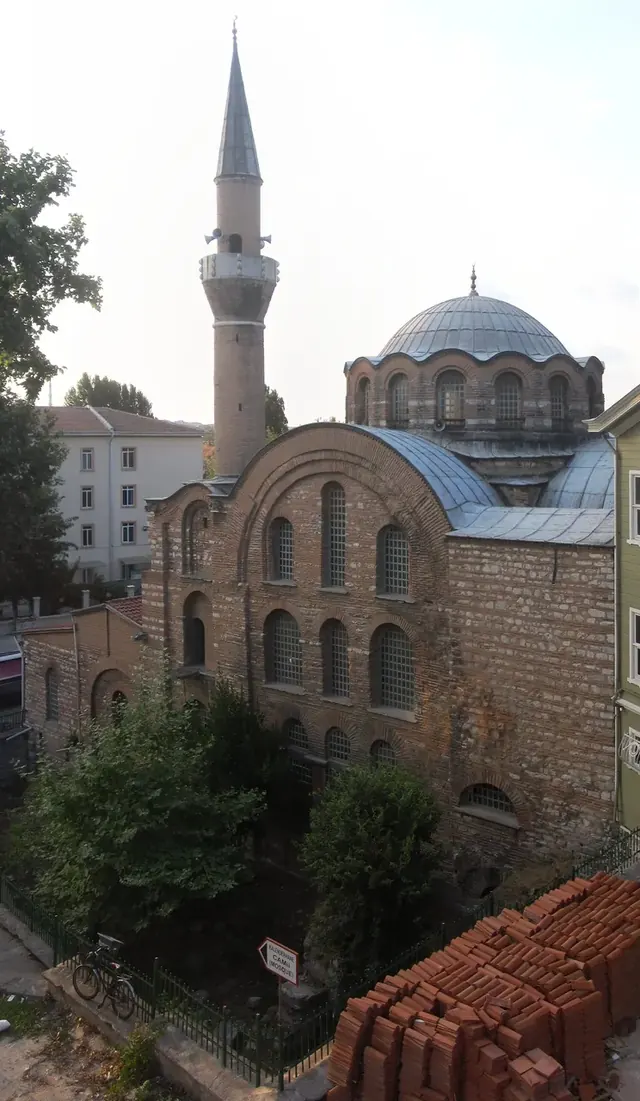
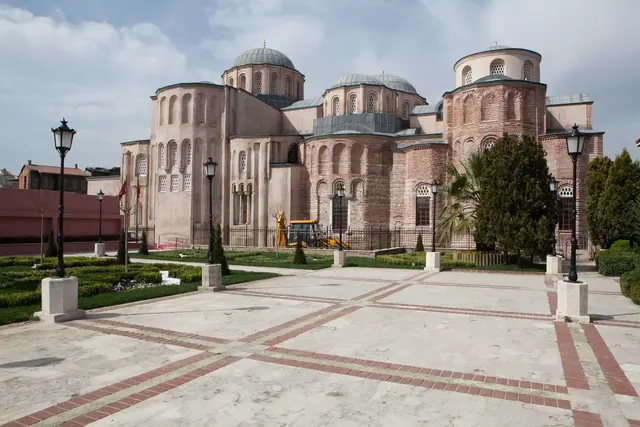
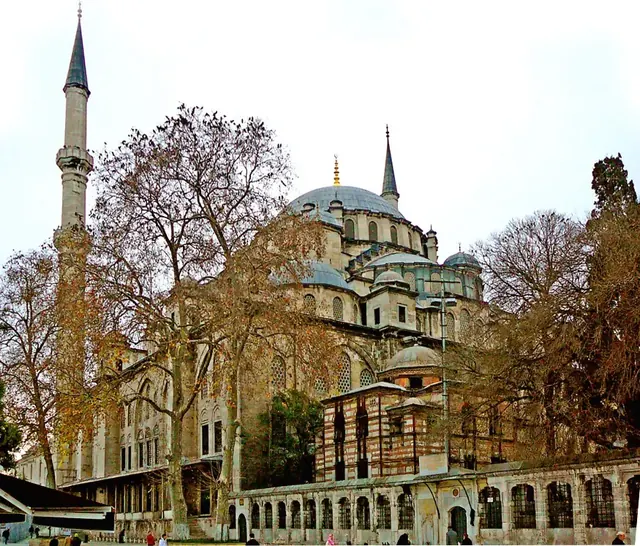
Sloping streets at the northern end lead towards Zeyrek, where the Zeyrek Mosque and the Fatih Mosque are both within walking distance. For more Byzantine sights, see our Byzantine Istanbul route, and for framing tips, our guide to the best photo spots includes the aqueduct.
Getting there from Sareban Hotel
You can walk here from the hotel, but it is a fairly long walk: follow Divanyolu and Ordu Caddesi past Beyazıt Square and continue via Şehzadebaşı to reach the eastern end of the aqueduct. The easier option is the T1 tram to Laleli-Üniversite, then a short walk north. Vezneciler metro station is also only a few minutes away.
Frequently asked questions
When was the Valens Aqueduct built?
It is generally dated to around AD 368, during the reign of Emperor Valens, and was repaired many times in the Byzantine and Ottoman periods.
Is there a fee to see the aqueduct?
No. It stands in the open and can be viewed free of charge from the street; visitors cannot go up onto it.
Why is it also called Bozdoğan Kemeri?
The origin of the name is not known for certain and there are several folk explanations. Both names are widely used in Turkish.