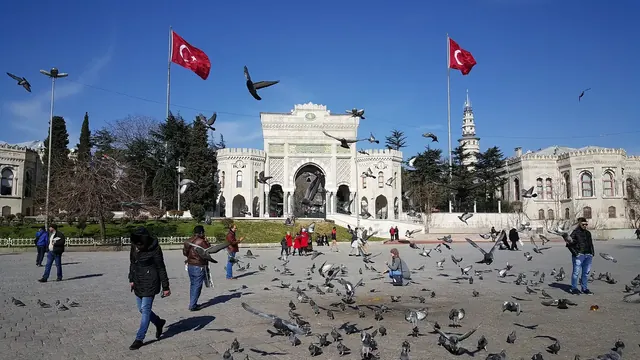
Beyazıt Square stands on the site of the Forum of Theodosius, a late Roman public square, and today it is one of the liveliest spaces in the old city, framed by Istanbul University's monumental gate, Beyazıt Mosque and flocks of pigeons. The stone Beyazıt Tower in the university grounds once watched over the city for fires. In a few minutes you can read some 1,600 years of layered history here.
On this page5
Roman stones by the tramline
At the end of the 4th century Emperor Theodosius I built a grand forum here, known in sources as the Forum Tauri. Lying beside the pavement along Ordu Caddesi, right next to the tram tracks, are massive column drums and arch blocks from its triumphal arch. Their unusual carvings, which look like teardrops or peacock eyes, are the detail everyone stops for, and their meaning is still debated.
Many of these pieces came to light during road widening in the mid-20th century. Others were reused centuries ago in the foundations and walls of the nearby Bayezid II Hamam, a rare spot where Rome and the Ottomans literally share the same stones.
From the Old Palace to the university
After the conquest, Mehmed II built his first palace here, before Topkapı Palace existed, which is why it became known as the Old Palace. In the 19th century the site became the headquarters of the Ottoman Ministry of War, and the arched, turreted gate facing the square dates from that period. Since the early Republic the building has been the main seat of Istanbul University.
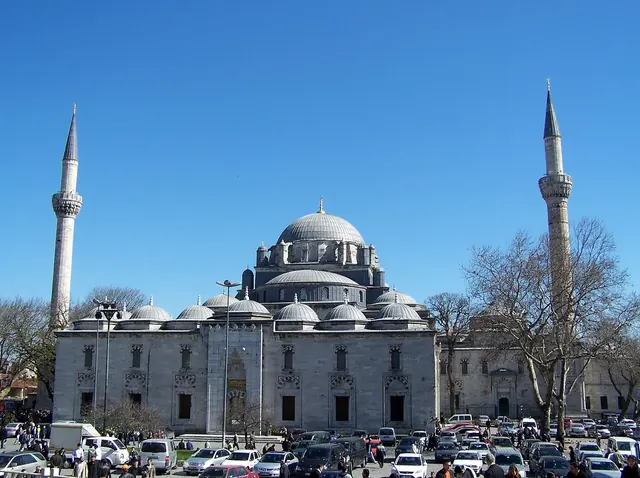
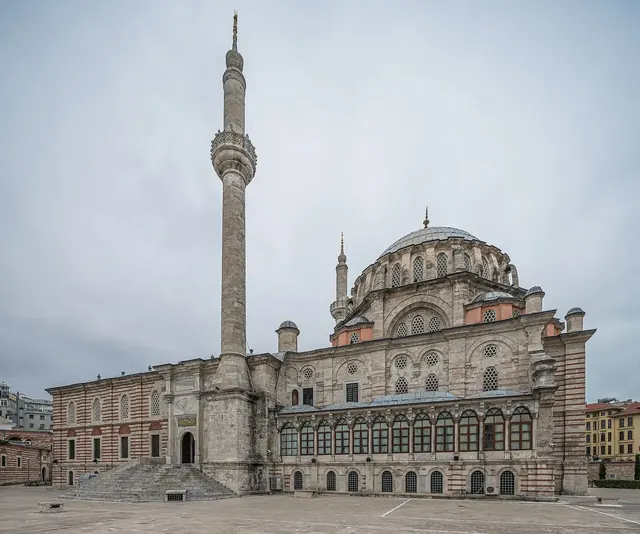
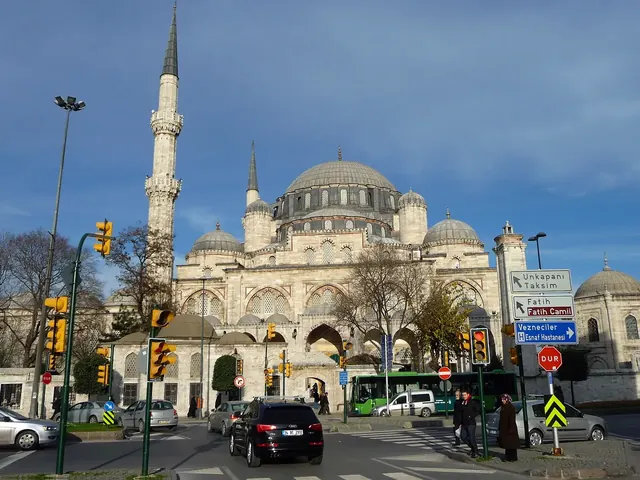
On the east side of the square stands Beyazıt Mosque, whose former soup kitchen has housed the Beyazıt State Library since 1884. Around the central pool, students, simit sellers and pigeons keep the square busy all day.
Beyazıt Tower: the city's fire lookout
In a city of wooden houses, fire was the greatest danger. A wooden fire-watch tower first stood here; the stone tower you see today was built in 1828 under Sultan Mahmud II, with Senekerim Balyan usually named as its architect. The upper storeys were added later.
When lookouts spotted a fire, they signalled which district was burning using baskets by day and lanterns by night. Because the tower stands inside the university grounds, it is generally not open to visitors, but it looks superb from the square and from the lanes leading up towards Süleymaniye.
What to see
- Triumphal arch fragments: Carved column drums along Ordu Caddesi.
- Istanbul University gate: The 19th-century Ministry of War gateway, the square's most photogenic facade.
- Beyazıt Tower: The stone fire tower rising behind the gate.
- Beyazıt State Library: A long-established public library in a historic mosque-complex building.
- The pool and pigeons: Children's favourite corner and a good place to pause.
Getting there from Sareban Hotel
From the hotel, climb to Divanyolu and walk west past the Column of Constantine and the entrances of the Grand Bazaar; the avenue runs straight into Beyazıt Square. On the T1 tram, the Beyazıt-Kapalıçarşı stop is at the edge of the square, and the Roman fragments are only a few steps away. From here you can follow the university wall north to the Süleymaniye Mosque.
Frequently asked questions
Can you climb Beyazıt Tower?
The tower stands in the grounds of Istanbul University and is generally not open to visitors. The best views of it are from the square and the lanes towards Süleymaniye.
What are the Roman ruins in Beyazıt Square?
They are column and arch fragments from the triumphal arch of the Forum of Theodosius, built at the end of the 4th century. You can see them in the open along Ordu Caddesi.
What was Beyazıt Tower used for?
It was a fire-watch tower. Lookouts signalled the district of a fire with baskets by day and lanterns by night.