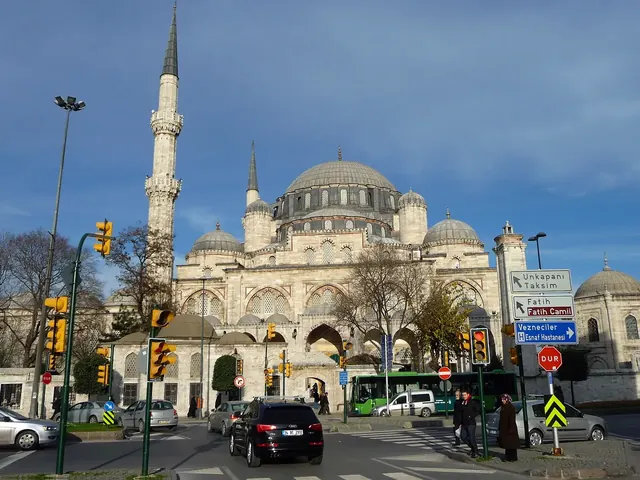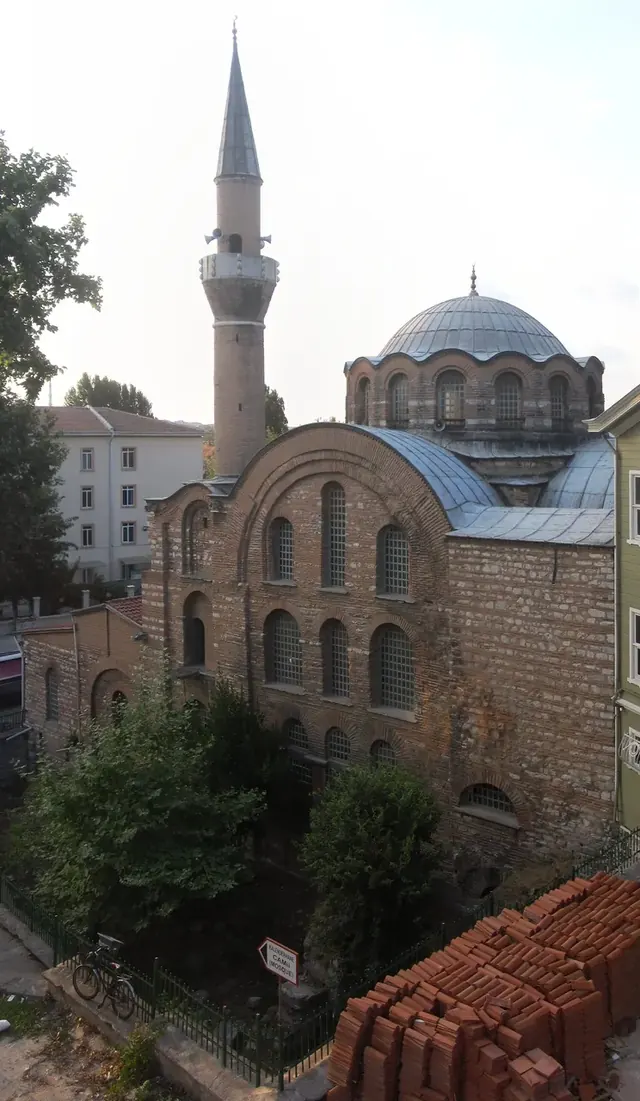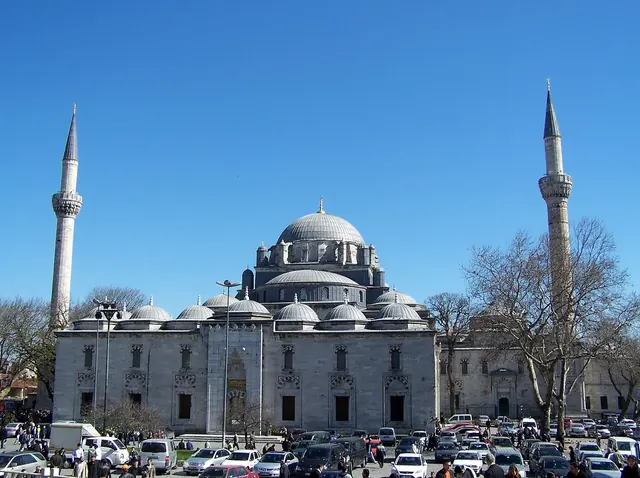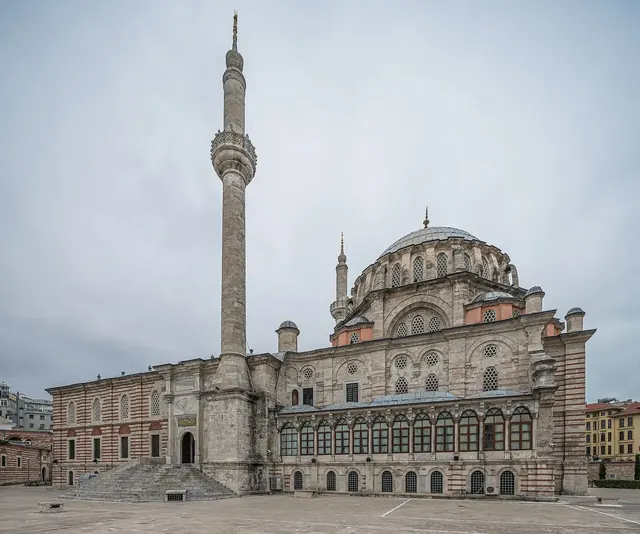
Laleli Mosque was built for Sultan Mustafa III between 1760 and 1764 on today's Ordu Caddesi, and after Nuruosmaniye it is the most important imperial mosque of the Ottoman baroque. It rises on a tall platform containing vaulted shops and halls, and its interior glows with coloured marble and stone. Although it stands right by a tram stop, most visitors pass without noticing it.
On this page5
Mustafa III's baroque mosque
Laleli went up only a few years after the Nuruosmaniye Mosque was finished, showing how quickly the new baroque taste took hold in the capital. Sources name Mehmed Tahir Ağa as its architect. There are several stories about the name; the most common holds that a dervish known as Lâleli Baba lived nearby and gave his name to the area and the mosque.
Unlike the classical mosques with their broad, ground-level courtyards, Laleli sits on a raised platform reached by stairs. Beneath it are vaulted shops and a large lower hall, an inventive way of stacking a mosque and a market on the same footprint.
Coloured stone, arches and light
Inside, the dome rises on piers and arches set against the walls. The multicoloured marble, porphyry and semi-precious stone around the prayer niche and pulpit are what set Laleli apart from its contemporaries, while the rhythm of the windows and curving cornices creates a lively play of light.
Outside, look for scrolled eaves, undulating mouldings and an ornate fountain. In the garden stands the tomb shared by Mustafa III and his son Selim III, the reforming sultan whose efforts to modernise the empire give the site added historical weight.
What to see
- The raised platform and stairs: A dramatic approach lifting the mosque above street level.
- Coloured stone around the prayer niche: Marble and porphyry panels on the qibla wall.
- Tomb of Mustafa III and Selim III: A baroque mausoleum for father and son.
- Baroque fountain and eaves: The easiest places to spot the curving stone carving from outside.
- The vaulted spaces below: The unusual structure that joins mosque and market.
Compare the baroque mosques
Seeing Laleli and Nuruosmaniye on the same day is the best way to understand early Ottoman baroque: Nuruosmaniye is all about its single dome and horseshoe courtyard, Laleli about its raised platform and rich interior colour. For the classical contrast, head on to the Süleymaniye Mosque.
The mosque is in daily use for prayer, so visits pause at prayer times and modest dress is expected. See our mosque etiquette guide, and for tips on prayer, halal food and more, our guide for Muslim travellers in Istanbul.
Getting there from Sareban Hotel
The easiest way is the T1 tram: board at Sultanahmet or Çemberlitaş and get off at Laleli-Üniversite, where the mosque is right in front of you. If you prefer to walk, go up to Divanyolu from the hotel and continue west past the Column of Constantine and Beyazıt Square along Ordu Caddesi. Our T1 tram guide explains how to use the line.
Frequently asked questions
Who built Laleli Mosque?
Sultan Mustafa III. Construction began in 1760 and was completed around 1764; the architect is usually named as Mehmed Tahir Ağa.
Where does the name Laleli come from?
There are several stories. The most common says it comes from a dervish known as Lâleli Baba who lived in the area.
Who is buried at Laleli Mosque?
Sultan Mustafa III and his son Sultan Selim III share the tomb in the mosque garden.