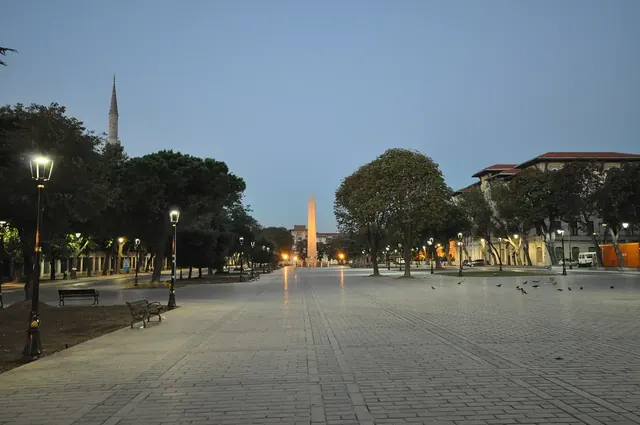
Beneath Istanbul lie more than a hundred cisterns built in the Byzantine era to store the city's water. The three most impressive ones open to visitors, the Basilica Cistern, the Cistern of Philoxenos (Binbirdirek) and the Theodosius Cistern (Şerefiye), sit within walking distance of one another between Sultanahmet and Çemberlitaş and can be combined in half a day.
On this page7
Why a city hid its water underground
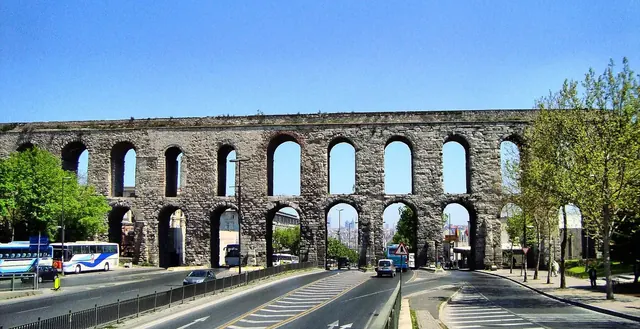
Constantinople had no major river running through it and was besieged many times. The answer was to bring water from far away through channels and aqueducts such as the Aqueduct of Valens, then store it inside the walls. Storage came in two forms: covered cisterns roofed with vaults and domes, and vast open-air reservoirs.
Sources record more than a hundred Byzantine cisterns in the city, many sitting silently beneath houses, shops and even hotels. Their columns were often reused from older temples and buildings, which is why a single cistern may hold columns of different heights with different capitals. To follow Byzantium above ground as well, see our Byzantine Istanbul itinerary.
The Basilica Cistern: a forest of columns
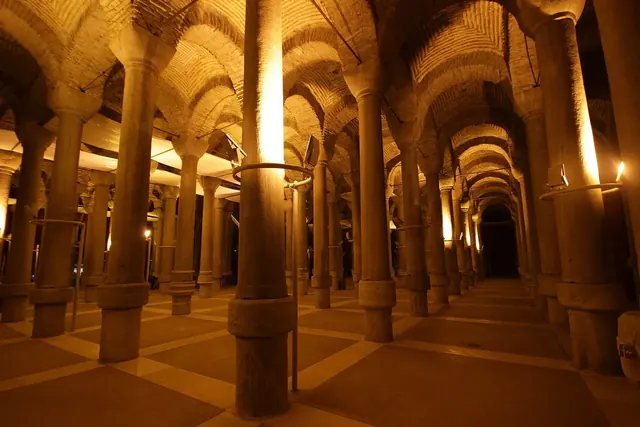
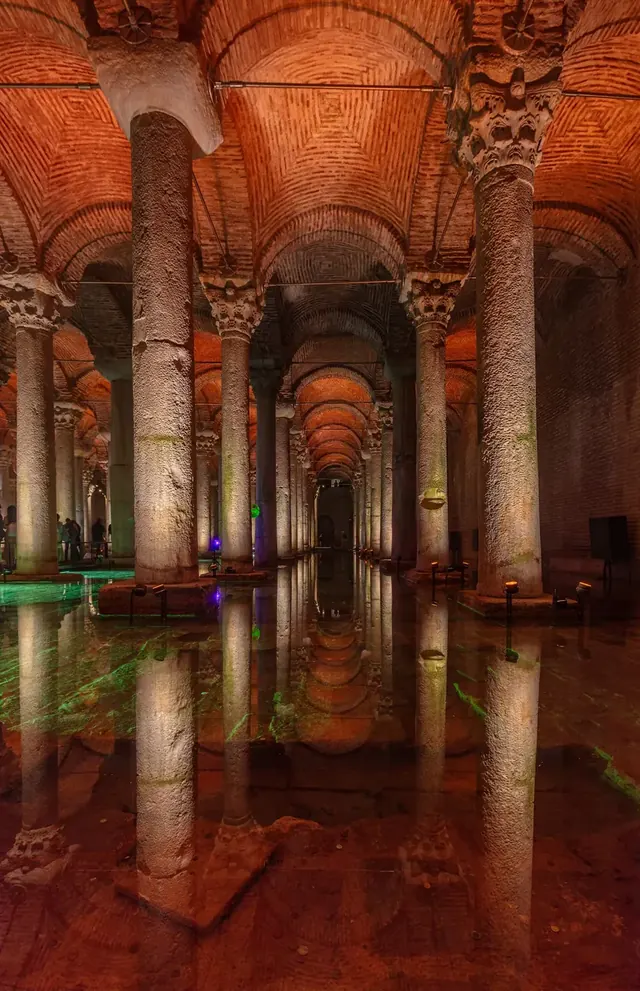
The Basilica Cistern was built under Justinian in the 6th century beneath a great public basilica, hence its English name; its Turkish name, Yerebatan, means sunken into the ground. Its 336 columns, as the figure is usually given, reflect in the water under low lighting and create the illusion of an endless forest. Forgotten for a long time in the Ottoman period, it was rediscovered thanks to residents who lowered buckets through their basements.
Its most famous details are the two Medusa heads in the northwest corner, one set sideways and one upside down, the most striking example of recycled masonry in the city. The so-called weeping column, covered in teardrop-like motifs, is another favourite. Reopened in 2022 after an extensive restoration, the cistern sometimes hosts contemporary art installations.
- It is one of the busiest spots in Sultanahmet; going early in the morning or toward evening shortens the queue.
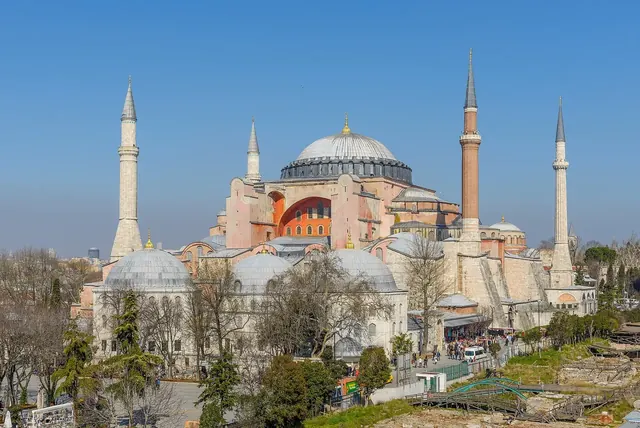
- It is directly across from Hagia Sophia, so the two fit easily into the same half-day.
- Allow about 45 minutes.
Binbirdirek Cistern: a dry cistern's second life
The Cistern of Philoxenos (Binbirdirek) lies below street level west of the Hippodrome. According to tradition it was commissioned in the 4th century by Philoxenos, one of Constantine's senators, and remodelled in the 6th century. Its columns rise in two stacked sections, giving it a taller, almost cathedral-like interior quite different from the Basilica Cistern.
It is dry today. Sources say it was used as a silk-thread workshop for a time in the Ottoman period. It now hosts cultural events and exhibitions, so visiting arrangements may change on some days. Because it is far quieter than the Basilica Cistern, you can study the columns and vaults at leisure.
The Theodosius Cistern (Şerefiye): light and projection
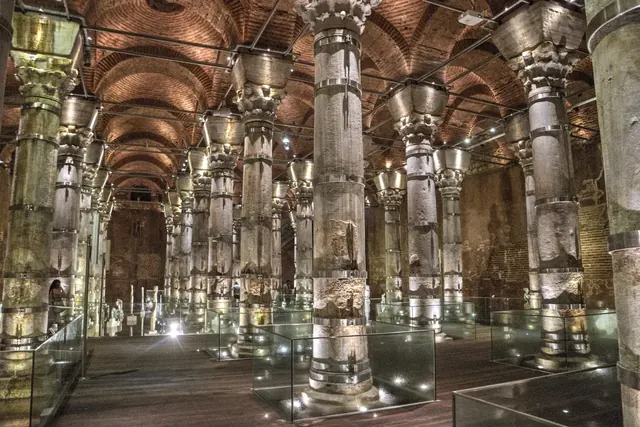
The Theodosius Cistern was built in the 5th century under Theodosius II and lay forgotten beneath a building for many years. After a major restoration it opened to visitors in 2018. With 32 marble columns it is relatively small but very elegant.
Visitors walk on glass walkways among the columns and vaults. Light and projection shows run at intervals through the day, telling the cistern's story visually in a way that also holds children's attention. Its position near the Çemberlitaş tram stop makes it easy to combine with a Grand Bazaar visit.
Open-air cisterns: giant reservoirs turned stadium and park
Byzantium's three great open-air reservoirs can still be traced in the city's fabric, though none holds water today. The Cistern of Aetius in Karagümrük now contains a football stadium, the Cistern of Aspar near the Yavuz Selim Mosque has become a park, and the Cistern of Mokios near Kocamustafapaşa was long used as a sunken vegetable garden. No ticket is needed to see them, and they fit well into a day in Fatih and Zeyrek or along the land walls.
All three covered cisterns in half a day
- From the hotel, walk up to the western side of the Hippodrome and start with Binbirdirek (about 10 minutes). Beginning with the quietest cistern is a good introduction to the architecture.
- Cross Divanyolu and walk to the Theodosius Cistern (5 to 7 minutes). Ask at the entrance when the next light show starts.
- Walk east past the Column of Constantine to the Basilica Cistern (7 to 10 minutes). If the queue is long, come back in the late afternoon.
- Emerging from the cisterns, daylight and crowds will feel sharper; ease back in with a tea break on Sultanahmet Square.
Practical tips for visiting cisterns
- It is cool and damp inside even in summer, so a light cardigan helps.
- Floors and stairs can be slippery from the humidity; wear shoes with grip. Both the Basilica and Theodosius cisterns have stairs at the entrance.
- Light levels are low; use your phone's night mode. Flash and tripod rules vary from cistern to cistern.
- Cisterns are perfect indoor options for rainy or very hot days; for more ideas see our rainy-day guide.
- Children usually love the Medusa heads and the light show; for family planning see our family guide to Istanbul.
Frequently asked questions
Which Istanbul cistern should I visit?
If you only see one, the Basilica Cistern is the most impressive for its scale and its Medusa heads. For a calmer and different experience, the light show at the Theodosius Cistern or the stacked columns of Binbirdirek are excellent alternatives.
How long is the queue at the Basilica Cistern?
It varies by season and day. It is usually longest around midday and shorter early in the morning and toward evening. Check current opening times on the official website.
Are the cisterns suitable for children?
Yes. The walkways have railings and are safe. The dim light and the chill can unsettle some small children at first; the short light show at the Theodosius Cistern is a good way to start.
How far are the cisterns from Sultanahmet?
All three are in or right next to Sultanahmet. The Basilica Cistern faces Hagia Sophia, Binbirdirek is west of the Hippodrome and the Theodosius Cistern is near the Çemberlitaş tram stop, each a few minutes' walk from the next.