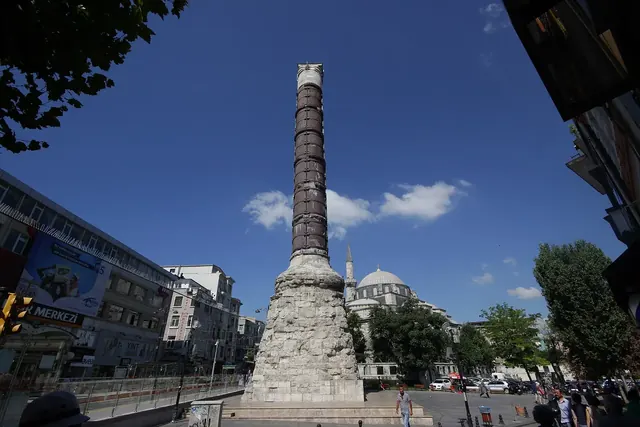
The Column of Constantine, known in Turkish as Çemberlitaş, is the porphyry column that Constantine the Great raised in 330 at the heart of his new forum when he inaugurated the city as the empire's new capital. It stands on the historic Divanyolu avenue between Sultanahmet and the Grand Bazaar, and its Turkish name — “the hooped stone” — comes from the iron bands around its shaft. It is one of the most important surviving witnesses to the birth of Constantinople.
On this page5
The monument that launched a new Rome
When Constantine refounded the old town of Byzantion as the empire's new centre, this column was the focal point of the lavish inauguration in 330. It stood just outside the city's earlier walls, in the middle of the circular Forum of Constantine on the ceremonial avenue. The forum was ringed with colonnades and filled with statues brought from all over the empire.
The shaft was made of stacked drums of Egyptian porphyry, the purplish-red stone reserved for emperors. According to ancient sources, a bronze statue on top portrayed Constantine as a radiant sun god. Including later additions and the base, the column is about 35 metres tall today.
From statue to cross to iron hoops
The statue of Constantine crashed down in a violent storm in 1106. In the 12th century Emperor Manuel I Komnenos added a masonry section to the top and placed a cross there; you can still see the change of material near the summit. After the Ottoman conquest the cross was removed.
Over the centuries fires and earthquakes around the column caused serious damage — which is why European travellers called it the “Burnt Column”. In the Ottoman period the shaft was bound with iron hoops to hold the porphyry drums together, and the base was encased in stone, giving the monument its Turkish name. Sources differ on exactly which repair added the hoops. The column underwent a thorough restoration in the 2000s.
Legends: what lies beneath?
Few monuments in Istanbul carry as many legends. Tradition says Constantine buried the Palladium, the protective statue brought from Rome, together with various relics revered in Christian tradition, in the column's foundations. None of this has been confirmed by excavation, but the stories show how the column came to symbolise the passage from pagan Rome to Christian Byzantium. Pause at the base and let them run through your mind — it turns a quick stop into a memorable one.
Around the column
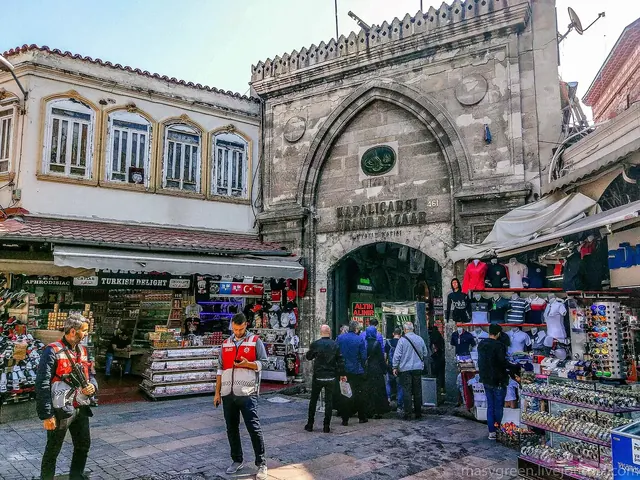
- Grand Bazaar: a few minutes' walk brings you to the Nuruosmaniye gate of the Grand Bazaar.
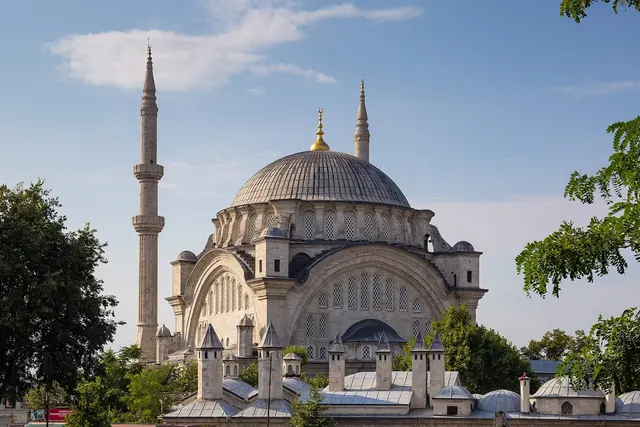
- Nuruosmaniye Mosque: right next to the bazaar gate, the Nuruosmaniye Mosque is the first great example of Ottoman Baroque.
- Historic hans: the lanes behind the column still hold Ottoman-era courtyard trading inns.
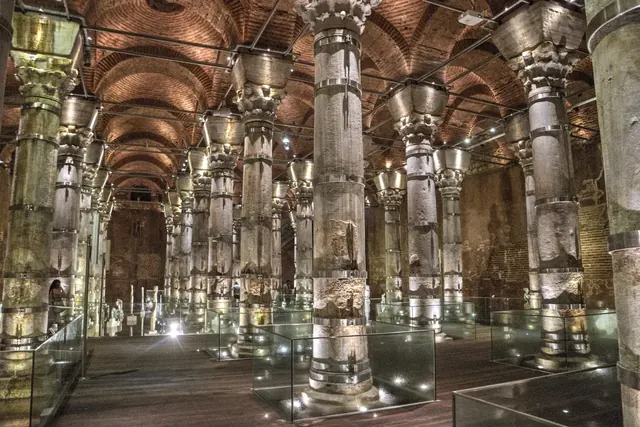
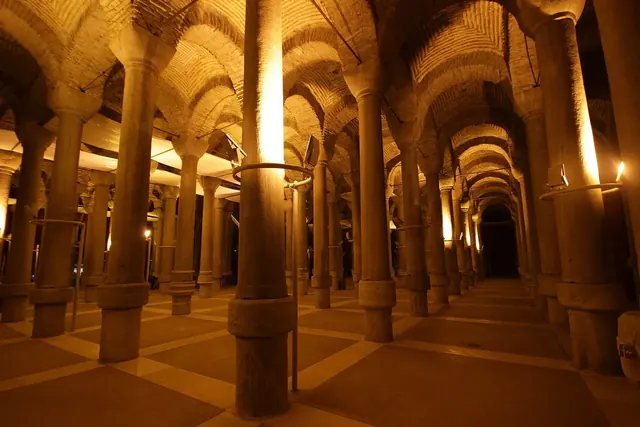
- The 1,001 Columns Cistern: in the streets south of Divanyolu, the underground Binbirdirek Cistern is waiting.
Getting there from Sareban Hotel
Walk uphill from the hotel past the Sokollu Mehmed Pasha Mosque, cross the Hippodrome to reach Divanyolu and follow the avenue west; depending on your pace it takes about 15 minutes. The column stands right beside the Çemberlitaş stop on the T1 tram line — our T1 tram guide helps you plan sightseeing by tram. For more stops nearby, start with our Beyazıt and Grand Bazaar neighbourhood guide.
Frequently asked questions
Is there an entrance fee for the Column of Constantine?
No. The column stands in the open beside the pavement and can be seen for free. The interior and top are not open to visitors.
When was the column built?
It was erected in 330, when Constantine the Great inaugurated the city as the new capital, at the centre of the Forum of Constantine.
Why is it called Çemberlitaş?
The name means “hooped stone”: the porphyry drums, damaged by fire and earthquakes, were bound together with iron hoops.
How do I get to the Column of Constantine?
The Çemberlitaş stop on the T1 tram line is right next to it, and it is also a few minutes' walk from Sultanahmet along Divanyolu.