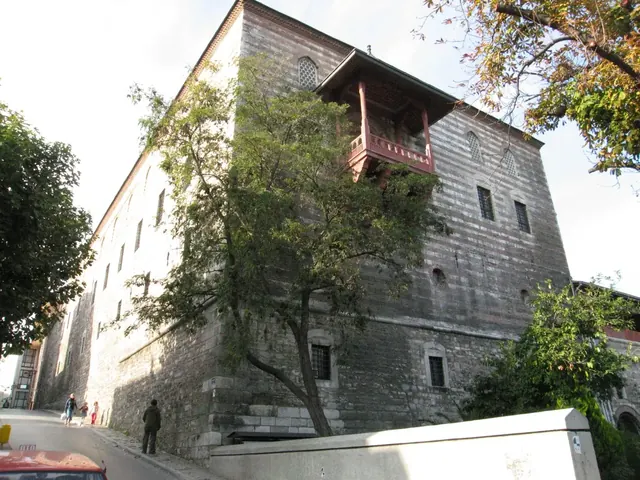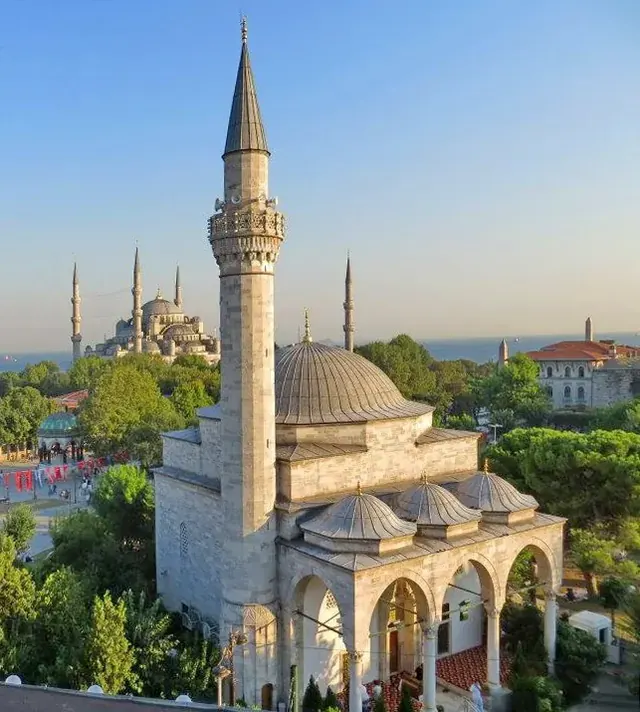
Firuz Ağa Mosque is a small, single-domed mosque on Divanyolu Avenue in Sultanahmet, right beside the tram line, built in 1491 by Firuz Ağa, chief treasurer to Sultan Bayezid II. One of the first generation of Ottoman mosques raised in Istanbul after the conquest, it shows the simple lines of early Ottoman architecture. For Muslim travellers it is a calm place to pray away from the crowds at the Blue Mosque.
On this page5
A treasurer's mosque, forty years after the conquest
Around four decades after Mehmed the Conqueror took Constantinople, Firuz Ağa, the official in charge of the palace treasury under Bayezid II, paid for this mosque. It was a time of intense rebuilding, when Ottoman grandees founded mosques, small prayer halls and fountains in their own names across the city. Firuz Ağa is believed to be buried in the small graveyard beside his mosque.
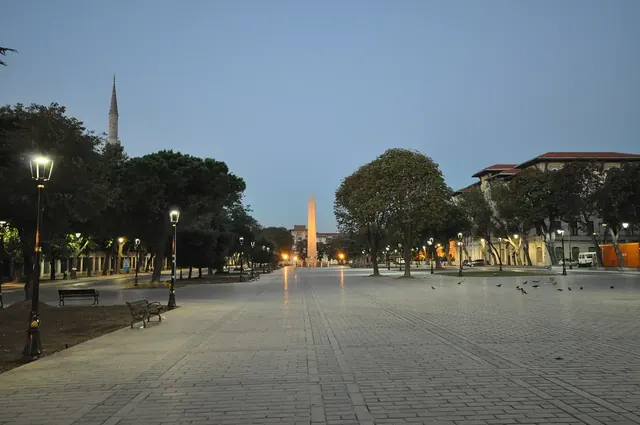
The setting matters too. The mosque stands on Divanyolu, the ceremonial avenue that followed the line of the Byzantine Mese, the city's main street. For centuries sultans, ambassadors and statesmen processed along it to the palace. Today the T1 tram follows the same route; walk west and you reach the Column of Constantine and the Grand Bazaar.
Early Ottoman architecture in miniature
The building follows the early Ottoman formula in its purest form: a square prayer hall under a single dome, fronted by an arcaded porch for latecomers. The stone and brick masonry reflects the modest scale of architecture before the great imperial complexes of the classical age. Decoration inside is restrained; the appeal lies in the calm, balanced space beneath the dome.
It makes an interesting comparison with the Blue Mosque a few hundred metres away, built more than a century later on a lavish scale with a cascade of domes and six minarets. Firuz Ağa represents the starting point of that architectural journey.
What to notice
- The single-domed prayer hall: small yet airy, with a simple transition from walls to dome.
- The porch: an arcaded entrance portico typical of early Ottoman mosques.
- The graveyard: beside the mosque, the tomb traditionally attributed to its founder.
- Palace of Antiochus ruins: right beside the mosque, below street level, the foundations of a 5th-century Byzantine palace whose hexagonal hall was later used as the Church of St Euphemia.
Practical notes for visiting and prayer
This is an active neighbourhood mosque open for all five daily prayers. When the Blue Mosque is packed with sightseers, it is a peaceful alternative nearby for Muslim visitors who want to pray. During prayer times worship takes priority, so sightseers should come between prayers.
The usual dress code applies: shoulders and knees covered, headscarves for women, shoes removed at the door. See our guide to mosque etiquette, and for prayer and halal food tips across the city, our Istanbul guide for Muslim travellers.
Getting there from Sareban Hotel
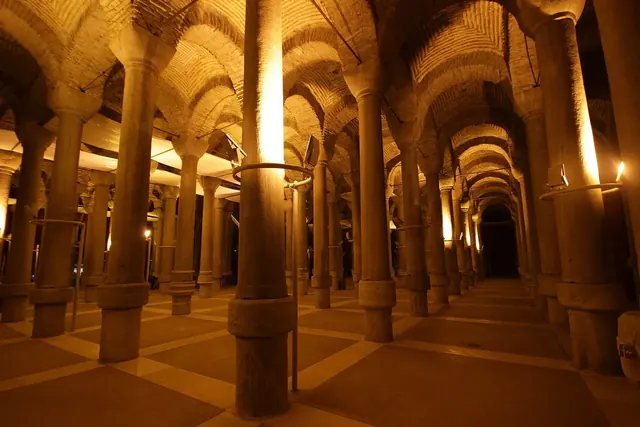
From our hotel, walk up to the Hippodrome and head out of its northern end onto Divanyolu; the mosque stands at the north-west corner of the square, right beside the tram tracks. The Basilica Cistern and the Binbirdirek Cistern are just a few minutes away, so it is easy to combine several stops in one short walk.
Frequently asked questions
When was Firuz Ağa Mosque built?
In 1491, during the reign of Bayezid II, by his chief treasurer Firuz Ağa.
Can tourists visit Firuz Ağa Mosque?
Yes, outside prayer times and in modest dress. It is a working mosque, so please be quiet and respectful.
Where can I pray quietly near Sultanahmet?
Firuz Ağa Mosque, on the corner of the Hippodrome, is much calmer than the big mosques. Close to our hotel, the Little Hagia Sophia Mosque and the Sokollu Mehmed Pasha Mosque are also peaceful options.