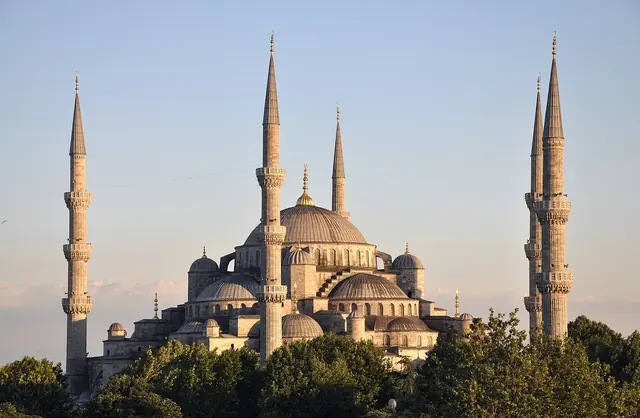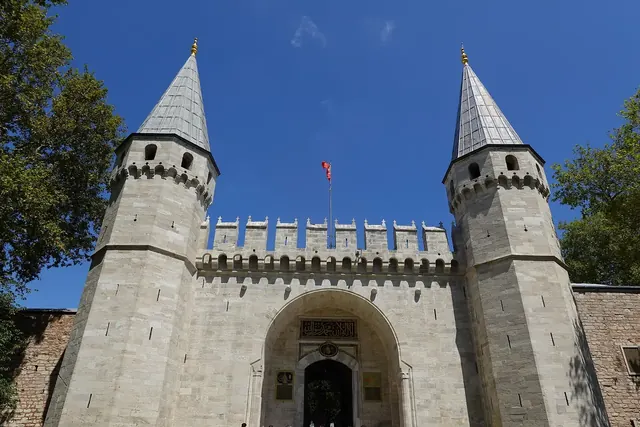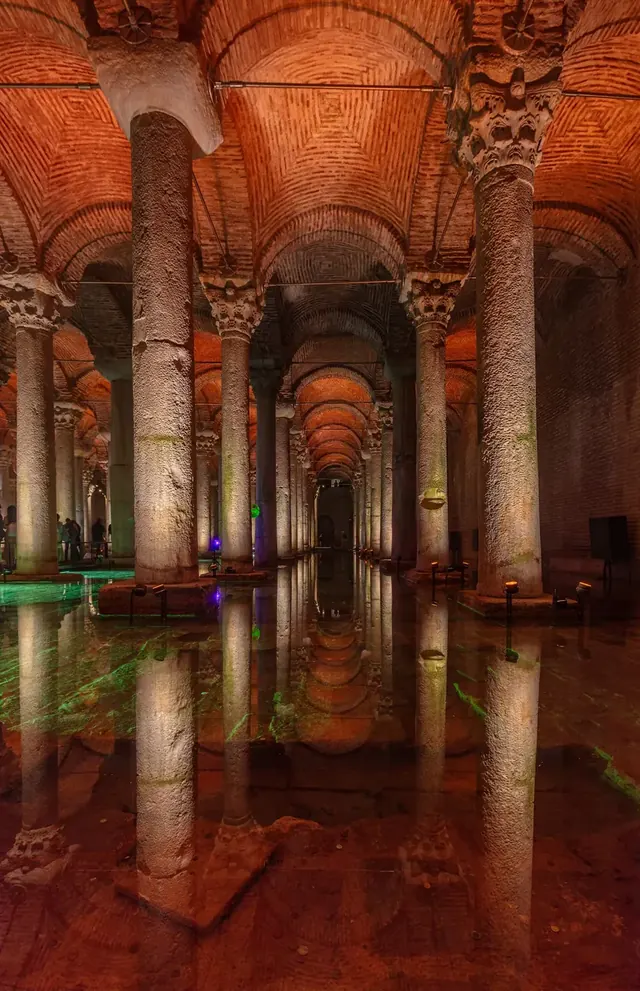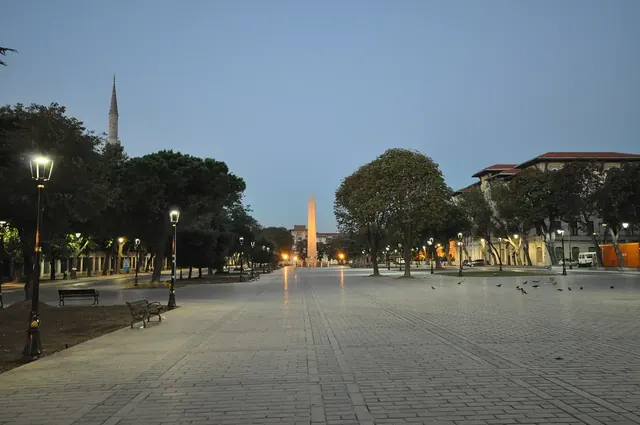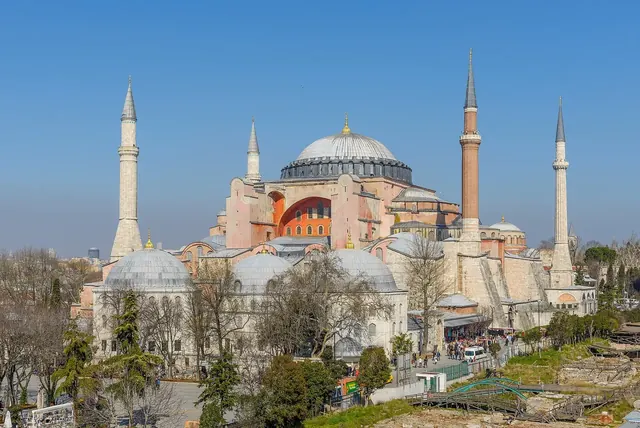
Staying close to Hagia Sophia and the Blue Mosque is the single choice that saves you the most time in Istanbul: you can be at the door before the queues form, slip back to your room in the midday heat and stroll between floodlit mosques after dinner. But 'near' can mean anything from two minutes to fifteen. This guide explains how distance, hills, crowds and the call to prayer shape your stay, so you can decide what close enough means for you.
On this page8
Why stay close to the main sights?
- Beat the queues: lines at Hagia Sophia, Topkapı Palace and the Basilica Cistern grow towards midday. If you are within walking distance, you can be there at opening time.
- A midday break: especially in summer and with children, an hour back at the hotel around lunchtime rescues the afternoon.
- Working around prayer times: mosques close to sightseers for a short while at each prayer. Staying nearby makes it easy to shuffle your plans around them.
- Evening walks: Sultanahmet Square looks completely different at night, with the mosques lit up. When you're close, that walk is effortless.
- No transport costs: the Old City's headline sights are all within walking distance of each other. Stay in the right spot and you may not need a taxi or tram for days.
Walking times: what does 'near' mean?
On booking sites, 'near Hagia Sophia' covers a wide area. It helps to think in three rings:
- 0–5 minutes: right around the square, the start of Divanyolu and behind the Arasta Bazaar. The shortest walk, but the heaviest crowds all day.
- 5–10 minutes: the upper streets of Cankurtaran and the area around Binbirdirek and Çemberlitaş. A little away from the crowds, still very close.
- 10–15 minutes: Küçük Ayasofya, Kadırga, the seaward end of Ahırkapı, and Sirkeci. Real neighbourhood life and quieter nights, for a slightly longer but pleasant walk.
How a day changes when you stay close: a sample plan
The difference walking distance makes is easiest to see in the shape of a day. This plan suits a family or couple who start early and take a midday break; check museum and mosque hours with official sources before you go.
- Early morning, before opening: after breakfast, walk to Hagia Sophia. The interior is calmer and the light softer in the first hours.
- Late morning: cross the square and go down into the Basilica Cistern; its cool underground hall is a welcome break on hot days.
- Midday: head back to the hotel and rest for an hour. The midday prayer passes in the meantime and the mosques reopen to visitors.
- Afternoon: visit the Blue Mosque, then take a short wander through the Arasta Bazaar.
- Evening: after dinner, walk the length of the Hippodrome between the two floodlit monuments, and stroll back to your hotel.
What the map doesn't show: hills
The Old City is built on hills, and Sultanahmet sits on top of one. The neighbourhoods that run down from the square towards the Sea of Marmara (Cankurtaran, Ahırkapı, Küçük Ayasofya and Kadırga) all slope towards the shore. If the walk to your hotel is downhill, the walk back to the sights will be uphill.
For a fit adult this is no big deal, and the slope is exactly what brings these streets close to the sea and its views. But with a pushchair or wheelchair, or an older relative who finds walking hard, look at the gradient of the route rather than the straight-line distance on the map. Our guide to accessible sightseeing in the Old City has more detail.
Crowds, noise and the call to prayer
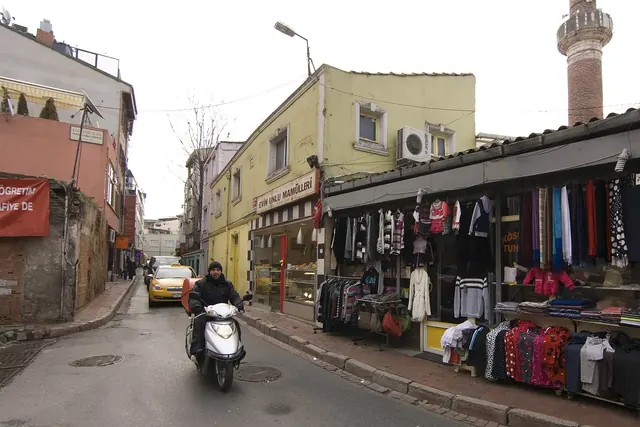
The streets nearest the square are full of visitors, tour groups and street sellers all day. The square itself calms down in the evening, but restaurant streets can stay lively until late. A few minutes away, evenings are usually quiet.
One thing everyone should know in advance: staying close to the great mosques means hearing the call to prayer, loud and clear, five times a day. Depending on the season, the dawn call can come very early. Many guests remember it as one of the highlights of Istanbul; light sleepers may want to pack earplugs. We explain the words and timings in The call to prayer (adhan).
Arriving with luggage: can a car reach the door?
Some streets around Sultanahmet are narrow, cobbled or closed to most traffic. If you are arriving by taxi or transfer, ask in advance whether a car can pull up right outside the hotel. Dragging a suitcase a few hundred metres uphill is no fun after a long flight.
We compare every way of getting in from the airports in Istanbul Airport to Sultanahmet and Sabiha Gökçen to Sultanahmet. It also helps to ask whether your hotel can arrange a paid transfer.
Which distance suits whom?
- A one-night stopover: the 0–5 minute ring. When time is short, every minute counts.
- A first visit of two to four days: the 5–10 minute ring is a good balance between closeness and crowds.
- Families and longer stays: the quieter neighbourhoods in the 10–15 minute ring. You rest well at night and start each day with a pleasant walk.
- Guests with limited mobility: a hotel with a lift and a level route to the square. Always ask about the gradient.
We compare all of these options, street by street, in Where to stay in Sultanahmet.
Where is Sareban Hotel?
Our hotel is on Cinci Meydanı Street in Küçük Ayasofya, the neighbourhood just south of Sultanahmet Square. Hagia Sophia and the Blue Mosque are about a 12–15 minute walk away; the sixth-century Little Hagia Sophia Mosque is a few minutes away, and the Marmara shore is a few minutes downhill. The walk back up to the square is a gentle climb, and our building has a lift.
So we sit in the 10–15 minute ring: an easy walk to the main sights, in a neighbourhood that is quiet at night. See the map and surroundings on our location page, and for arriving from the airport, our transfer page.
Frequently asked questions
Where is the closest place to stay to Hagia Sophia?
The streets around Sultanahmet Square, behind the Arasta Bazaar and in upper Cankurtaran are a few minutes away. Quieter neighbourhoods such as Küçük Ayasofya and Kadırga are a 10–15 minute walk.
Will the call to prayer wake me up in a hotel near the Blue Mosque?
Near the big mosques you will hear the call to prayer clearly five times a day, and the dawn call can be early. Most guests enjoy it as part of the experience; light sleepers may want earplugs.
Is it worth staying within walking distance of Hagia Sophia?
It is not essential, but it saves a lot of time. You can arrive before the queues, rest at the hotel at midday and walk around the floodlit square in the evening without thinking about transport.
How far is Sareban Hotel from Hagia Sophia?
From our hotel in Küçük Ayasofya, Hagia Sophia and the Blue Mosque are about a 12–15 minute walk.