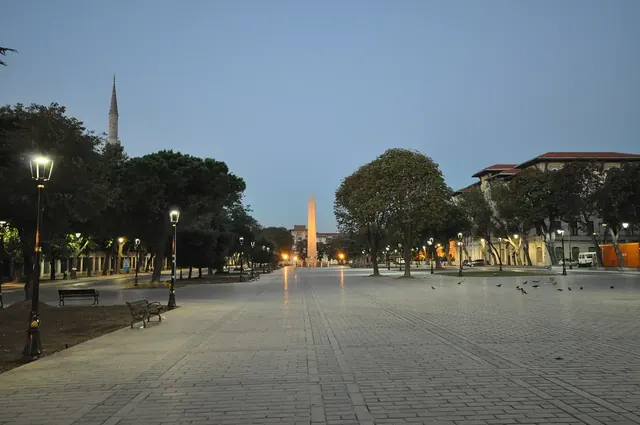
Istanbul's Old City is not an easy place for travellers with limited mobility: streets climb the slopes of seven hills, cobblestones are everywhere and pavements are narrow. Still, with careful planning, smart route choices and some flexibility, you can see a good share of Sultanahmet's main sights. This guide offers honest, general advice for wheelchair users, older visitors who find long walks hard and families with strollers; conditions change, so always confirm your specific needs in advance.
On this page6
A realistic picture: terrain and surfaces
The historic peninsula sits on hills. Sultanahmet Square lies on a relatively level ridge, but streets running down to the Marmara shore and the Golden Horn are noticeably steep. Our own Küçük Ayasofya neighbourhood is on one of these slopes: downhill towards the sea, uphill towards Sultanahmet.
The most common obstacles are cobblestones, uneven paving, high or broken kerbs and cars parked on pavements. Kerb ramps are more common on recently redeveloped avenues and rarer in side streets, so planning routes around the flattest path rather than the shortest one makes a real difference.
Getting around: tram, rail, ferry and taxi
- T1 tram: The trams are low-floor and platforms sit fairly close to door level. Many stops are reached by ramps, although some entrances are narrow or sloping, and trams get very crowded at peak times. Sultanahmet and Çemberlitaş are the closest stops to our hotel. See our T1 tram guide.
- Metro and Marmaray: Most stations have lifts, though they are occasionally out of service for maintenance. Interchange stations such as Sirkeci and Yenikapı are large, so distances inside can be long.
- Ferries: Boarding is via a ramp or gangway, and the slope and gap vary with sea conditions. Asking crew for help is perfectly normal. Our ferry guide has general information.
- Taxis and transfers: Most standard taxis are not wheelchair-accessible, though a folding chair fits in the boot. Arranging transfers in advance with a clear description of your needs is the safest option. For the paid, on-request transfer our hotel offers, see our transfer page.
Sights with relatively easier access
These places stand out for wide, fairly level spaces. Thresholds, steps and security arrangements at entrances can change, so check official sources before you go:
- The Hippodrome: Paved with stone but broad and flat, with the obelisks and German Fountain easy to see up close and benches for rest stops.
- Around the Blue Mosque and Hagia Sophia: The courtyards and gardens facing the square are spacious. Interior access (thresholds, ramps, shoe areas) varies by entrance, so ask the attendants. Note that Hagia Sophia's upper gallery is reached by a long, sloping stone ramp.
- Gülhane Park: The main paths are wide with gentle gradients, and shaded benches make it a good resting place for older visitors.
- Kennedy Avenue promenade: The seaside path is largely flat, but crossing points over the main road are limited and the descent from the neighbourhood is steep.
- Galataport and Istanbul Modern: Karaköy's redeveloped waterfront and the modern museum building offer far easier access than the historic streets.
- Miniatürk: Paths in this open-air model park are generally flat and wide, a good way to see the whole city in one place without steep hills.
Sights that need more planning
- Topkapı Palace: The courtyards are broad, but the ground is sloping and uneven in places, and some sections, especially inside the Harem, involve steps. Plan a shorter visit focused on the main courts and selected rooms such as the Treasury.
- Basilica Cistern and other cisterns: You descend by stairs and the walkways inside can be damp. Ask the operator about alternative access before visiting.
- Grand Bazaar: Some gates have steps and slopes, and the lanes get very crowded. Early mornings are much calmer.
- Rüstem Pasha Mosque and the Süleymaniye area: Rüstem Pasha is reached by a narrow staircase, and Süleymaniye sits on a hilltop with steep surrounding streets. Taking a taxi up and exploring downhill is less tiring.
For older travellers and anyone who tires easily
Limited mobility is not only about wheelchairs. For older visitors who find long walks tiring, the principle is the same: do less, but do it well. Plan one main visit a day, build in seated breaks and stay out of the midday sun in summer. A folding walking-stick seat or a light rollator can make queues far less tiring.
State museums may offer free or reduced entry for visitors with disabilities and their companions; eligibility and required documents can change, so check official museum sources. For ticket planning, see our museum pass guide.
A suggested level route, and choosing where to stay
- Morning: Take the tram to Sultanahmet stop and see the obelisks in the Hippodrome.
- Late morning: Visit the courtyards of the Blue Mosque and Hagia Sophia, entering where access suits you.
- Midday: Rest in the shade along Gülhane Park's main path.
- Afternoon: Ride the tram to Karaköy for a level waterfront stroll at Galataport.
When choosing accommodation, ask in advance about lifts, entrance steps, bathroom layout and how steep the street is. Our hotel has a lift, but we also want to be upfront that our neighbourhood is on a slope. Message us through the channels on our contact page before booking and we will give you realistic information about your specific needs. For more route ideas, see our one-day Old City guide.
Frequently asked questions
Is Sultanahmet wheelchair-accessible?
Partly. Open areas such as the Hippodrome, mosque courtyards and Gülhane Park are manageable, but cobbled side streets, hills and stepped entrances are challenging. Plan the flattest routes and travel with a companion if possible.
Is the T1 tram wheelchair-friendly?
The trams are low-floor and many stops have ramps, but some stop entrances are narrow or sloping and boarding at rush hour is hard. Travel at quieter times.
Can I access the Basilica Cistern with limited mobility?
The cistern is reached by stairs and the walkways can be damp. Ask the operator about alternative access before you go.
Are there museum discounts for disabled visitors?
State museums may offer free or reduced entry for disabled visitors and companions. Conditions can change, so check official museum sources.