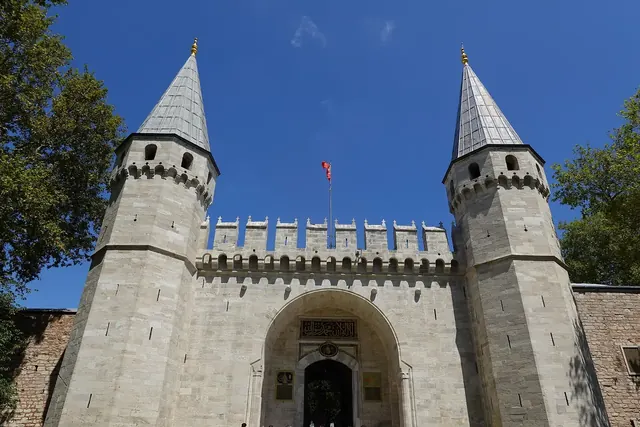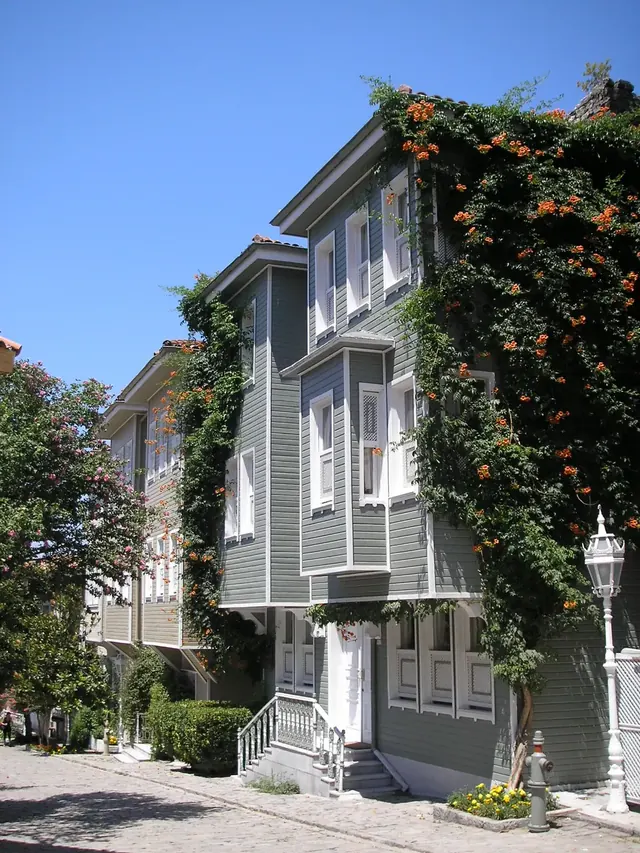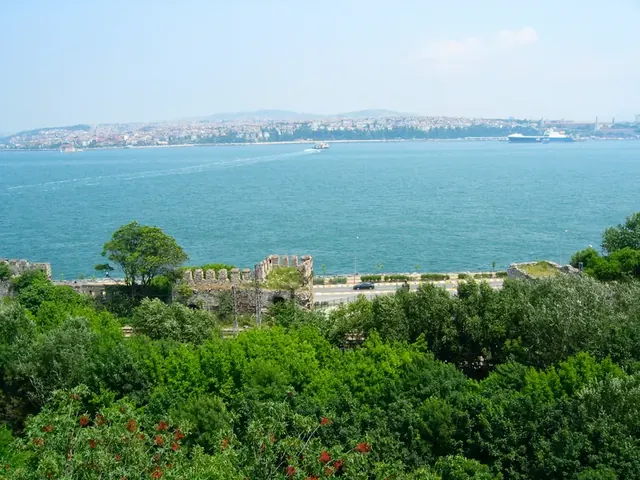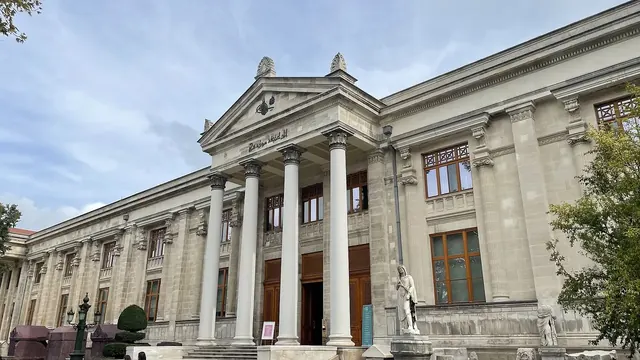
The Istanbul Archaeology Museums are a complex of three buildings in the outer gardens of Topkapı Palace, beside Gülhane Park: the Archaeological Museum, the Museum of the Ancient Orient and the Tiled Kiosk. Built up by the painter and archaeologist Osman Hamdi Bey, the collection ranges from the famous Alexander Sarcophagus to one of the earliest known peace treaties. Anyone with an interest in the ancient world should allow at least two to three hours.
On this page4
The museum Osman Hamdi Bey built
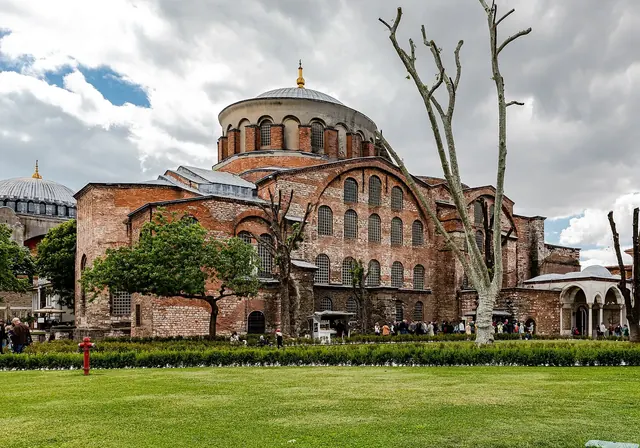
The Ottoman state began gathering antiquities in the mid-19th century, initially storing them in the church of Hagia Irene as the Imperial Museum. Everything changed in 1881 when Osman Hamdi Bey, best known abroad for his orientalist paintings, became director. He pushed through laws restricting the export of antiquities and led excavations at the royal necropolis of Sidon, in today's Lebanon, which yielded a group of spectacular sarcophagi.
To house them, the architect Alexandre Vallaury designed the neoclassical main building, opened in 1891, with a façade echoing the sarcophagi inside. The oldest building on site is far earlier: the Tiled Kiosk was built in 1472 under Mehmed the Conqueror and is among the oldest surviving Ottoman secular buildings in the city. A second Vallaury building, once a fine-arts school, now holds the Museum of the Ancient Orient.
Treasures not to miss
- The Alexander Sarcophagus: a late 4th-century BC masterpiece carved with battle and hunting scenes, some still showing traces of original paint. It is named for its depictions of Alexander the Great, not because he was buried in it.
- The Mourning Women Sarcophagus: shaped like a small temple, with grieving women standing between its columns.
- The Treaty of Kadesh tablet: a clay copy of the peace agreement between the Hittites and Egypt, often cited as one of the oldest surviving written peace treaties (Museum of the Ancient Orient).
- Glazed-brick panels from Babylon: striding lions and dragons from the processional way and Ishtar Gate (Museum of the Ancient Orient).
- A head from the Serpent Column: a fragment broken off the bronze Serpent Column that still stands, headless, in the Hippodrome.
- The Tiled Kiosk: Seljuk and Ottoman tiles, Iznik ceramics and the building's own glittering tiled façade.
Current status and planning
The main building spent many years partly closed for earthquake strengthening and redisplay, with galleries reopening in phases. Which rooms are open can still change, so check the Ministry of Culture and Tourism's official channels for current status, opening times and museum-pass validity before you set out.
The complex is large, so a plan helps: start with the sarcophagi in the main building, continue to the Ancient Orient museum and finish at the Tiled Kiosk. The shady garden, scattered with column capitals and sculpture, is a pleasant place to pause. Doing this and Topkapı Palace on the same day is tiring; split them across two half days if you can, and see our museum pass guide for ticket planning.
Getting there from Sareban Hotel
From our hotel, walk through the Hippodrome, past Hagia Sophia and along Soğukçeşme Street to the gate of Gülhane Park; the museum is up a short slope to the left inside the park. To save your legs, take the T1 tram one stop from Sultanahmet to Gülhane. You can also walk down to the museum from the first courtyard of Topkapı Palace.
Frequently asked questions
How long do I need at the Istanbul Archaeology Museums?
Allow two and a half to three hours for all three buildings, or about 90 minutes if you focus on the highlights.
Is the Alexander Sarcophagus really Alexander the Great's tomb?
No. It takes its name from the carved scenes showing Alexander; it is generally believed to have been made for a ruler of Sidon.
Is the whole museum open?
The main building reopened in stages after lengthy strengthening works, and the status of individual galleries can change. Check official sources shortly before your visit.
Is it near Topkapı Palace?
Yes. The museums sit in the palace's outer gardens, a few minutes on foot from the first courtyard or from Gülhane Park.