The sema is a spiritual ceremony in which Mevlevi dervishes, followers of the 13th-century mystic Rumi (Mevlânâ), whirl to music as a form of remembrance of God. The white-robed whirling dervishes are not performing a dance show but a prayer centred on love and devotion. The Mevlevi Sema Ceremony was inscribed on UNESCO's list of the Intangible Cultural Heritage of Humanity in 2008, and in Istanbul its most important home is the Galata Mevlevi Lodge.
On this page7
Who was Rumi?
Jalal al-Din Rumi, known in Türkiye as Mevlânâ (“our master”), was born in 1207 in Balkh, in present-day Afghanistan. His family later settled in Konya, the Seljuk capital in Anatolia. He was a respected religious scholar and teacher when, in 1244, he met the wandering dervish Shams of Tabriz, an encounter that transformed his life. His Masnavi, some twenty-five thousand couplets in Persian, is counted among the masterpieces of Sufi literature.
Rumi died in Konya on 17 December 1273. His death is remembered as Şeb-i Arus, the “wedding night”, because for the Mevlevis death is union with the Beloved, God. The commemorations held in Konya every December are therefore a celebration rather than a mourning. The Mevlevi order took institutional shape under his son Sultan Walad, and the sema ceremony developed its present form over the following centuries.
The symbolism of the dress: sikke, tennure and cloak
Every element of the dervish's clothing carries meaning. In Mevlevi interpretation, together they tell the story of the death of the ego and rebirth into truth:
- Sikke: the tall, honey-coloured felt hat, symbolising the tombstone of the ego. When you see a sikke carved on top of an Ottoman gravestone, a Mevlevi is buried there.
- Tennure: the white skirt that flares out as the dervish turns, representing the burial shroud.
- Hırka: the black cloak worn at the start, symbolising the grave. The dervishes take it off before they begin to turn, a gesture understood as shedding worldly attachments and being reborn to the truth.
- Post: the red sheepskin on which the sheikh sits is the spiritual centre of the ceremony; dervishes bow as they pass in front of it.
The meaning of the turn: right hand to heaven, left hand to earth
Before turning, the dervish stands with arms crossed over the chest, a posture understood as bearing witness to the oneness of God. Then the arms slowly open: the right palm faces upward to receive divine grace, and the left palm faces downward to pass that grace on to people and all creation. The dervish keeps nothing for himself; he is only a channel.
The turn goes from right to left, around the heart, with the left foot anchored to the floor while the right foot drives the rotation. The dervishes spin on their own axis while also moving in a circle around the hall, often compared to the planets turning on their axes while orbiting the sun. The ceremony has four parts called selam, each expressing a different spiritual state, and it closes with a recitation from the Qur'an and a prayer.
The ney and Mevlevi music
Music carries the soul of the sema. The ceremony opens with the Na'at-ı Şerif, a hymn in praise of the Prophet, followed by a beat of the kudüm drums and an improvised ney solo. The ney, an end-blown reed flute, is central to Mevlevi thought: the Masnavi famously opens by asking the listener to hear the reed as it complains of separation. Cut from its reed bed, the ney stands for the human soul longing to return to its origin.
A ney player is called a neyzen. The music is performed by an ensemble known as the mutrip, which besides ney and kudüm may include instruments such as the rebab, tanbur and kanun. Mevlevi compositions, called ayin, are regarded as some of the richest works of Ottoman classical music.
The Galata Mevlevi Lodge: Istanbul's first Mevlevi house
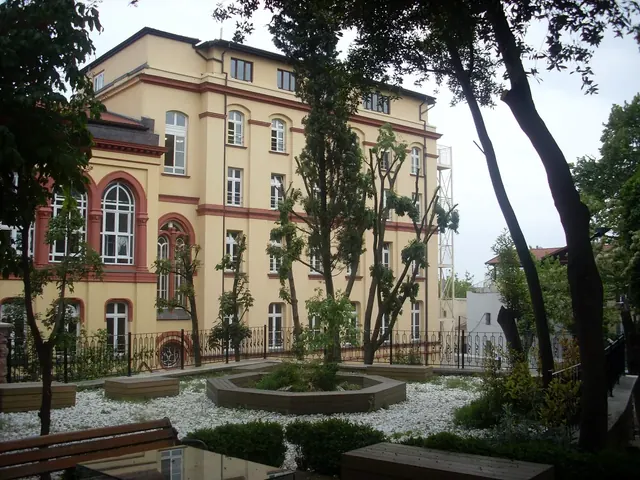
Next to the historic Tünel station, the Galata Mevlevi Lodge was founded in 1491 and is known as the first Mevlevi lodge in Istanbul. Its wooden ceremonial hall (semahane), the dervishes' cells and the small cemetery can be visited today as a museum. It holds the tomb of Şeyh Galib, one of the great poets of Ottoman literature, and according to most sources İbrahim Müteferrika, founder of the first Ottoman Turkish printing press, is also buried in its graveyard.
In 1925 all Sufi lodges in Türkiye were closed by law, and the sema was kept alive afterwards through commemorations and cultural events. Sema ceremonies are known to be held at the Galata lodge on certain days; please check the current programme and ticketing with official sources before you go. The museum combines easily with the Galata Tower and a ride on the historic Tünel funicular; our Galata and Karaköy guide has more ideas for the area.
Not a show: etiquette for watching a sema
In Istanbul you will see many events advertised as “whirling dervish shows”. Some are shortened, stage-friendly versions of the ceremony. If you want to feel its spiritual depth, look for a sema organised by a Mevlevi lodge or a cultural institution that includes all parts of the ritual. Wherever you watch, please follow these courtesies:
- No applause: the sema is an act of worship, so there is no clapping, neither during nor at the end. It closes in silence and prayer.
- Photos and video: usually not allowed during the ceremony, and flash is never acceptable. Follow the staff's instructions.
- Silence: switch off your phone, do not talk and try not to leave before the end.
- Children: a full ceremony can last around an hour, so it suits children who can sit quietly for a long time.
- Dress: there is no strict code, but simple, modest clothing suits the spirit of the place.
A UNESCO heritage and Rumi's message
UNESCO proclaimed the Mevlevi Sema Ceremony a Masterpiece of the Oral and Intangible Heritage of Humanity in 2005 and inscribed it on the Representative List of the Intangible Cultural Heritage in 2008.
Rumi's thought, built on love and tolerance, is read all over the world today, and the sema is a beautiful doorway for people of any faith to meet the mystical side of Islam. For basic questions, see what visitors ask about Islam; for more evening ideas back on the historic peninsula, read evenings in the old city. To spot a dervish's sikke on old gravestones, our guide to visiting tombs and cemeteries will help.
Frequently asked questions
Should I applaud at the end of a sema?
No. The sema is a religious ceremony of remembrance, so there is no applause at any point. It ends quietly with a prayer.
How long is a sema ceremony?
A full ceremony usually lasts about an hour. Shortened performances may be briefer.
Can I watch a sema at the Galata Mevlevi Lodge?
Ceremonies are known to be held there on certain days. Schedules and ticketing can change, so check official sources before you go; our front desk is happy to help.
What do the dervishes' raised hands mean?
The right palm turned upward receives grace from God, and the left palm turned downward passes it on to people and all of creation.