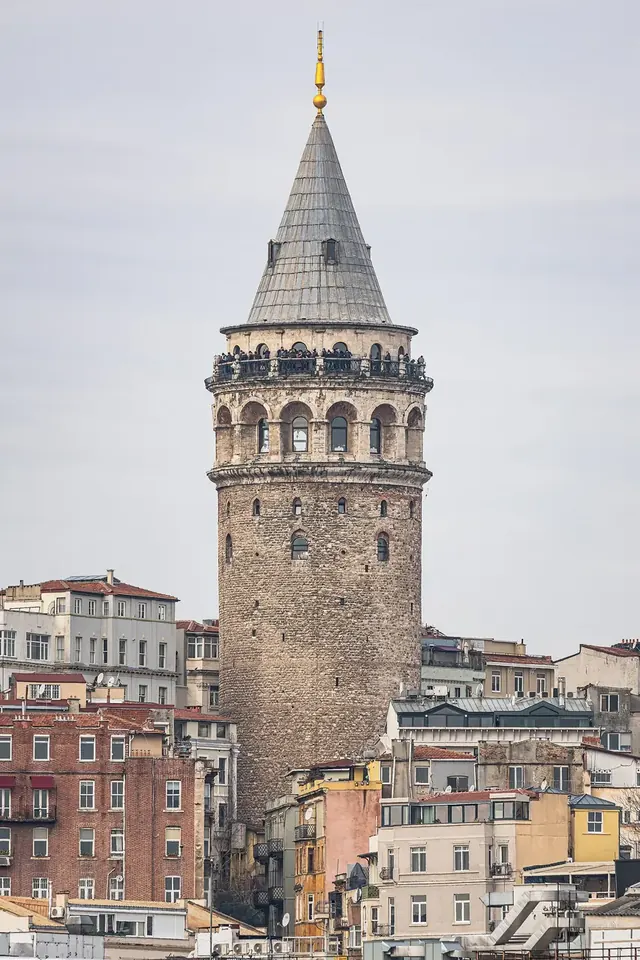
Galata Tower is a medieval stone tower built by the Genoese in 1348 on the hill above Karaköy, across the Golden Horn from the old city. Now run as a museum, it has a wraparound balcony with views over the Historic Peninsula, the Bosphorus and the Sea of Marmara all at once. If you want to understand Istanbul's skyline in one glance, this is the classic place to do it.
On this page6
From Genoese fortress to fire lookout
In the late Byzantine period, Galata was a walled colony run by merchants from Genoa, who had won trading privileges from the emperors. In 1348 they crowned the highest point of their walls with this tower, calling it Christea Turris, the Tower of Christ. Some sources say an earlier Byzantine tower stood here, but the stone shaft you see today is Genoese. It rises about 67 metres, and its walls are well over three metres thick at the base.
After the Ottoman conquest in 1453 the tower served many purposes: it was used at times as a prison and a storehouse, and from the 18th century it became a fire lookout for a city of wooden houses. Fires and storms damaged it repeatedly, and the conical cap you see now dates from a major restoration in the 1960s. After another restoration in 2020, the Ministry of Culture and Tourism reopened it as a museum.
The legend of the flying man
The tower's most famous story belongs to Hezarfen Ahmed Çelebi, said to have lived in the 17th century. According to the travel writer Evliya Çelebi, Hezarfen strapped on home-made wings, leapt from Galata Tower and glided across the Bosphorus to land in Üsküdar on the Asian shore. No other source confirms it, so historians treat it as a legend.
It is still a wonderful story to tell children on the way up. Once you are on the balcony, look across the water to Üsküdar and let them guess how far that flight would have been.
What you'll see inside and from the top
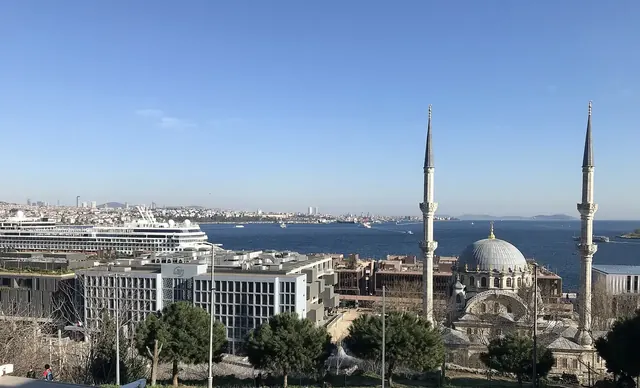
- The balcony: A narrow gallery runs all the way round. To the south are the domes of the old city and Süleymaniye Mosque; to the east, the mouth of the Bosphorus and Maiden's Tower; to the north, the rooftops of Beyoğlu.
- Exhibition floors: Displays explain the tower's many lives, Galata's Genoese past and the old fire-watch system.
- Thick stone walls: The deep window slits make it clear this was built as a defensive watchtower, not a viewing platform.
- Getting up and down: Visitors usually take a lift to the upper floors and finish the last stretch, and the way down, on stairs. The arrangement can change.
- The square below: The little plaza and cobbled lanes at the foot of the tower are photogenic even if you don't go up.
Timing your visit to avoid the crowds
Galata Tower has some of the longest queues in Istanbul. Opening time and weekday mornings are usually the calmest. Sunset is the most popular slot of all: the light is superb, but the balcony gets packed and finding a spot for photos becomes a challenge. Opening hours and ticket rules change, so check the official source before you go, and see our museum pass guide to find out which passes currently apply.
The balcony is narrow. The railings are secure, but anyone uneasy with heights may prefer a single lap. Hold small children's hands the whole way round. Strollers are impractical inside, so a baby carrier is the better option.
A short walk around Galata afterwards
From the tower, walk uphill along Galip Dede Street, lined with musical instrument shops. It leads to the Galata Mevlevi Lodge and then to the start of İstiklal Avenue. If you'd rather go downhill, the Karaköy waterfront and the Galataport promenade are waiting. For the wider neighbourhood, see our Galata and Karaköy guide.
Getting there from Sareban Hotel
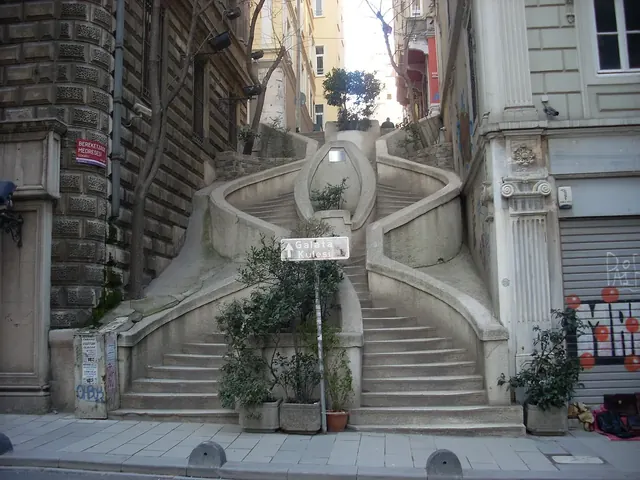
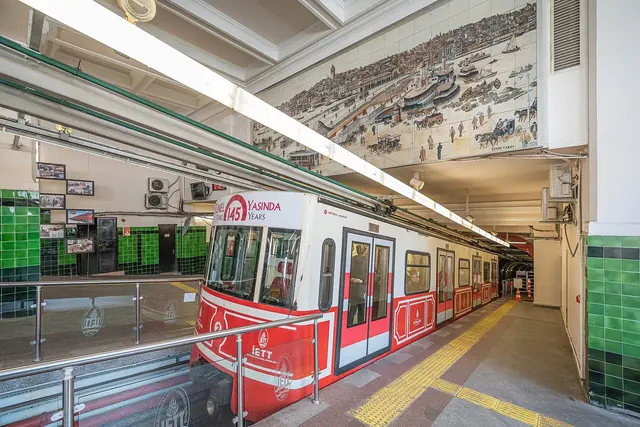
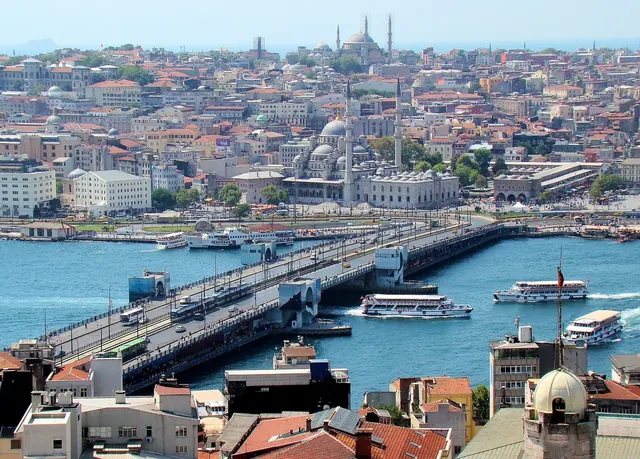
From our hotel in Küçük Ayasofya, walk to the Sultanahmet or Çemberlitaş stop and take the T1 tram towards Kabataş. It crosses the Golden Horn on the Galata Bridge; get off at Karaköy. From there you can either climb on foot, via the steep Yüksekkaldırım slope or the Camondo Stairs, or ride the historic Tünel funicular up to Beyoğlu and stroll downhill along Galip Dede Street to the tower.
Keen walkers can also stroll to Eminönü and cross the bridge on foot. The view of the tower from the middle of the bridge is one of the highlights of the route.
Frequently asked questions
Do you have to pay to go up Galata Tower?
Yes. The tower is run as a museum and there is an admission charge. Prices, hours and pass validity change, so check the official source before your visit.
How long do you need at Galata Tower?
Allow 45 minutes to an hour inside, plus waiting time at the entrance, which can be considerable at busy times.
Is Galata Tower good for kids?
Yes, the view and the flying-man legend go down well with children. The balcony is narrow and can be crowded, so keep little ones close and keep the visit short if they are nervous of heights.
Can I walk from Sultanahmet to Galata Tower?
You can, via Eminönü and the Galata Bridge, and it's a lovely walk, but the final section is a steep climb. Taking the T1 tram to Karaköy and walking only the hill is much easier.