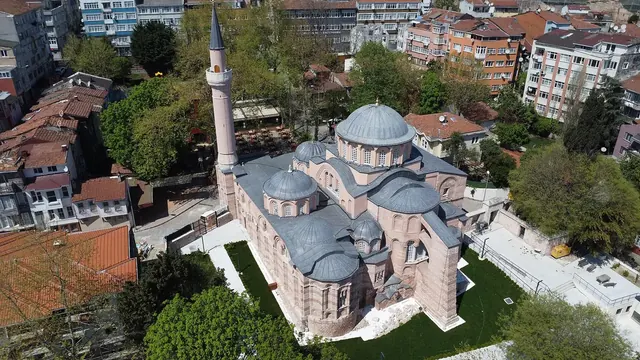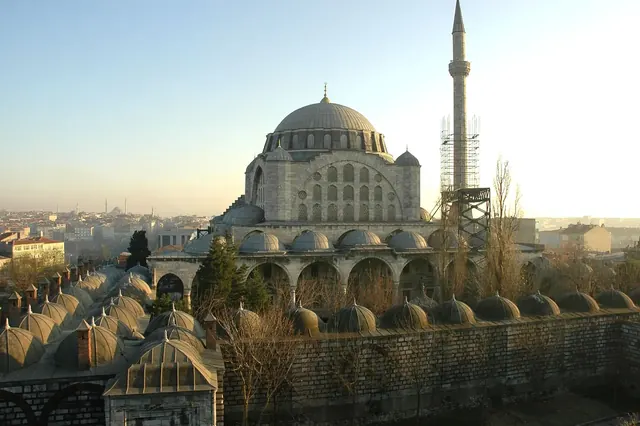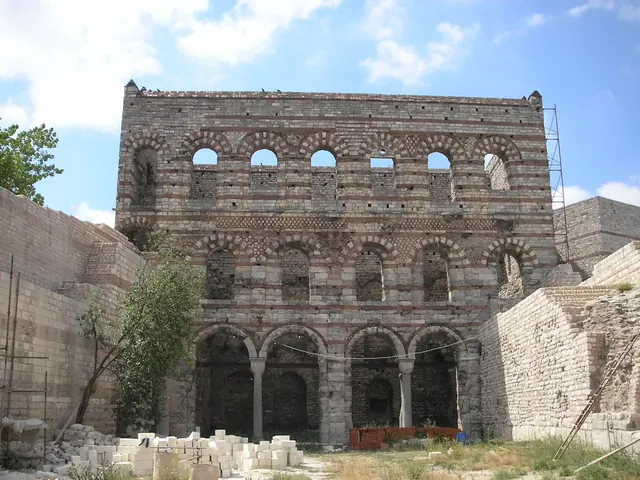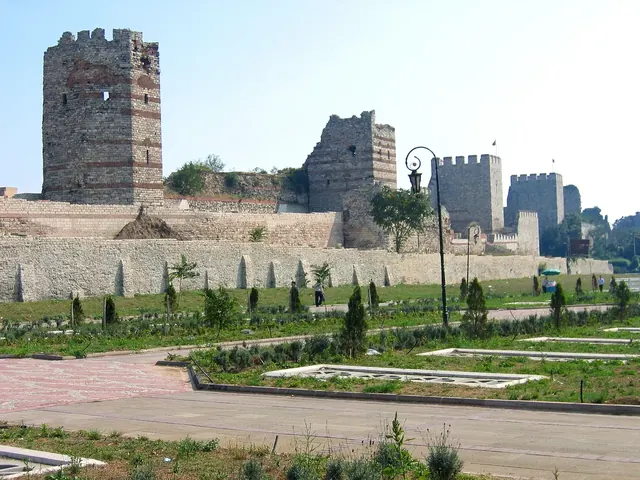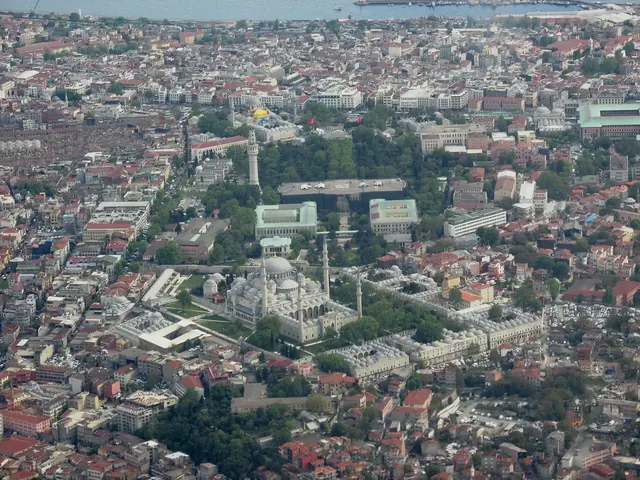
Edirnekapı and the Chora area lie on the landward edge of the Historic Peninsula, along the 5th-century Theodosian Walls. The Chora Mosque with its world-famous Byzantine mosaics, Sinan's Mihrimah Sultan Mosque and the Tekfur Palace, a rare surviving Byzantine palace, stand close together here. Away from the crowds, it is one of Istanbul's most rewarding corners for anyone fascinated by history.
On this page7
A quiet neighbourhood at the city's land gate
In Edirnekapı the walls dominate every view: thick courses of stone and brick, half-ruined towers and cemeteries at their foot. Outside the gate lies the Edirnekapı Martyrs' Cemetery, a quiet place of remembrance for those who fell from the War of Independence onwards. Inside the walls, low houses, narrow streets and corner grocers keep everyday life ticking over at an unhurried pace.
The area around the Chora Mosque, with its restored timber houses and small square, is the best-kept corner of the district. Coming here after Sultanahmet, what strikes you most is the silence: the wind, the cats and a distant call to prayer.
Walls, a siege and a statesman's mosaics
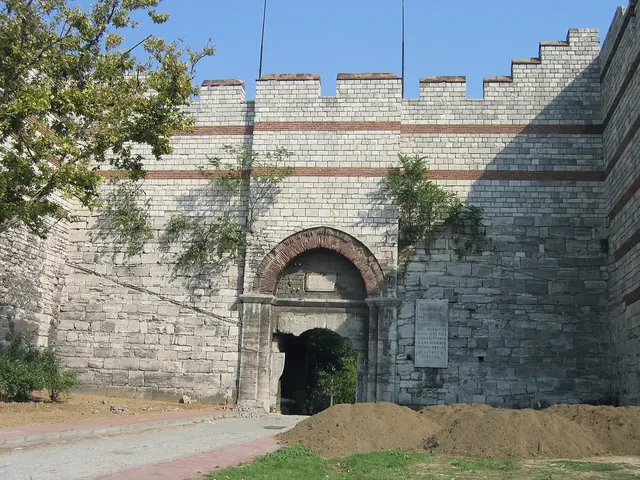
The land walls were built in the early 5th century under Theodosius II. Swiftly repaired after the great earthquake of 447, they formed a triple line of defence: a moat, a lower outer wall and a tall inner wall reinforced with towers. Stretching from the Sea of Marmara to the Golden Horn, they protected the city for a thousand years and were the main stage of the siege of 1453. According to tradition, Mehmed the Conqueror entered the city through the gate now called Edirnekapı.
Chora comes from the Greek word for countryside, since the monastery originally stood outside Constantine's walls. Its magnificent decoration was commissioned in 1315–1321 by the statesman and scholar Theodore Metochites. Converted into a mosque in the early 16th century, it served as a museum from the mid-20th century, was reconverted following a 2020 decision and reopened for worship in 2024. The Mihrimah Sultan Mosque was built by Sinan in the 1560s for Mihrimah Sultan, daughter of Süleyman the Magnificent.
What to see in the area
- Chora Mosque (Kariye): mosaics of the lives of Christ and the Virgin and the famous Anastasis fresco in the side chapel, the high point of late Byzantine art.
- Mihrimah Sultan Mosque, Edirnekapı: a Sinan mosque on one of the city's highest points, flooded with light from hundreds of windows.
- Tekfur Palace Museum: a rare surviving example of Byzantine palace architecture, later used as an 18th-century tile workshop.
- Theodosian Land Walls: a UNESCO-listed triple defensive line running for kilometres.
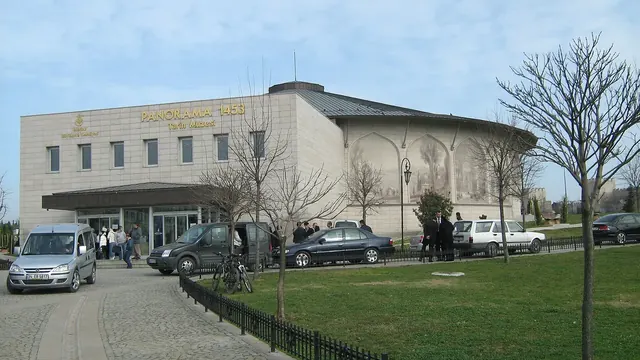
- Panorama 1453 History Museum: south of the district at Topkapı, a 360-degree painting of the 1453 siege under a domed hall.
Along the walls from Panorama 1453 to the Tekfur Palace
- Start at the Panorama 1453 Museum at Topkapı to set the scene for the siege.
- Walk north along the inside of the walls to Edirnekapı, noting the different repairs on the towers.
- Visit the Mihrimah Sultan Mosque just inside the gate and take in the play of light through its windows.
- Walk through the neighbourhood streets to the Chora Mosque and take your time with the mosaics and frescoes.
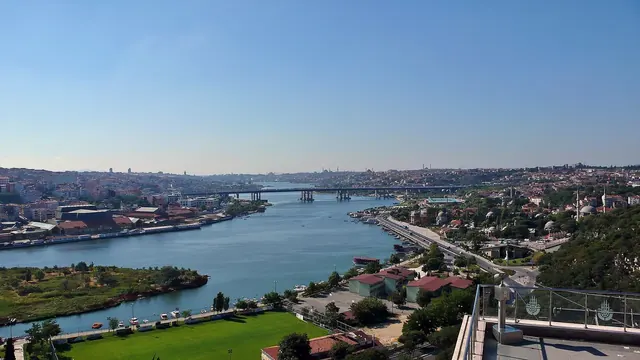
- Continue north along the walls to the Tekfur Palace; if you still have energy, walk downhill to Balat and Fener.
Wood-fired ovens and market gardens by the walls
Edirnekapı is not a food destination for visitors, and that is its charm: you eat what locals eat. Pide from wood-fired ovens topped with minced meat or cheese, thin lahmacun and grilled kebabs with frothy ayran make the classic lunch. Tea gardens near the Chora are a good place to rest between sights.
The market gardens along the walls have grown lettuce, parsley, rocket and other greens for the city for centuries, and this ancient urban farming tradition partly survives today. Seasonal fruit and vegetables sold in the streets are a small reminder of that green heritage.
For families: panorama, walls and safety
Panorama 1453 is a great way to introduce children to history: the 360-degree painting, with sound effects, brings the siege vividly to life. Some restored sections of the walls can be climbed, but many parts have no barriers, so don't let children scramble up.
On quieter, isolated stretches of the walls, walk in daylight and in a group rather than alone. The martyrs' cemetery and graveyards call for respect, so remind children to keep their voices down.
Getting there from Sareban Hotel
Walk from our hotel to the Sultanahmet stop and ride the T1 tram west to the Topkapı stop. Note that this stop is near the historic Topkapı city gate, not Topkapı Palace; the Panorama 1453 Museum is right beside it. From there it is roughly a 20–25 minute walk along the walls to Edirnekapı, or a short taxi ride.
You can also take a taxi directly, with journey times depending on traffic. On the way back, walk downhill to Balat and take a taxi or one of the Golden Horn buses to Eminönü, then the T1 tram back to our hotel.
Frequently asked questions
Can you still see the mosaics in the Chora Mosque?
Yes. The building reopened for worship as a mosque in 2024 and the mosaics and frescoes remain visible. A separate visiting arrangement may apply to foreign visitors, so check official sources for the current situation before you go.
Is the Topkapı tram stop the one for Topkapı Palace?
No. The Topkapı stop on the T1 line is near the historic Topkapı gate in the city walls, far to the west. For Topkapı Palace, get off at Sultanahmet or Gülhane.
Is it safe to walk on top of the walls?
Only climb sections that are restored and fitted with railings. Many parts are unprotected and carry a real risk of falls; walking along the foot of the walls in daylight is the safest option.