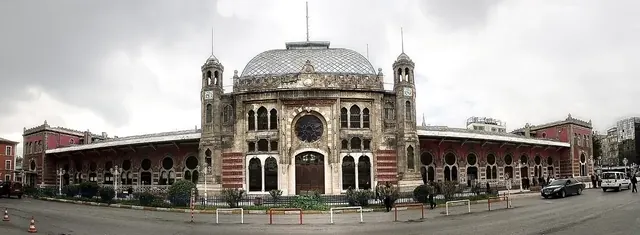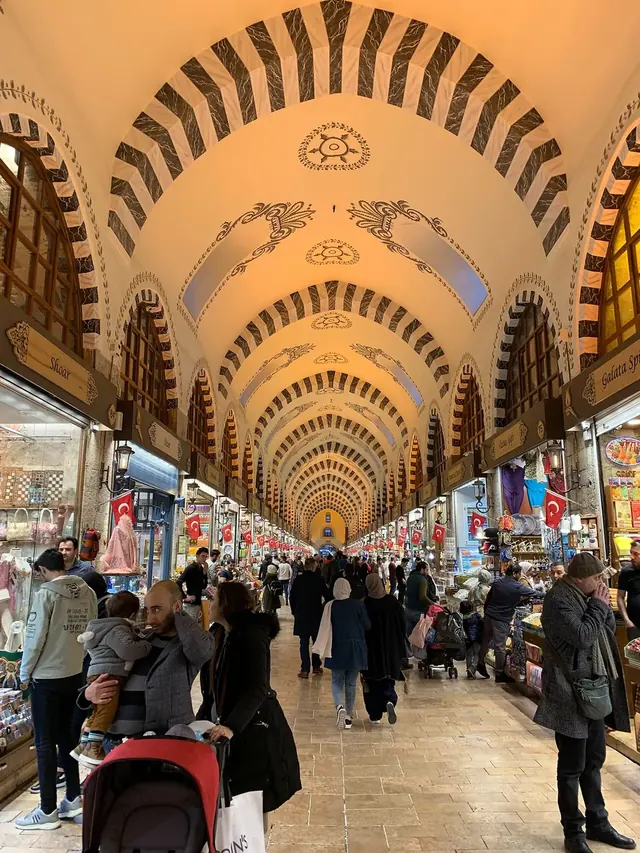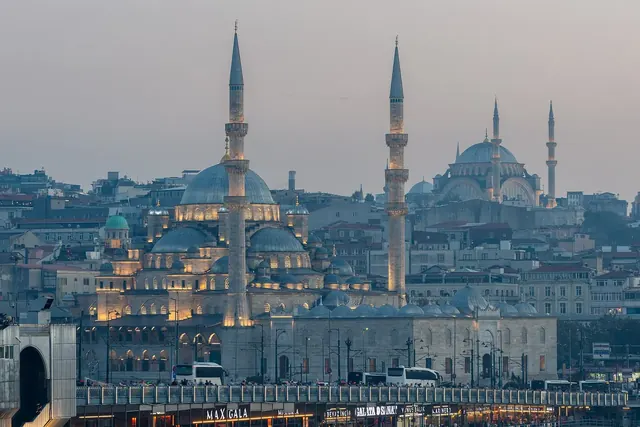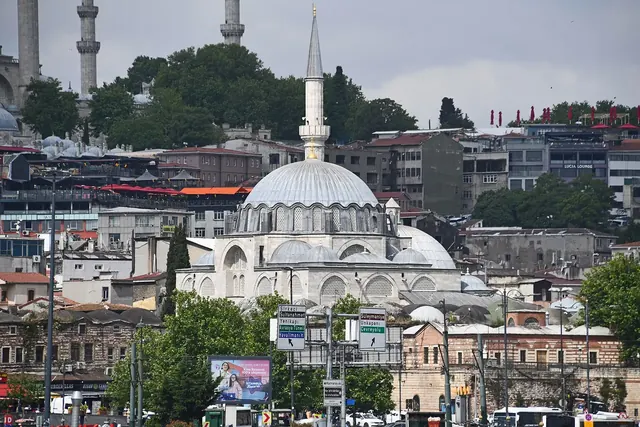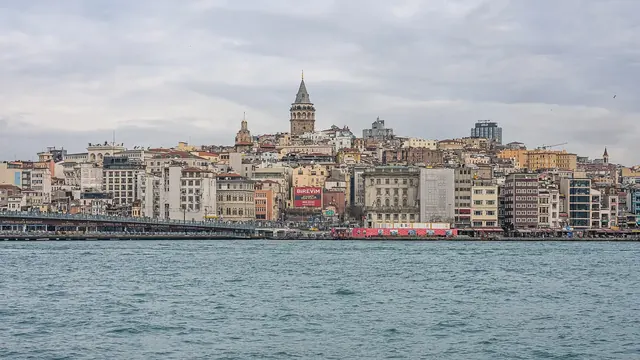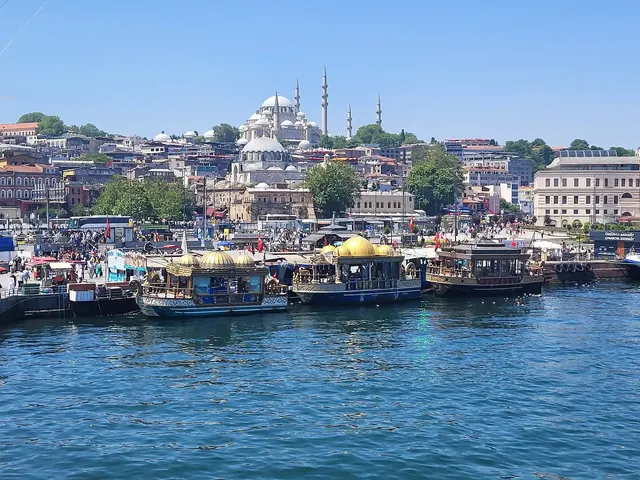
Eminönü is the Historic Peninsula's port and market gateway, where the Golden Horn meets the Bosphorus. The Spice Bazaar, the New Mosque, the Rüstem Pasha Mosque and Sirkeci Station cluster around its busy waterfront, and ferries leave from here for Üsküdar, Kadıköy and the Bosphorus. It is the city's loudest, liveliest and most unmistakably Istanbul corner.
On this page7
Ferry horns, spice scents and a crowd that never stops
Standing still in Eminönü is almost impossible. Ferries disgorge passengers at the piers, fishing lines dangle in a row from the rails of the Galata Bridge, pigeons burst up from the courtyard of the New Mosque and porters with loaded carts shout for space in the market lanes. This is a trading district that serves the city rather than its visitors, which makes it both one of the most tiring and one of the most genuine experiences Istanbul offers.
The back streets are divided by trade: one lane sells kitchenware, the next saplings and seeds, another wedding sweets and henna. In the narrow slopes of Tahtakale you smell freshly ground coffee, and along Hasırcılar Street the stalls are piled with spices, dried fruit and cheese.
From Genoese wharves to the Orient Express
In Byzantine times the southern shore of the Golden Horn was lined with wharves and warehouses granted to Italian trading powers such as Venice, Genoa, Amalfi and Pisa. Under the Ottomans the customs house was here, and the district's name is generally traced to emin, the title of the customs officials.
Construction of the New Mosque began in 1597 under Safiye Sultan, stalled for decades and was finally completed in 1665 under Turhan Hatice Sultan. The L-shaped Spice Bazaar, built to fund the mosque complex, is called the Egyptian Bazaar in Turkish after the revenues and goods that came from Egypt. Sirkeci Station opened in 1890 as the terminus of the Orient Express, and today's Galata Bridge, built in the 1990s, is the latest in a line of crossings on this spot since the 19th century.
What to see in Eminönü
- Spice Bazaar: a 17th-century market of spices, Turkish delight, dried fruit and nuts; remember to look up at its vaulted ceilings.
- New Mosque: facing the ferry piers, its broad courtyard and steps are the neighbourhood's meeting point.
- Rüstem Pasha Mosque: Sinan's small jewel raised above a row of shops, its interior covered in İznik tiles from floor to dome. The entrance is up a narrow stair from the street and easy to miss.
- Sirkeci Station: the historic station building, with its orientalist façade and clock tower, still evoking the Orient Express era.
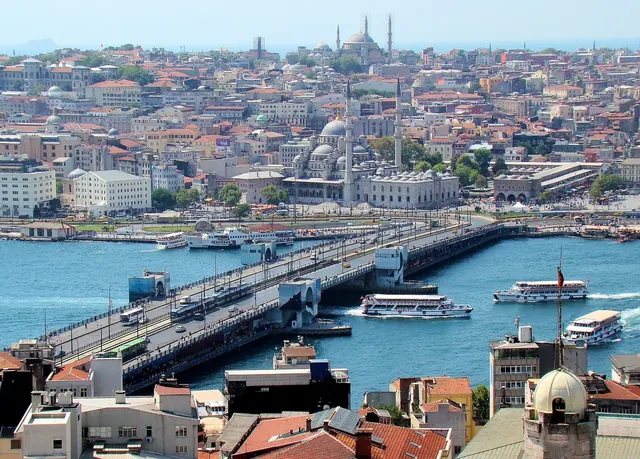
- Galata Bridge: anglers on the upper deck and a waterside walkway below; the middle of the bridge gives the best views of the Golden Horn and Galata.
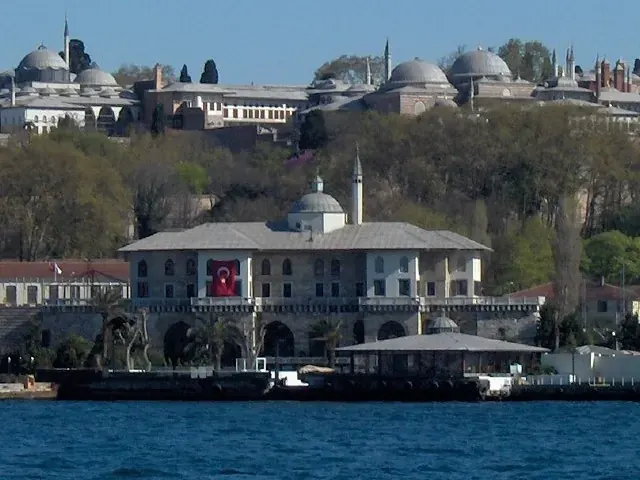
- Sepetçiler Pavilion: an elegant 17th-century waterside pavilion on the shore towards Seraglio Point.
A two-hour walk from the shore to the bazaar
- Start at the Sepetçiler Pavilion and follow the shore west to Sirkeci Station, peeking into the old waiting hall.
- Weave between the ferry piers into the courtyard of the New Mosque and take in its tiled interior.
- Enter the Spice Bazaar by the side gate, walk its full length and continue west along Hasırcılar Street.
- Climb the stairs off Hasırcılar to the Rüstem Pasha Mosque and take your time with the tiles.
- Return to the water and walk to the middle of the Galata Bridge, then turn around for the classic view of the Süleymaniye skyline.
Fish sandwiches to Turkish delight: street food on the move
Eminönü is the showcase of Istanbul street food. The emblem is balık ekmek, grilled mackerel or similar fish stuffed into half a loaf with onions and greens, often washed down with turşu suyu, a tangy, spiced pickle juice that locals swear by. Stalls also sell stuffed mussels, simit and grilled corn, and the side-street canteens serve döner, rice and home-style stews.
The Spice Bazaar and the streets around it are where you buy edible souvenirs: rose and pistachio Turkish delight, walnut sucuk and pestil made from grape molasses, dried apricots and figs, freshly ground Turkish coffee and spices of every kind. Our guides to street food and what to buy help you choose.
For families: handling the crowds
Eminönü gets extremely busy, especially on weekend afternoons. Hold small children's hands, agree on a meeting point and carry valuables in front of you. In the Spice Bazaar's narrow aisles a pushchair is hard work at peak times, so a baby carrier is more practical.
The highlight for most children is the ferry: even a short hop across the water, with gulls following the boat, becomes a memorable ride. On the Galata Bridge, watch out for fishing lines and hooks left on the ground. Our Istanbul ferry guide explains the options.
Getting there from Sareban Hotel
The simplest way is to walk from our hotel to the Sultanahmet or Çemberlitaş stop and ride the T1 tram a few stops to Eminönü. If you like walking, the downhill route via Gülhane Park or Cağaloğlu usually takes 25–30 minutes and passes plenty of historic buildings along the way.
We suggest walking down and taking the tram back: the return from Eminönü to Sultanahmet is uphill all the way, which is hard going with bags from the bazaar.
Frequently asked questions
What is the difference between the Spice Bazaar and the Grand Bazaar?
The Spice Bazaar is smaller and food-focused: spices, Turkish delight, nuts and coffee. The Grand Bazaar is much larger and specialises in carpets, jewellery, ceramics and textiles. The two are linked by an uphill walk of about 20 minutes; see our Beyazıt and Grand Bazaar page.
Which ferries can I take from Eminönü?
Regular ferries run from the Eminönü piers to Üsküdar and Kadıköy, and Bosphorus cruises leave from here too. Check official sources for current timetables; we compare the choices in our Bosphorus cruise guide.
How long do I need for Eminönü?
Two to three hours covers the Spice Bazaar, the New Mosque, the Rüstem Pasha Mosque and the Galata Bridge. Add a ferry ride and set aside half a day.