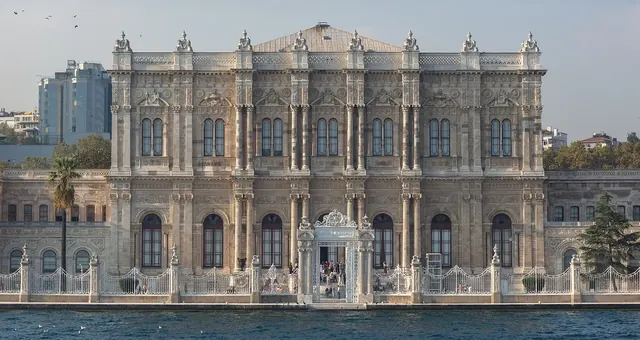
Dolmabahçe Palace is the grand 19th-century Ottoman palace on the European shore of the Bosphorus in Beşiktaş, built for Sultan Abdülmecid between 1843 and 1856. Designed by the Balyan family of architects, it is famous for its crystal-balustered staircase, the vast chandelier-lit Ceremonial Hall and the room where Atatürk died in 1938, and it is one of the most visited sights in Istanbul.
On this page6
From a filled-in cove to an imperial showpiece
The name tells the story of the site. This was once a small bay on the Bosphorus that was gradually filled in from the 17th century onwards and turned into imperial gardens and pavilions; locals called it Dolmabahçe, the “filled garden”. By the mid-19th century Sultan Abdülmecid wanted a masonry palace that could stand comparison with the royal residences of Europe, replacing the older Beşiktaş waterfront palace.
Construction began in 1843 and the palace came into use in 1856. Sources credit the design to Garabet Amira Balyan and his son Nigoğos Balyan, members of an Armenian dynasty of architects who shaped much of 19th-century imperial Istanbul. The façade blends baroque, rococo and neoclassical ornament with a traditional Ottoman room layout, stretching for hundreds of metres along the water like a stage set. From then on it served as the seat of government, apart from the years when Abdülhamid II ruled from the palace complex on the Yıldız hillside.
In the Republican era the palace became Atatürk's residence in Istanbul, and he died in his room here at 9:05 on the morning of 10 November 1938. According to tradition the palace clocks were stopped at that moment. The simply furnished room is the most moving stop on the tour, and visitors tend to pass it in silence.
Three worlds under one roof
The palace is divided into three parts. The Selamlık (Mabeyn-i Hümayun) was the official wing where state business was conducted and ambassadors were received. In the centre, the Ceremonial Hall (Muayede Salonu) was built for the formal religious-holiday receptions; with its soaring dome and colossal crystal chandelier it is the palace's showstopper. The chandelier is often said to have been a gift from Queen Victoria and to weigh several tonnes. The Harem was the private world of the sultan and his family, simpler in decoration but revealing about everyday court life.
Throughout, European crystal, furniture and clocks sit alongside carpets woven at the Hereke workshops that were founded to supply the palace, plus an extensive painting collection. The former Crown Prince's Apartments now house a Painting Museum with works by Ottoman and early Republican artists, which makes a good add-on if you still have energy after the main tour.
Details worth looking for
- The Crystal Staircase: a double-branched staircase in the Selamlık with crystal balusters, the palace's most photographed interior feature.
- The Ceremonial Hall dome: look up as soon as you enter; trompe-l'œil ceiling painting makes the dome feel even higher than it is.
- The Imperial and Treasury gates: monumental gateways on the land side, carved with garlands, medallions and floral motifs.
- The Clock Tower: a neo-baroque tower near the entrance, added in the 1890s under Abdülhamid II and attributed to Sarkis Balyan.
- The sea gates: wrought-iron gates opening from the garden onto the Bosphorus, a reminder that the palace was designed to be approached by water.
- Atatürk's room: in the Harem section; look for the clock set at 9:05.
How visits work, and the best time to go
The palace is usually closed one day a week, and the interiors are seen along a set route, sometimes in timed groups when it is busy. Tickets may be sold separately or combined for the Selamlık and the Harem, so check the current days, hours and ticket options on the official National Palaces website before you go. Shoe covers are handed out to protect the carpets, and photography indoors may be restricted.
Queues grow long on summer days and at weekends, so arriving close to opening time is the easiest option. The gardens and waterfront are lovely year-round, with spring flower beds and soft autumn light giving photographers an edge. Because most of the visit is indoors, it also works well on a rainy day. For younger children the tour can feel long and hands-off; a simple game of counting chandeliers or clocks helps keep them engaged.
See it alongside Istanbul's other palaces
Dolmabahçe is impressive on its own, but it makes more sense in comparison. Topkapı Palace shows the classical Ottoman court, spread out in pavilions around courtyards. Across the water, Beylerbeyi Palace and the small Küçüksu Pavilion are also Balyan works, smaller-scale variations on the same style. To see the palace façades from the water, take a look at the ferry and boat options in our Bosphorus cruise guide.
Getting there from Sareban Hotel
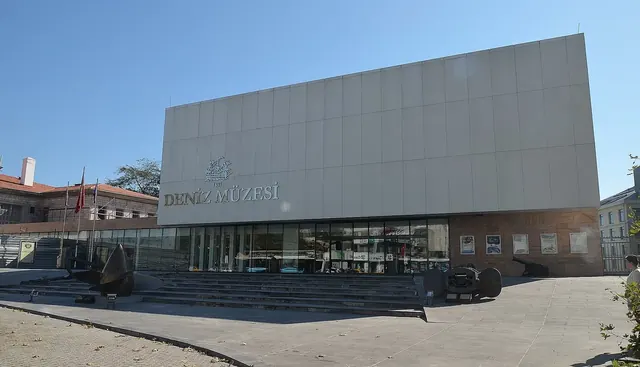
From our hotel in Küçük Ayasofya, walk up to the Sultanahmet or Çemberlitaş stop and take the T1 tram to Kabataş, the end of the line. On the way the tram crosses the Golden Horn on the Galata Bridge. From Kabataş it is a short, flat walk along the Bosphorus road to the palace, with the clock tower guiding you in. If you want to pair it with the Istanbul Naval Museum, simply continue along the waterfront towards Beşiktaş afterwards. Our T1 tram guide covers the practical side of riding the tram.
Frequently asked questions
How long does it take to visit Dolmabahçe Palace?
Plan on roughly an hour to an hour and a half for the Selamlık and two and a half to three hours including the Harem. Add the Painting Museum and the gardens and it becomes a half-day outing.
Can I take photos inside Dolmabahçe Palace?
Photography is fine in the gardens, on the waterfront and of the exterior. Indoor photography and filming may be restricted, and the rules change from time to time, so follow the signs at the entrance.
Can you see the room where Atatürk died?
Yes. It is on the visitor route in the Harem section, so make sure your ticket includes the Harem.
Should I visit Dolmabahçe or Topkapı Palace?
Ideally both. Topkapı was the sultans' home from the 15th to the 19th century and is a sprawling complex of courtyards and pavilions, while Dolmabahçe is a single European-style palace from the 1850s. Together they show how the empire's image of itself changed.