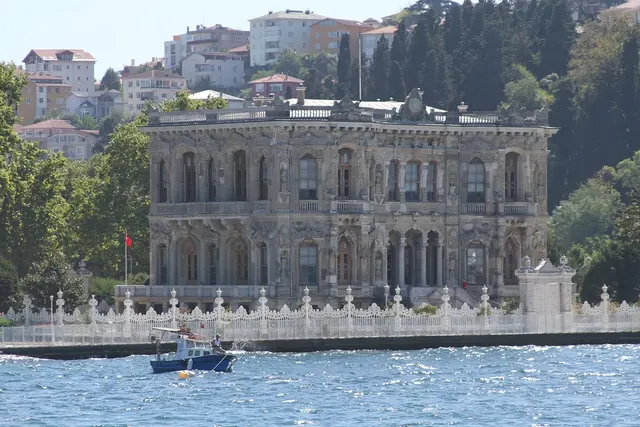
Küçüksu Pavilion is a small, lavishly decorated Ottoman lodge on the Asian shore of the Bosphorus, built for Sultan Abdülmecid in 1856–1857 on a meadow where two streams meet the sea. Officially it lies in the Beykoz district. It is no grand palace, but its carved façade and water's-edge setting make it one of the most elegant buildings on the strait.
On this page5
Picnics on the Sweet Waters of Asia
The shore here was once a grassy meadow between the Göksu and Küçüksu streams, known to European travellers as the Sweet Waters of Asia. In the 18th and 19th centuries Istanbul families rowed over on Fridays and holidays to picnic, stroll and glide up the stream in rowing boats, scenes captured in countless engravings and paintings.
Wooden pavilions stood on the site from the 18th century onward and were rebuilt several times. Sultan Abdülmecid commissioned the present stone pavilion from the architect Nikoğos Balyan. It was never meant for long stays, only for hunting trips, outings and short rests, so there are few rooms, each richly finished.
What to look for
- The sea-facing façade, carved with Baroque and Rococo flourishes; from the water it looks like a jewellery box
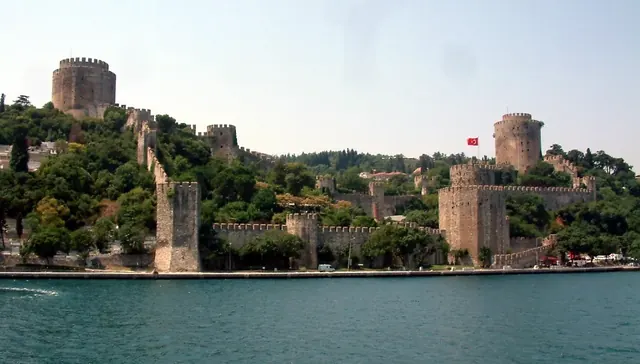
- The quay right on the Bosphorus, with views across to Rumeli Fortress
- Salons with crystal chandeliers, painted ceilings, Hereke carpets and period furniture
- A compact plan over two main floors, designed for a sultan's day out rather than a whole court
- The ornate Küçüksu Fountain near the gate, built in 1806 by Mihrişah Valide Sultan, mother of Selim III
A short but rewarding visit
The pavilion is run as a museum by the National Palaces administration. Visits are short given its size; you may be asked to wear shoe covers and follow photography rules. It closes on some weekdays, so check current days and hours with official sources before you make the trip.
Much of the charm is outside. From the garden and quay you look across one of the narrowest stretches of the Bosphorus toward the fortress and the second Bosphorus bridge. Because the interior tour is brief and indoors, it also works on a showery day.
Pair it with Anadolu Hisarı
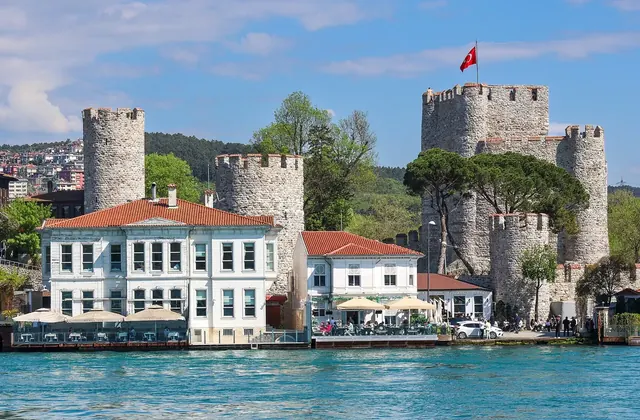
The pavilion is within walking distance of Anadolu Hisarı, the small fortress at the mouth of the Göksu stream. Visit the pavilion, then stroll to the castle and the old wooden houses along the stream. Together with Rumeli Fortress across the water, this stretch of the Bosphorus packs five centuries of Ottoman history into a few hundred metres.
It's also one of the prettiest sights from a Bosphorus cruise; the white façade is easy to spot from the deck. For the villages on the opposite shore, see our Bosphorus villages page.
Getting there from Sareban Hotel
Küçüksu is one of the farther Asian-side sights from our hotel, so plan on half a day. Walk or take the T1 tram to Sirkeci, then Marmaray to Üsküdar. From Üsküdar Square, buses heading north toward Beykoz along the coast road pass Küçüksu, and the ride itself hugs the Bosphorus. A taxi is faster.
Some Bosphorus commuter ferries call at Asian-side piers such as Kandilli and Anadolu Hisarı, but services can be infrequent. If you'd like to arrive by water, check the current timetable first; our ferry guide has the basics.
Frequently asked questions
Which district is Küçüksu Pavilion in?
It is officially in Beykoz, on the Asian shore north of Üsküdar, between Kandilli and Anadolu Hisarı.
Who built Küçüksu Pavilion?
The architect Nikoğos Balyan designed it for Sultan Abdülmecid in 1856–1857 as a lodge for hunting trips, outings and short rests.
How long do I need?
The interior is small; 45 minutes to an hour covers the rooms, garden and quay.
Can I see it without going inside?
Yes. The sea façade is best admired from a Bosphorus boat. To see the rooms, go on a day the museum is open.