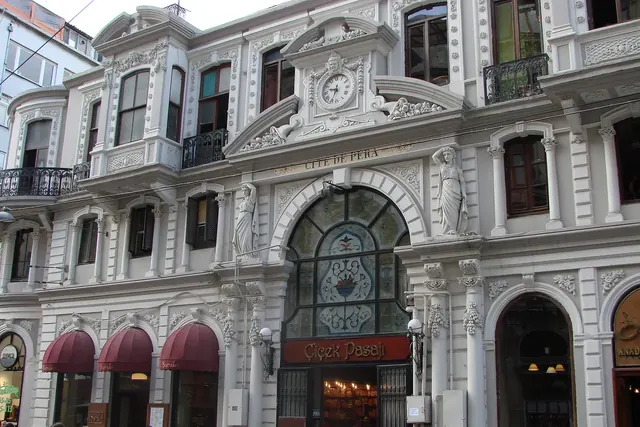
Çiçek Pasajı, the Flower Passage, is the glass-roofed arcade of a historic building on İstiklal Avenue near Galatasaray, built in 1876 as the Cité de Péra. With its French Second Empire façade, it is one of the best-known examples of 19th-century architecture in Beyoğlu. Today it is lined with restaurants, but the building alone is worth a few minutes of your walk.
On this page6
Rising from the ashes of the Naum Theatre
This plot was once home to the celebrated Naum Theatre, where Beyoğlu audiences enjoyed opera and touring European companies. The theatre burned down in the great Beyoğlu fire of 1870. The banker Hristaki Zografos Efendi bought the site and commissioned the architect Kleanthis Zanos to design an elegant building with shops at street level and apartments above. Completed in 1876, it was named the Cité de Péra, in the spirit of the Parisian arcades of the day, and was also known for a time as the Hristaki Passage after its owner.
Home to wealthy Pera families and a place for them to shop, the building is considered one of Istanbul's first arcades. Its ground-floor tailors, patisseries and boutiques were part of the fashionable shopping life of the Grande Rue de Péra.
Why is it called the Flower Passage?
The present name dates from the early 20th century. According to the popular story, after the 1917 Russian Revolution, some of the Russian émigrés who found refuge in Istanbul, many of them women, made a living selling flowers in and around the arcade, and the building came to be known as the Çiçek Pasajı. The origin isn't firmly documented, but it remains one of the best-known tales of Beyoğlu's émigré world in the 1920s.
The building fell into disrepair during the 20th century, and part of it collapsed in 1978. A thorough restoration in the 1980s brought the façade back to its original appearance and gave the arcade its current glass-covered form.
Architectural details to notice
- The façade: Pilasters, arched windows, balcony brackets and the roofline facing İstiklal are typical features of the French Second Empire style.
- The glass roof: The iron-and-glass roof over the inner street keeps it bright even on a rainy day and recalls the arcades of 19th-century Europe.
- A passage between two streets: The arcade runs from İstiklal through to the street behind, leading straight into the Balık Pazarı market.
- Upper floors: The decorated windows of the former apartments hint at the 19th-century life above the bustle.
- The view from across the street: Cross to the opposite pavement of İstiklal to take in the whole symmetrical façade.
The passage today, and notes for families
Today the ground floor of Çiçek Pasajı is lined end to end with restaurants, and it's best known as a dining address. It's worth knowing that many of these venues serve alcohol. Families who prefer an alcohol-free setting can enjoy the architecture on a short walk-through and eat at the traditional canteens and patisseries nearby.
Right next door, the Balık Pazarı market street, with its fruit, pickle, dried-fruit and spice stalls, is a colourful and fun daytime stroll with children. The mirrored interior of the nearby Avrupa Passage is another lovely example from the same era.
Nearby around Galatasaray
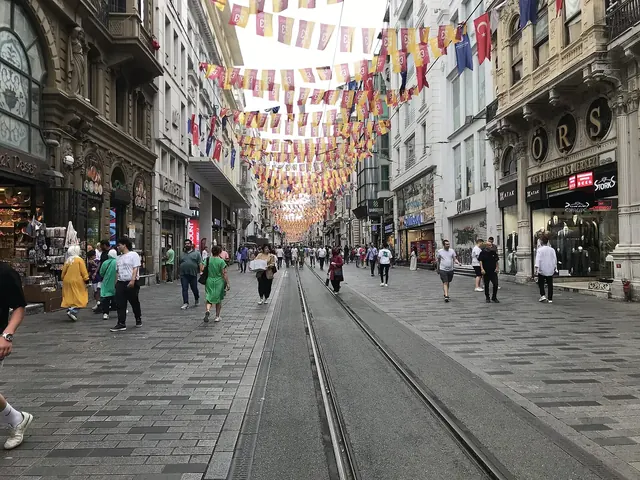
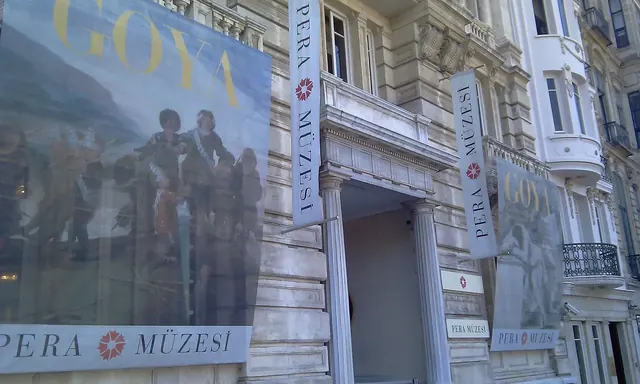
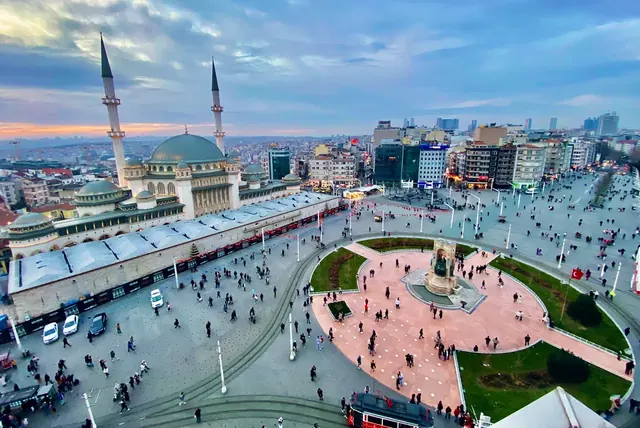
The arcade is a few steps from Galatasaray Square, the liveliest point on İstiklal Avenue. Opposite stands the historic gate of Galatasaray High School, and towards Meşrutiyet Street is the Pera Museum. Walk north and you'll reach Taksim Square; walk south to the Tünel funicular and on to the Galata Mevlevi Lodge. For the whole district, see our Beyoğlu and Taksim guide.
Getting there from Sareban Hotel
The easiest route from our hotel is to take the T1 tram from the Sultanahmet or Çemberlitaş stop to Karaköy, ride the Tünel funicular up to Beyoğlu, and walk along İstiklal Avenue towards Galatasaray; the arcade is on the left, shortly after Galatasaray High School. Alternatively, take the tram to Kabataş, ride the F1 funicular up to Taksim and walk down the avenue to Galatasaray. The heritage tram also stops at Galatasaray, very close to the passage.
Frequently asked questions
Is there an entrance fee for Çiçek Pasajı?
No. The arcade opens onto İstiklal Avenue and you can walk through and admire it for free.
When was Çiçek Pasajı built?
It was built in 1876 as the Cité de Péra, on the site of the Naum Theatre, which burned down in the fire of 1870.
Is Çiçek Pasajı suitable for families?
For a short architectural visit, yes. It is essentially a street of restaurants, many of which serve alcohol, so families may prefer to eat at nearby patisseries and canteens instead.
What else is near Çiçek Pasajı?
The Balık Pazarı market and the Avrupa Passage are right next door, with Galatasaray High School diagonally opposite. The Pera Museum is a short walk away.