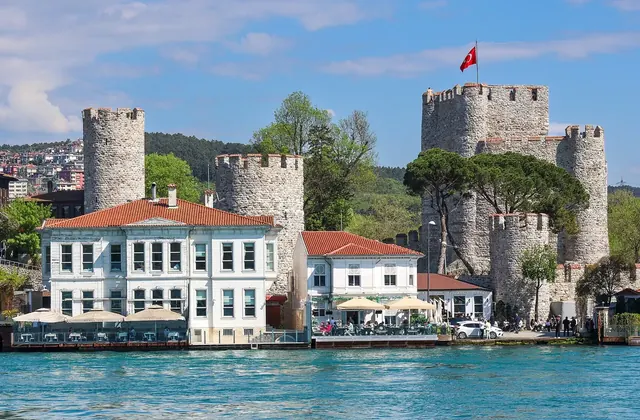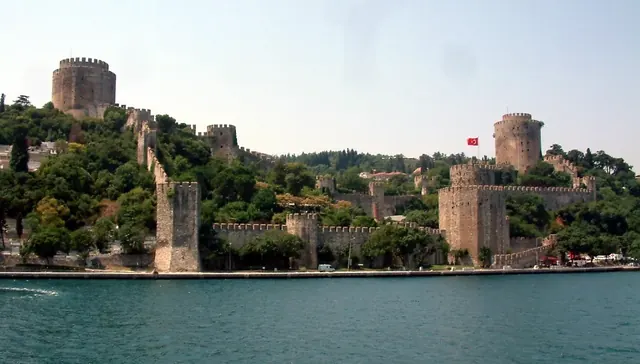
Rumeli Fortress (Rumelihisarı) is the castle Sultan Mehmed II built in 1452 at one of the narrowest points of the Bosphorus, a year before he conquered Constantinople. Together with Anadolu Fortress on the opposite shore it controlled shipping coming down from the Black Sea; today it is an open-air museum whose walls offer some of the most dramatic views of the strait.
On this page5
The move before the conquest
As Mehmed II prepared to besiege Constantinople, he set out to cut the city's lifeline to the Black Sea. On the Asian shore, Anadolu Fortress, built by his great-grandfather Bayezid I in the late 14th century, was already in place. In the spring of 1452 the young sultan began a new fortress on the European side, at one of the narrowest points of the strait. According to sources, thousands of masons and labourers finished it in an astonishing four months or so.
Ottoman chroniclers also called it Boğazkesen, which can be read as “Strait-Cutter” or “Throat-Cutter”. With guns on both shores, the two fortresses controlled every ship passing through, and records say vessels that tried to slip past without permission were fired upon. After the conquest the fortress lost its military role; it served for a time as a prison, and a small neighbourhood grew up inside its walls.
Three towers, three viziers and a remarkable restoration
The plan is an irregular polygon that follows the steep slope, with walls tumbling down the hillside to the water. The three great towers carry the names of the viziers who oversaw their construction: Halil Pasha, Zağanos Pasha and Saruca Pasha. Legend says the sultan gave each vizier a tower to build and turned the work into a race, while taking charge of the connecting walls himself.
Much of what you see today is the result of a restoration in the 1950s led by three women architects, Cahide Tamer, Selma Emler and Mualla Eyüboğlu Anhegger, who cleared the houses from inside the walls and turned the fortress into a museum. In the courtyard you can still see the base of the minaret of a small mosque from Mehmed's time.
What to look for
- The walls and tower steps: climb the open sections for a bird's-eye view of the Bosphorus; the steps are high and uneven.
- The minaret stump: a small reminder of daily life and worship among the garrison.
- The open-air theatre: a stepped stage in the courtyard that occasionally hosts summer concerts.
- Cannons and cannonballs: Ottoman guns and stone shot displayed in the grounds, though displays may change with restoration work.
- Two eras in one frame: the Fatih Sultan Mehmet Bridge just to the north sets 15th-century walls beside 20th-century engineering.
Visiting tips, and completing the 1453 story
Built on a steep slope, the fortress involves plenty of stairs and inclines, so wear good shoes; it is not suitable for strollers. Some parts of the walls have low railings or none at all, so watch children closely. In recent years the museum has been closed for long periods for restoration, so always confirm that it is open, along with current hours, on the official website before you set out. Our museum pass guide explains ticket options.
To round out the story of the conquest, visit the Theodosian Land Walls, where the decisive fighting of 1453 took place, and the Panorama 1453 History Museum, which recreates the siege in a giant painting. Spring and autumn are the most comfortable seasons to visit; shade is limited in the courtyard in summer.
Getting there from Sareban Hotel
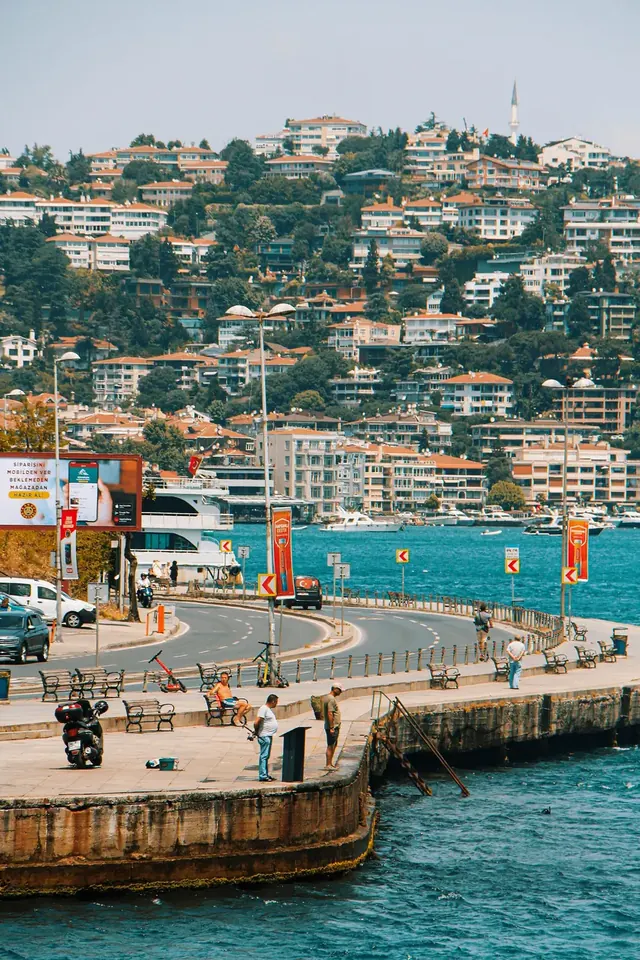
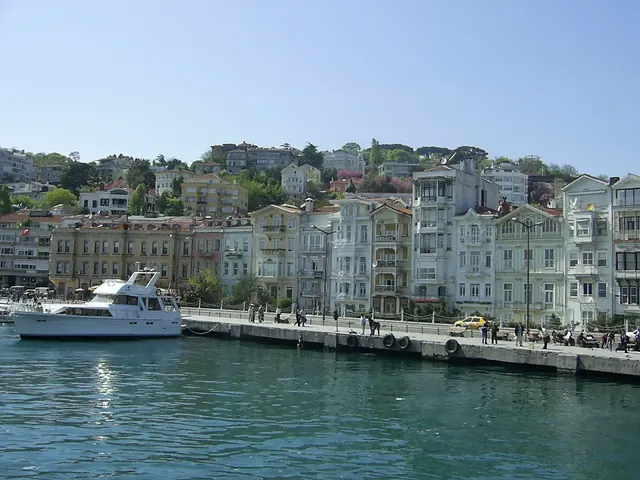
Take the T1 tram from near our hotel to Kabataş, then one of the buses running north along the coast road towards Sarıyer, getting off at Rumelihisarı. The ride hugs the shore past Beşiktaş, Ortaköy, Arnavutköy and Bebek. A nicer alternative is to ride as far as Bebek and walk the final stretch along the water, taking in Bebek Waterfront on the way. See our Bosphorus villages page for the neighbourhoods around it.
Frequently asked questions
When and why was Rumeli Fortress built?
Mehmed the Conqueror built it in 1452, just before taking Constantinople. With Anadolu Fortress opposite, it let the Ottomans control Bosphorus shipping and cut the city off from help arriving via the Black Sea.
Is Rumeli Fortress suitable for children?
Older children love the walls and cannons. The steps are steep, though, and some sections lack railings, so younger children need close supervision, and strollers are impractical.
How long does a visit take?
An hour to an hour and a half is enough to climb the walls and explore the grounds. Combine it with a walk from Bebek and it becomes a half-day outing.
What is the difference between Rumeli and Anadolu fortresses?
Anadolu Fortress is a smaller castle on the Asian shore built by Bayezid I in the late 14th century. Rumeli Fortress followed in 1452 on the European shore on a much larger scale, and together they held one of the narrowest points of the strait.