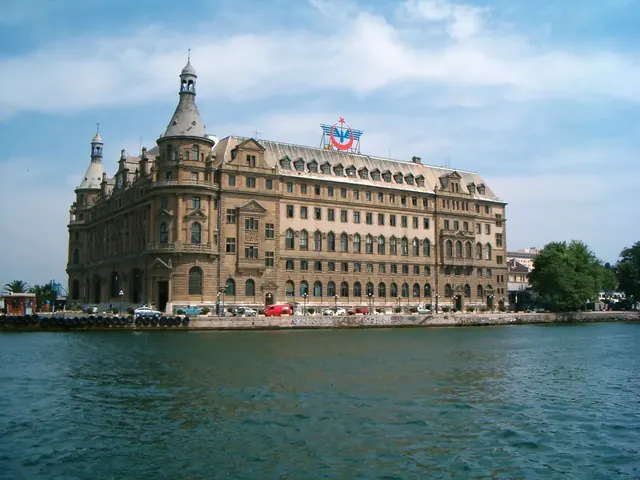
Haydarpaşa Station is a grand historic railway terminus on the waterfront just north of Kadıköy, on Istanbul's Asian side. Opened in 1908 as the city's gateway to the Anatolian and Baghdad railways, it was for decades the first thing travellers from Anatolia saw of Istanbul. Now the focus of restoration work and archaeological excavations, it is best admired from the deck of a ferry.
On this page6
Istanbul's gateway to the Baghdad Railway
The station was built as the Istanbul terminus of the Anatolian and Baghdad railway, a flagship project of the late Ottoman Empire developed with German capital. German architects Otto Ritter and Helmuth Cuno designed it, and construction took place in 1906–1908. Because it stands on reclaimed land, sources say the building rests on a large number of timber piles driven into the seabed.
With its heavy stone walls, pointed corner towers and German neoclassical style, it makes a fascinating counterpart to Sirkeci Station across the water: Sirkeci is a European terminus dressed in Oriental motifs, Haydarpaşa an Anatolian gateway in European dress. For generations ferries and train ferries bridged the gap between them; today Marmaray does it under the sea.
Fires, blasts and a stubborn survivor
The station has had more than its share of disasters. In 1917, during the First World War, an ammunition explosion in the station yard caused serious damage. In 1979 a tanker collision and explosion offshore shattered its celebrated stained-glass windows. In 2010 a fire gutted the roof and upper floor.
Each time it was repaired, and the building became a symbol of resilience for Istanbul. The image of arrivals from Anatolia stepping down its stairs and seeing the old city across the water for the first time runs through Turkish novels, films and songs.
Where things stand: restoration and excavations
Intercity trains stopped using the station in 2012 and suburban services in 2013 because of major rail works. Restoration of the building continued over the following years, while excavations in the station yard uncovered a wealth of finds from ancient Chalcedon and later periods.
Whether you can go inside, and the current status of train services, have changed over time, so check up-to-date information before planning around a visit. Even when the interior is off limits, the station can always be enjoyed from outside, from the pier and, best of all, from a passing ferry.
What to look for
- The sea-facing main façade with its two corner towers and steep pointed roofs
- The historic Haydarpaşa pier in front and the steps leading down to the water
- The classic view from an approaching ferry, with Kadıköy and Moda in the background
- To the north, toward Üsküdar, the imposing Selimiye Barracks, remembered for Florence Nightingale's nursing work during the Crimean War
- A short waterfront walk south to Kadıköy's pier and market streets
Combine it with Kadıköy and Moda
Haydarpaşa makes a natural start to a day in Kadıköy. From the station, walk along the shore to Kadıköy's market lanes, with their fishmongers, pickle sellers and spice stalls, then continue to the Moda seafront to finish the day facing the old city skyline. If you're working the Asian side into a longer trip, see our 5-day itinerary.
Getting there from Sareban Hotel
The ferry is the way to go. From our hotel, take the T1 tram to Eminönü or Karaköy and board a ferry to Kadıköy; the station grows on the horizon as you cross. From Kadıköy pier it's a short walk north along the shore. At times there are also services calling directly at the Haydarpaşa pier, so check the timetable.
Alternatively, ride Marmaray from Sirkeci and get off at Ayrılık Çeşmesi, but the sea crossing is both more scenic and truer to the station's story. Our ferry guide covers routes and tickets.
Frequently asked questions
Do trains still run from Haydarpaşa?
The station closed to trains in 2012–2013 for rail works, followed by a long period of restoration and excavation. Service status can change, so check before you go.
Who designed Haydarpaşa Station?
German architects Otto Ritter and Helmuth Cuno. The station opened in 1908.
Can you go inside?
Access to the interior depends on the restoration process. The exterior can always be seen from the pier and from passing ferries.
What's the easiest way to get there?
Take a ferry from Eminönü or Karaköy to Kadıköy, then walk a short way north along the waterfront.